aquaculture
-
![]()
![]()
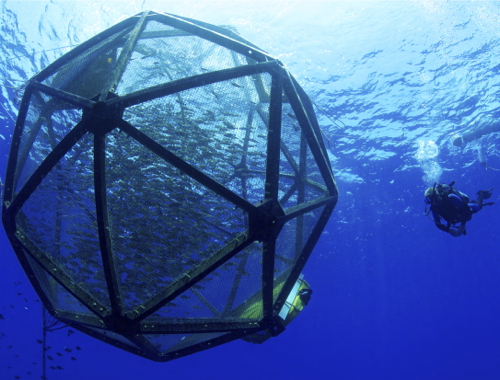
The big blue: Can deepwater fish farming be sustainable?
An experimental fish farm floating off the Big Island of Hawaii has the whole world watching.
-
![]()
![]()
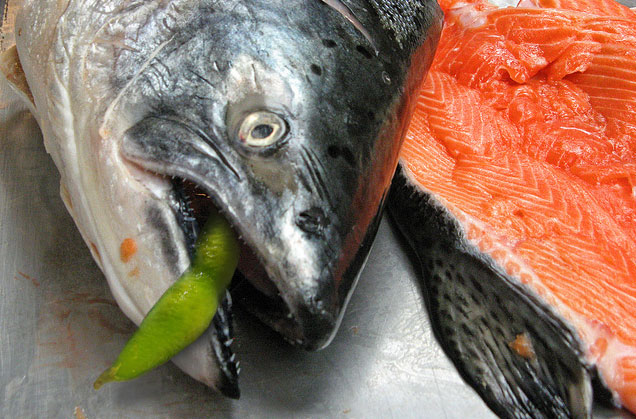
Can carnivorous farmed fish go vegetarian?
The aquaculture industry has long fed wild fish to farmed fish, putting a huge dent in ocean ecosystems. Will new vegetarian feed improve aquaculture's footprint, or just muddy the waters?
-
![]()
![]()
Foot-long shrimp take over Gulf of Mexico
The Asian tiger prawn, a gigantic shrimp that can grow to more than a foot long, is invading the Gulf of Mexico. This year the species was found for the first time in Texas waters. This giganto breed of crustacean threatens the survival of crabs, oysters, and regular old normal-sized shrimp. It could disrupt the […]
-
![]()
![]()
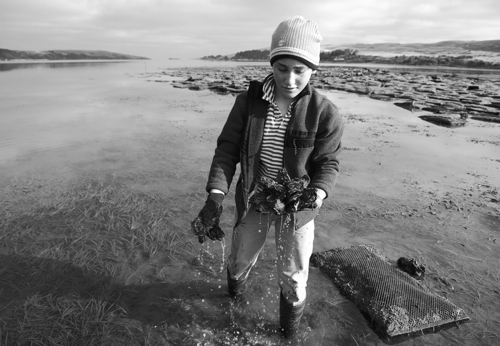
Learning on the half-shell
Photo: Gwendolyn MeyerLuc Chamberland thinks oyster farming is often misunderstood. That’s why the aquaculturist wants to educate the public about the benefits of cultivating bivalves in Tomales Bay, a pristine estuary in West Marin, Calif. A recent, high-profile controversy surrounding a commercial oyster farm in the area has focused on the potentially negative environmental impacts […]
-
![]()
![]()
Ocean of trouble: Report warns of offshore fish farming dangers
In light of the FDA's recent approval of genetically engineered salmon, the latest Food & Water Watch report on open-ocean aquaculture might leave some advocates feeling a little clammy.
-
![]()
![]()
Small fry: The case for smaller fish portions
New science says smaller fillets are more sustainable -- but not just for the reasons you'd expect.
-
![]()
![]()
How a company you've never heard of could destroy the ocean ecosystem
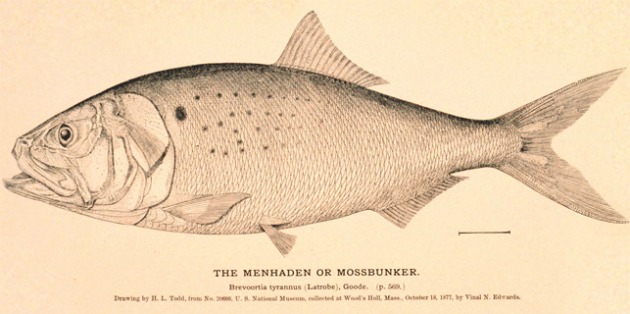
Omega Protein, Inc. (a company you've never heard of) is quickly overfishing the Atlantic menhaden (a species you've never heard of). As a result, a number of fish that you have heard of -- striped bass, bluefish, tuna, dolphin, seatrout, and mackerel -- as well as the ocean ecosystem as a whole, the Chesapeake Bay, and the Long Island Sound (which you’ve heard of) are suffering.
Menhaden are tiny, bony, oily fish that humans can't eat, but which, according to marine scientists, are "the most important fish in the sea." Menhaden are the main consumers of phytoplankton, and without them, areas like the Chesapeake Bay and Long Island Sound are clogged with algae. They are also a staple food for bigger, tastier fish, who, deprived of menhaden, are growing sad and malnourished.
In the past 25 years, the menhaden population has shrunk from 160 billion to about 20 billion. -
Critical List: Floods herald largest Gulf dead zone on record; the Senate hearts ethanol
Louisiana fishermen can't catch a break. Flooding on the Mississippi River could create the largest dead zone in the Gulf of Mexico on record.
Louisiana, in general, can't catch a break. A plant that blends chemicals used in oilfields exploded on Tuesday.
The Senate decided against ending subsidies for corn-based ethanol in a vote that split, not just along party lines, but also between Big Ag states and everyone else.
Google's newest clean energy investment hands $280 million to a solar company that leases panels to customers. -
Critical List: Christie ditches climate initiative; France opens huge solar farm
New Jersey governor Chris Christie has jumped ship from a regional greenhouse gas program, because "it's a failure." The owners of the Fukushima nuclear plant provided regulators with only a one-page memo on its tsunami and earthquake preparedness. One page. A decade ago. In Japan, the country that invented the word “tsunami.” Green tech companies […]