Grist List
-
![]()
![]()
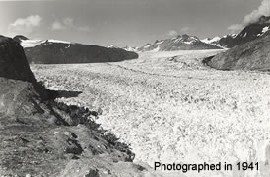
Glacier National Park to be devoid of glaciers by 2020
In the 19th century, there were 150 glaciers in Glacier National Park, and now there are just 25. By 2020, even those will be gone, says Daniel Fagre, coordinator of climate change and glacial geology studies in the park.
-
![]()
![]()
New site shows how far public transportation will take you
Mapnificent lets you see how far you can get on public transportation in a set amont of time, in more than 60 metro areas worldwide. (Above: 15 minutes on bus and rail in Chicago.) It's a new way of visualizing how easy it is to navigate a city without a car. You can use it to check out places where you might want to live or visit, to get an idea of how far transportation will get you and how much of your day it might take up to get where you need to go.
Here's what 15 minutes looks like in a few more cities:
-
![]()
![]()
Destroying dams could save a salmon species
Twenty years and $350 million after President George H.W. Bush first signed an act to restore Washington State's Elwha River, the process to bring down two gigantic dams has begun. That could save the Elwha’s population of salmon.
-
Critical List: China makes solar power cheap; U.K. fishing fleet wastes cod
China is making solar power cheap in order to drive solar growth.
Since 1963, U.K. fishing boats have tossed $1 billion worth of dead or dying cod overboard to keep within their quotas.
In Washington State, what The New York Times calls "the largest dam removal project in American history" will destroy two dams and help salmon regrow their population. -
![]()
![]()
Your next plastic cup could be made out of fish
Plastic is actually a pretty revolutionary material — we wouldn't want to go back to a time before it existed (just a time before people started throwing it in the ocean). But it's made from petroleum, and we haven't really got any to spare. So viable plastic alternatives — corn plastic, algae plastic, chicken feather […]
-
![]()
![]()
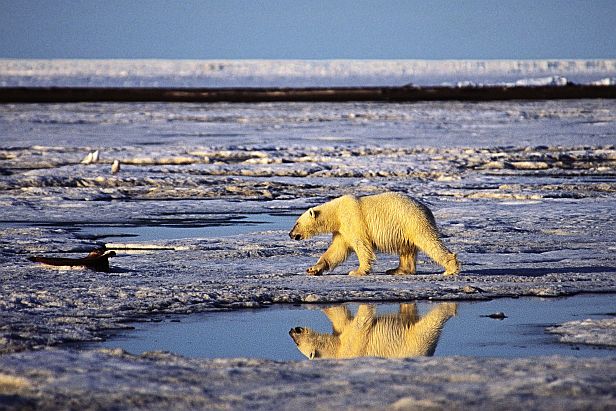
Federal biologist who reported polar bear deaths now under (deeply weird) investigation
Back in 2006, Dr. Charles Monnett published an article that included observations about polar bear deaths in the Beaufort Sea. In the report, co-authored with another scientist, Monnett reported seeing four dead polar bears in 2004. Monnett works for the federal government, and this month he was put on administrative leave while the government investigates "integrity issues" connected to that report. Administrative leave means he has to put all current research on hold.
Public Employees for Environmental Responsibility, a watchdog organization, has formally complained about the investigation. In its complaint, the group includes portions of an interview the Department of the Interior inspector general conducted with Monnett. From the transcript, it appears that they were concerned about the method Monnett and his colleague had used to achieve a rough estimate of the mortality rate. The group writes that "it became clear that the IG agents were focused on what in their mind was a disparity but was, in fact, their inability to understand the note.”
And, if you read the transcript, the investigators do seem tangled up. Here's a sample: -
![]()
![]()
Dear skeptics: Here is more climate data than you can handle
For the climate skeptics who dragged us all through Climategate on the conviction that climate scientists are lying jerks, here is the data you wanted to see. Here it is. The University of East Anglia put it online for all to access. This might make it harder for scientists to get shared data in the future, since people don’t always like it when you give away their work for free, but it is worth it just to shut you up.
Happy now? Oh, what, you actually have no idea how to interpret this raw data? -
![]()
![]()
New photovoltaic generator runs on heat instead of sunlight
Photovoltaic cells, the basic unit of solar power systems, turn light into electricity. But fueling photovoltaics with sunlight isn't always practical. MIT scientists came up with a way around this issue: they found a really efficient way to turn heat into light.
-
![]()
![]()
Tokyo is cutting electricity use by 15 percent
Japanese people are already kicking Americans' butts when it comes to energy efficiency: they use half as much energy as we do already, despite their proclivity for gadgets like automatic toilets. But since the Fukushima meltdown, they've gotten even more hyper-aware of the need to save energy.
In Tokyo, the government is hoping to cut electricity use during work hours by 15 percent compared to last year, and they're on track to do it.