Gristmill
-
Your choice vs. the 'expert' choice in video contest
The following guest post was written by Keith Gaby, communications director for the Environmental Defense Fund's national climate campaign. This was originally posted on Climate 411.
-----
Who is right when a national environmental group holds a video competition and the public and the "experts" disagree on who should win?
At the 2005 Sundance Film Festival, the jury of film experts chose Forty Shades of Blue as the best dramatic film. The Audience Award went to Hustle & Flow. I don't know which was a better film, but I do know Hustle & Flow went on to earn $20 million in wide release in the U.S., while Forty Shades of Blue topped out at $75,000. I'm sure it doesn't always happen that way, but it goes to show that the experts don't always know what will succeed in the marketplace of ideas.
We at Environmental Defense Fund just finished something a bit like a film festival -- a competition that challenged participants to make a 30-second ad that explains how capping greenhouse gas pollution will help cure our national addition to oil. This week we announced two winners, one selected by our staff and another chosen by thousands of voters online. Like at Sundance, the voters and the judges chose different winners ... in fact, the video chosen by us "experts" came in dead last in the online voting.
I thought it might be interesting to explain our decision and see what others think.
-
Green spending cuts still on table in Senate, more…
The Senate is likely to vote Tuesday to move forward with the stimulus package. The fate of the package, now weighing in at $827 billion in new spending and tax cuts, rests on whether or not senators OK a bipartisan compromise amendment from Susan Collins (R-Maine) and Ben Nelson (D-Neb.). As we reported last week, […]
-
Fighting economic decline and climate change simultaneously
As a new administration took over in Washington in the midst of a massive economic decline, the media kept asking members of the new energy and environment team if the U.S. could "afford" their agenda in light of the economic condition of the nation. (Witness the Washington Post interview with Carol Browner.) The New York Times reported on Jan. 18:
Given a choice between stimulating the economy and protecting the environment, 58 percent of Americans said it was more important to stimulate the economy, compared with 33 percent who chose protecting the environment. In April 2007, 36 percent said it was more important to stimulate the economy, compared with 52 percent who chose the environment.
No doubt the priority given the economy today would be greater, given Friday's numbers on job losses and unemployment.
But it's a silly question and a false, unnecessary choice. It hides the most rational course of action: doing both simultaneously.
The question ignores the fact that a public dollar -- or $1 trillion such dollars -- can be spent in ways that simultaneously:
- produce new jobs and incomes,
- help fight global warming, and
- save money for people on tight budgets.
Public investment in the energy efficiency of homes and other buildings can do all of that -- and might even make it easier for budget-strapped homeowners to pay their mortgages, so it could stabilize neighborhoods and help unfreeze the lending system as well. That's a pretty powerful answer to those who say we can't afford green concerns because of economic problems.
A dollar can accomplish more than one objective at a time. The problem is that we have come to think of "efficiency" as pursuing a single objective at the expense of all others, even those that might logically be complementary. Environmental advocates see industry only as sacrificing the environment to the efficient pursuit of profit maximizing. Industry for too long has seen environmentalists only as regulating and constraining their pursuit of profits. Of course, it is difficult for private parties -- businesses pursuing profits, or neighborhood residents protecting their air or well water quality -- to pursue multiple objectives at once. That's a role for government. It's a role government plays exceptionally well.
This brings us to the U.S. in 2009: facing huge government deficits, uncertain energy costs, rising unemployment and growing poverty, and a threat from global warming that requires action sooner rather than later. The spending legacy from 2008 includes a $700 Billion "Toxic Assets Relief Fund," of which half has been spent in ways that seem to have had no effect, and plans going forward include spending the other $350 Billion of TARF money and implementing a massive, ~$800 billion stimulus plan.
If there was ever a time we needed efficiency in pursuit of multiple goals, it's now.
-
Decent media is possible
Witness as AlJazeera English does a segment on carbon cap-and-trade that is about 4,587,209 times more intelligent and informative than anything you will ever see on a U.S. cable network:
-
Attending a conference that calls for action on the Salish Sea
Starting today, I'll be spending three days at the Puget Sound Georgia Basin Ecosystem Conference learning about the health -- or perhaps un-health -- of the Salish Sea, a term that refers to waters in both Washington state and British Columbia, including the Puget Sound, the Strait of Georgia, and the Strait of Juan de Fuca (see map at right).
Co-hosted by the Puget Sound Partnership and Environment Canada, this biennial conference is touted as the largest and most comprehensive scientific research and policy event in the region. Those attending include scientists, policymakers, Coast Salish Tribes and First Nations, biz folk, educators, and concerned citizens.
I'll be sitting in on sessions about climate change, citizen science, and the future of tidal energy in the Puget Sound; listening to keynote speeches from tribal leaders and Gov. Chris Gregoire (D); hobnobbing with fishy folks; and generally reveling in the marine biology nerdyness of it all. I promise to report back regularly on what I learn while I'm there, wifi-permitting.
-
Deployment precedes innovation
In energy efficiency circles, the story of Jan Schilham's 1997 redesign of a pumping system for a Shanghai carpet-making factory is famous. Schilham saved 92 percent of pumping energy and lowered capital costs by using a well-known principle: Pumping water slowly through fat, straight pipes reduces friction and saves energy relative to pumping the same volume quickly through narrow twisty pipes.
Why isn't it always done that way? Because the bigger pipes cost more than the energy saving. Schilham's insight was that energy is not the only payback. Fatter pipes lower the size of the pumps and motors required, so even with the additional plumbing expenses, total capital costs are lower. Energy savings in this context are free, or better than free.
In a narrow sense, this was an improvement in cost accounting, not technology. Nothing unknown or untested was deployed. No breakthrough enabled the lower costs -- they'd always been possible. Schilham simply counted a benefit that had been overlooked, demonstrating that a technique usually considered unprofitable actually saved money.
The key that allowed Schilham to exercise his genius was that Interface carpets had already decided to reduce its ecological footprint drastically. "Whether" had already been decided -- Schilham was worrying about the "how." Essentially he was in the position of someone complying with a standards-based efficiency rule.
-
Ditty Bops nominated for Grammy thanks to sustainable CD packaging
Remember when album art mattered? My college band, Groove or Die, had the idea of one-upping the Rolling Stones by making our album jacket out of an actual pair of pants.
That idea, like most things Groove or Die-related -- including actually recording music -- never quite made it out of the dining hall.
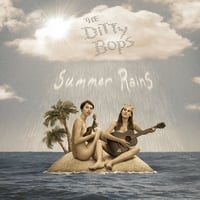 This trip down memory lane was brought on by the Ditty Bops, whose efforts to create an album out of recycled materials and soy-based inks earned their album Summer Rains a Grammy nomination for "Best Recording Package" (that's what they're calling album art in this post-vinyl age). As I have seen them perform wearing nothing but recycled plastic bags, in a sense they one-upped Groove or Die by wearing album material instead of making album material out of what they wear.
 -
We need to stop blaming victims of breast cancer and start researching envirotoxicity
Having been touched by breast cancers in numerous women important to me, I've long been astounded by the extent to which discussions of the subject start by blaming women -- you picked the wrong parents, you didn't have your kids soon enough, you forgot to have kids, you ate too much, you ate the wrong things ... on and on and on.
Sandra Steingraber, Ph.D, an environmentalist and brilliant poet, writes about the medical-industrial complex and its instant assumption that the genesis of cancer is in the genes in her outstanding book Living Downstream. Sadly, her message seems to have been shrugged off by industry and the agencies charged with protecting public health. The media watchdog group FAIR (Fairness and Accuracy in Reporting) has a nice new piece in the February 2009 issue (alas, not yet available online) on the media's code of silence with respect to the environmental causes of cancer.
It's worth a trip to the library or magazine stand to check it out.
Meanwhile, there's a good discussion of the topic that starts at about 18:40 in this week's "CounterSpin," the FAIR radio program.
The bottom line: environmental insults are at least as significant as the usual factors discussed around incidence of breast cancer in the US -- but are studied far less, and are almost entirely absent from the wave of feel-good pink bushwa that floods the media every year during "Breast Cancer Awareness Month."
The sterling SF Bay-area group Breast Cancer Action has been a real leader in refusing to allow industry to bury the connection between their emissions and women's breast cancers. For a good example of their work, check out this factsheet on breast cancer and the environment.
-
Seattle Times editor wants to stick it to bicyclists
My wife snipped an editorial out of the Seattle Times for my perusal a couple of weeks ago. James Vesely, the opinion page editor, thinks that Seattle bicyclists should be taxed and licensed. My wife, a bleeding-heart liberal who never saw a tax she didn't like, was incensed that the Times editorial page editor would waste print space on such a petty issue.


