Twilight Greenaway's posts RSS feed


Comments

Americans want more fruits and veggies for everyone

Photo by Chiot's Run.

If you’ve noticed more carrot-crunching, more orange-peeling, and an abundance of leafy green salads lately, it’s probably not a coincidence. As The Washington Post reported earlier this week, Americans eat more fresh foods than they did five years ago.

The WaPo story was based on a national phone survey conducted by the Kellogg Foundation, which found that the majority of Americans are trying to eat more fresh fruits, vegetables, and whole grains, are shopping at farmers markets at least on occasion, and say they know “a lot or a little about where their fresh fruits and vegetables come from.” These findings are interesting -- and they speak to the success of a whole array of efforts to get more of us cooking, examining what we eat, and honing in on the place where healthy and truly delicious foods intersect.

Less visible in the media landscape is the fact that the Kellogg Foundation survey also suggests that all this healthy eating has Americans looking outside themselves.

this story continues
 

Comments

The Domino’s effect: The pizza giant refuses to phase out inhumane pork

Animal behaviorist Temple Grandin has describes raising pigs in gestation crates as "asking a sow to live in an airline seat.” (Photo by Farm Sanctuary.)

Domino’s wants to be different. The company -- once known for crap-tastic pizza and mediocre ad campaigns -- has struggled in recent years to remake its image with an ironic campaign that admitted to poor quality followed by an effort to incorporate so-called “artisan toppings.”

Domino's has been doing so much to reach out to food-conscious customers, says Kristie Middleton, outreach manager at the Humane Society of the United States (HSUS), that she's surprised by its latest move -- a decision to continue serving pork from pigs raised in gestation crates. “It seems like it would only make sense to include an animal welfare tenet as part of their rebranding,” she says.

this story continues
Read more: Article, Food
 

Comments

Politicians, advocates make an 11th-hour push for a better farm bill

Senator Debbie Stabenow, head of the Senate Ag Committee, has pledged to get a farm bill passed by September. (Photo by Lance Cheung for the USDA.)

Right now, the Farm Bill needs a hero, and Sen. Debbie Stabenow thinks she's up for the job. Despite serious setbacks, the Democrat from Michigan is confident she and the committee she chairs can work with the House committee to pass a new farm bill before the current one runs out in September.

And, while hearing Stabenow speak at a conference last week, I just about believed her. The senator has worked on a handful of farm bills before this one and she knows what it takes. But, as I mentioned in a recent post, she’s up against a formidable round of cuts. The Tea Party-driven House Agriculture Committee not only wants to cut $33 billion (compared to the Senate’s $23 billion), but they want to make most of those cuts to the Supplemental Nutrition Assistance Program (SNAP, or food stamps).

this story continues
 

Comments

Chefs’ disregard for environment leaves a bad taste

Thomas Keller

Thomas Keller in his kitchen. (Photo by Arnold Gatilao.)

Thanks, Thomas Keller. Now we know where you stand. When you joined forces with Andoni Luis Aduriz and came out publicly in The New York Times this week as a chef who does not feel any obligation to the environment, we heard you.“With the relatively small number of people I feed, is it really my responsibility to worry about carbon footprint?” you asked.

You think it’s not your place, as reporter Julia Moskin puts it, “to provide a livelihood for farmers near [your] restaurants, to preserve traditional culinary arts or to stop the spread of global warming."

Yep, you’re just here to “create great, brilliant food.”

And you know what? That might make sense -- if we lived in the 19th century. Then you could just focus on making your brilliant food (it would probably be served to royalty) and someone else would do the driving, someone else the laundry, and so forth. While the farmers -- out in the countryside -- would do nothing but farm. Of course, no one would dream of writing about you in a national publication, either. You wouldn’t have to be a global citizen of an information age.

this story continues
 

Comments

Farm interrupted: Berkeley’s Occupy the Farm ends in arrests

A young farmer is arrested on the sidewalk outside the Gill Tract. Click to watch the raw footage.

The farmers and activists who have been occupying the Gill Tract -- a 10-acre piece of land on the outskirts of Berkeley, Calif. -- since Earth Day, had a rude awakening Monday morning. As the Oakland Tribune reported, around 100 police officers clad in riot gear and brandishing batons appeared at the farm at 6:15 a.m. and made nine arrests. The officers, the report continues:

… encountered fewer than 10 protesters on the field, most of whom were still sleeping. By 9 a.m., the remaining encampment was cleared.

All except a young man who is sitting in a tree near the tract and refuses to come down.

Of the nine arrested, two were detained for sleeping overnight on the actual tract and seven were arrested outside the fence line on suspicion of unlawful assembly.

this story continues
Read more: Food
 

Comments

Could insects feed the world? [VIDEO]

Still on the fence about trying some edible insects? This video from Quest might just give you the nudge you need. In it you'll meet several entomophagists (bug-eaters), including Monica Martinez of Don Bugito, a taco stand we covered last fall.

You'll also hear compelling evidence for insects as one answer to feeding a growing population. As one scientist puts it: "Cows and pigs -- they're warm-blooded. When they eat, they have to actually waste a lot of energy producing heat. Insects are cold-blooded. I mean that in a good sense. They don't have to maintain their body heat, so when they eat they don't have to waste energy, they convert that into protein."

The video takes us into the kitchen of a serious bug connoisseur as she prepares roasted figs with sautéed grasshoppers and bee larvae (the "bacon of the edible insect world") -- and manages to make the dish look surprisingly appetizing.

Read more: Food, Sustainable Food
 

Comments

University strikes back against Occupy the Farm

Photo by Steve Rhodes.

“Maybe you’ll be my one phone call from jail,” urban farmer and activist Ashoka Finley says, just before our phone conversation ends.

He’s joking, but I imagine he can probably see a group of police officers out of the corner of his eyes as he says it. Finley is one of a group of Occupiers who have been living and farming on a 10-acre piece of land on the outskirts of Berkeley, Calif., called the Gill Tract.

Finley has also just told me that he’s prepared to get arrested if things at the Gill Tract escalate. “We’re not going anywhere, we’re going to keep planting and farming,” he says, as if it’s the most defiant thing he can imagine.

this story continues
 

Comments

Green eggs, hold the ham [VIDEO]

Unless someone like you cares a whole awful lot,
We won't get $25K. We will not!

If you're just tuning in, Grist's been struck by a curse.
Unless you help out, we're stuck speaking in verse.
"Oh no, this can’t be," you might be retorting,
"This rhyme scheme will starve us of good food reporting."
Just five measly bucks will make this curse scram
and I'll go back to writing on green eggs and ham.

You've got brains in your head and feet in your shoes,
Please consider supporting our brainy green news.
With our readers’ support, we’re sure to succeed.
Ninety-nine and three-quarters percent guaranteed!
So if you want to shake off this Seuss-ian rhyme,
Donate today -- and thanks for your dime.

Yours Seuss-ly,

Twilight Greenaway
Grist Food Editor

P.S. Giving online make you a wreck? You're also welcome to send a check: Grist, 710 Second Avenue, Suite 860, Seattle, WA 98104.

P.P.S. If we reach our goal by May 15, Grist will receive $25,000 from a generous donor.

Read more: Article, Inside Grist
 

Comments

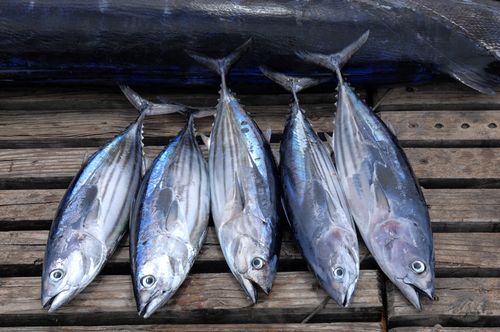
We catch too many sardines — but should we stop eating them?

Photo by Andrea Nguyen.

On the Mother Jones website yesterday, contributor and author Julia Whitty posed some important questions about a small, less popular fish that’s begun to come back into vogue in recent years.

The post, called "It's Okay to Eat Sardines...Right?," began like this:

Sardines are considered a "sustainable" seafood, one of the few fish you can eat guilt-free, right? Well, not exactly. Forage fish like sardines and anchovies are the key players in huge but delicate food webs known as wasp-waist ecosystems. These are so complex and dynamic that it's questionable whether we have the know-how to manage them well yet.

Whitty went on to illustrate that we don’t, in fact, seem to know how to manage the world sardine fisheries very well. And she presented a telling and useful chart that tracked the global capture of sardines over the last 50 years. It shows a mountain of consumption that rises steeply in 1975 and goes crashing back down again 20 years later. She also points out that although the Marine Stewardship Council approves of sardine eating, Whitty herself has written in the past about what she sees as lapses in judgement on its part, when it comes to the fishing practices surrounding other types of fish.

I was with Whitty through a great deal of her argument, and I can always get with a considered note of caution about what we eat and how much. So I waited patiently for her to get to the discussion of what happens to the rest of the sardines. But it didn’t come.

You see, as many ocean conservationists and sustainable seafood experts point out, the problem isn’t that people are frying or grilling up too many sardines. The problem is the fish we’re not eating, but feeding to other, farmed fish (like tuna and salmon) and industrially farmed animals (fish oil makes pigs, chickens, and cows grow faster).

this story continues
Read more: Food, Sustainable Food
 

Comments

It’s official: China now eats twice the meat we do

If meat eating is a race, China is so far ahead of us we can't even see what color shorts it's wearing. Americans still eat about twice as much of the stuff on a per-person basis, but, well, China has a lot more people.

If you like geeking out about who eats what where and how it impacts the environment, you might enjoy spending some time with this very data-rich post about the recent doubling of China’s meat consumption from the Earth Policy Institute (EPI). But, for those who want a cheat sheet, I've collected what I think are some of the most memorable bits below.

First, take a look at this very telling chart, which shows plain and clear how fast things have been changing:

this story continues

Twilight Greenaway

Twilight is the food editor at Grist. Follow her on twitter.

Advertisement
Advertisement
advertising