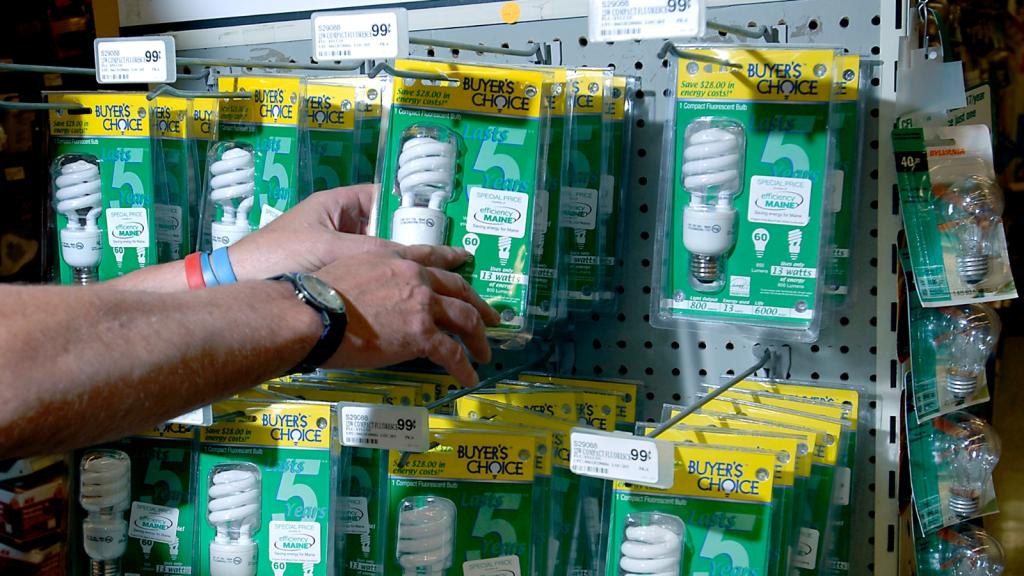
Random House to bump up use of recycled paper For you fogies who still read books made of ... what do they call it? ... "paper," here's some good news: Leading U.S. publishing company Random House announced this week that it plans to increase the recycled-paper content of its books to 30 percent by 2010. It's an ambitious goal, as only about 3 percent of paper currently used in Random House books is recycled. The average recycled-paper content in the biz is about 5 percent. Random House, which buys about 120,000 tons of paper each year for book production, claims …
Business & Technology
Taking Care of Business
New York Times runs series on green biz The New York Times is running a ginormous series today on green business, creatively titled "The Business of Green." (Hey, NYT, if you need headline help for the next series, just let us know.) Read about green collaborations among businesses and enviro organizations; Chicago's success in combining environmental and economic goals, and meeting them; entrepreneurs in the carbon-trading market; the risks of nuclear power as a "clean" energy source; and environmental products like lead-free bullets that are popping up in government agencies. Take a video tour of a cutting-edge green building; learn …
Carbon Upset
European Union's fledgling carbon-trading market hits turbulence A hullabaloo has erupted in the European Union over its one-year-old carbon-trading market, established to help the E.U. meet its targets under the Kyoto Protocol. It turns out that 21 of the 25 countries involved have come in under their greenhouse-gas emissions targets, leaving a 70.5 million ton surplus. Good news, right? Not so much. Industry types are being accused of tricking governments into high-balling the targets, leaving companies awash in credits they didn't have to work for. Worse yet, news of the surplus was leaked early, leading to a spectacular market crash …
Can you work as an environmental consultant without losing your soul?
As director of program development at The Environmental Careers Organization, Kevin Doyle knows a thing or two about job searching. In this recurring column for Grist, he explores the green job market and offers advice to eco-job-seekers looking to jumpstart their careers. I have been working in the environmental consulting field for several years now. I must admit, I'm quite disillusioned due to clients who simply don't care about the environment. I turn away projects when I realize the goal is to use me to produce an assessment that removes their responsibility. When I explain that the data cannot be …
Consulting With the Devil
Can you work as an environmental consultant without losing your soul? Jacqueline is a 40-year-old environmental consultant who's disillusioned by all the pollutocrats asking her to fudge data. She wants to make a career change -- just one among many who are frustrated by their seemingly ineffectual eco-related jobs, says green-careers guru Kevin Doyle. In his latest column, Doyle weighs in on the concerns of many environmental professionals toiling in the for-profit world. Is his counsel on the mark? Join the discussion in Gristmill.
Wal-mart’s organic bomb
Melanie Warner at the NYT reports today that Wal-Mart is about to dramatically increase its organic food offerings. In very understated fashion, she says, "Wal-Mart's interest is expected to change organic food production in substantial ways." Um, yeah, it sure will. Wal-Mart's plan is to sell organics ~10% over the price of non-organics -- a much closer premium than you can get elsewhere. It's also getting brands like Pepsi, Rice Krispies, and Kraft Mac 'n' Cheese in the game. There's good back and forth in the article about the pros and cons of further industrializing organics -- availability and expansion …
The high cost of cheap gas.
The New York Times is running an interesting article called "The High Cost of Cheap Gas and Vice Versa." The author calculates the current average cost of driving at 15 cents a mile, up from 6.6 cents in 1998, and down from 20.1 cents in 1980 (in 2006 dollars). He also puts up a cost-per-mile calculator, in case your math skills have deteriorated since you last took the SAT. My colleague JP Ross tells me that a Toyota Prius in electric-only mode uses .26 kWh to go a mile. If you are filling up with peak electricity rates, say 12 …
A speculation about why ADM’s HFCS business is booming.
In the first quarter of 2006, as I reported yesterday, Archer Daniels Midland somehow managed to boost the price of high-fructose corn syrup (HFCS) despite mounting concern over the sweetener's health effects. The company booked a cool $113 million profit from HFCS over the quarter, more than three times more than it netted in the same period a year before ($33 million). This, despite a slowing domestic market for sweet soft drinks, as consumers increasingly switch to juice and bottled water. The company's official explanation -- "increased sweetener and starch selling prices" -- doesn't explain how it managed to make …
Umbra on global warming and you
Dear Umbra, I love the scientific ins and outs, really I do, but what oh what can we do about global warming? And I mean us ordinary folks with a house and mortgage and some percentage point of kids and a few compact fluorescents and maybe even a hybrid in the driveway. We're right there with you, so please don't leave us hanging. Peter Kelley College Park, Md. Dearest Peter, Right. Sorry. I got frowny last month, and forgot to put a "we can do it!" sheen on everything. (Which reminds me -- has anyone else noticed that everything in …
Has the corporate-responsibility movement lost sight of the big picture?
Just as people sailing full-tilt into an iceberg zone can get distracted rearranging deck chairs, those of us advocating corporate responsibility may be guilty of spending too much time fiddling with the nuances of the language that describes our work. We do this even as abrupt climate change, pandemics, and other mega-trends float, quiet but menacing, in our path. But as people like the Inuit have long known and acknowledged via their kayak-loads of words for ice and snow, language can powerfully shape thinking -- and perhaps even influence our species' chances of survival. What lies beneath? Photo: iStockphoto. Next …

Macklemore credits Seattle parks with launching his rap career
What the frack do we know? (Not much)
Holland is better than we are at everything