Climate Change RSS feed


Comments

You shall not pass: Activists to block Warren Buffett’s coal trains

350.org activists getting pumped up for Saturday's day of action. (Photo by Gregory Dennis.)

Saturday will be a vast day of witness about climate change, from underwater on the dying coral reefs of the Pacific to the summit of melting Mont Blanc. But one of the thousands of actions planned for Connect-the-Dots day will be aimed at educating a single human being -- one with power enough to make an immediate difference in the fight against climate change.

Activists in White Rock, British Columbia, will stand on the tracks across which four of Warren Buffett’s Burlington Northern coal trains are scheduled to pass en route to the Pacific, where their cargo will be shipped to China and burned in power plants. The organizers have informed police and Burlington Northern of their plans, and have pledged to be “peaceful, non-violent, and respectful of others. There will be no property destruction. We are striving to be the best citizens we can. We will stand up for what we believe is right and conduct ourselves with dignity.”

And there’s a chance, I think, that their actions might work. Because Buffett is clearly a more interesting man than most of the 1%. In the U.S., he’s called attention to the fact that the rich are undertaxed -- the so-called “Buffett Rule” has become a rallying cry against inequality. And he’s also pledged to give most of his vast fortune to Bill Gates’ foundation after his death, arguing that “life has dealt a terrible hand to literally billions of people around the world, and Bill and Melinda are bent on reducing that inequity to the extent they possibly can.”

But though some of us have tried, as far as I know no one has ever been able to talk with him about the connection between Berkshire Hathaway’s business and that “terrible hand” afflicting so many.

this story continues
Read more: Article, Climate Change
 

Comments

Speak up! Young people need to be heard at the Earth Summit

Photo by cotidad.

Next month, the United Nations will hold a mega-conference in Rio de Janeiro, Brazil -- the Earth Summit, aka Rio+20. In addition to being an international Who’s Who of over 130 heads of state and leaders in sustainable development, it will also be a chance for young people to assert the urgency of the challenges we face and seize the opportunities presented to our generation to address them.

Yeah, I know you're probably still sour about the last global enviro conference that made headlines -- the 2009 Copenhagen climate negotiations. I understand that bitterness. I was there, a senior in college then, all wide-eyed and hopped up on hope. But in preparing to attend the Earth Summit with other youth leaders, I come with renewed enthusiasm that this conference will be different.

For one, we are all a little more sober heading into Rio+20. Few anticipate that it will produce a sweeping treaty that will plug our smokestacks and curb our passion for plastic. And after talking with U.S. State Department negotiators, I am assured that this is certainly not the course the U.S. is taking. (There are, however, many things that the State Department could warm to with a little pressure from the American public, like including at least one young person on the official delegation to represent American youth.)

Rather, Rio+20 will be a global conversation and test run in 21st century governance, driven by our planet's limitations and need for diverse stakeholder participation. This is an opportunity for those of us energized by the street and internet democracy that has proliferated in recent years to bring our voices to the table with world leaders.

this story continues
 

Comments

The ‘reasonable middle’ on climate change

I had a Twitter conversation yesterday with Jonathan Foley (@GlobalEcoGuy), a climate scientist who directs the Institute on the Environment at the University of Minnesota, that I'd like to follow up on. These aren't exactly the most focused thoughts I've ever had, so bear with me for a bit of a ramble.

I don't know how to resurrect Twitter threads, but Foley, who's a good sport, allowed me to pester him about, among other things, what it means to be in the "reasonable middle" on climate change. (He sent me a-pestering with this innocent tweet, which links to his short essay on "becoming a climate pragmatist," containing good common sense with which I largely agree.) The dispute, as ever, is over "alarmism." Here's how Foley describes his message on climate:

I don't say "it won't be that bad" -- I say that "it won't be as bad / good as climate hawks / skeptics say".

This is a very common way of putting things in the climate-o-sphere: "Some people underplay the problem; some people overplay the problem; I play it down the center, just the straight facts. I am not on a side. I am in the reasonable middle."

I'd note two things about this message.

this story continues
Read more: Article, Climate Change
 

Comments

Wind farms DO NOT cause climate change

A study that just came out in Nature Climate Change found that wind farms can impact local temperatures, particularly at night. Basically, the turbines mix warmer air from high up with colder air closer to the ground. Hence, warmer air overall, in these very local spots.

So, of course, Fox News is telling people that "New research shows wind farms cause global warming." Not to be out-crazied, the Telegraph is going with "Wind farms can cause climate change." Gizmodo at least uses the word "local" in its headline. But unfortunately such restraint hasn't stopped the internet from deciding, as this apparently very patriotic gentleman on Twitter demonstrates, that "Wind farms = worse for local climate change than 100 years of pollution (0.6 degree F)."

Which, FINE, the scientists report that the temperature changes they've documented, "if spatially large enough, may have noticeable impacts on local to regional weather and climate." That impact, however, is different from what we normally mean by climate change. We're talking about the increase of global average temperatures, which -- funny how averages work -- is a much bigger deal than local temperature increases.

this story continues
 

Comments

Ask Umbra: Where’s the best place to ride out climate change?

Send your question to Umbra!

Q. Dear Umbra,

If you assume the Greenland ice shelf falls in the ocean, and ditto in Antarctica, and that the Southwest United States runs out of water, where would be the place to move before doomsday? I am thinking Maine or Vermont, along the coast, but more than 20 feet above sea level. I am looking for a sort of “best places” to retire for survivalists. Your thoughts?

Amy L.
Wichita, Kan.

Photo by Colin Grey

A. Dearest Amy,

Believe it or not, I answered a question similar to yours a few years ago, from a fellow in Belgium. After careful consideration, I advised him that Europe was the place to be. As it happened, I was feeling down on the U.S. after the botched response to Hurricane Katrina. I’m also something of a Europhile. I can’t help it -- the countries are so tiny and proximate! The pastries are so good!

this story continues
Read more: Climate Change, Living
 

Comments

Rising tide: Norfolk, Va., struggles on the front lines of sea-level rise [VIDEO]

Norfolk, Va. (Photo by Sharon.)

When the presidential candidates talk about the long-term economic security of the U.S., they often talk about the national debt, the viability of Medicare and Social Security, and the rise of China.

But there’s another issue that could have major implications for the nation’s economy, and it’s barely mentioned at all: the soaring costs America might face in generations to come from climate change. More specifically, the very damaging and very costly effects of sea-level rise.

According to recent research put out by Climate Central, close to 4 million Americans now live in coastal communities that could see increased flooding caused by sea-level rise. The kind of flooding that was once considered extremely rare could happen more and more often, with devastating economic consequences.

The city of Norfolk, Va., is getting an early look at what sea-level rise means for a big coastal community. The city is experiencing sea-level rise earlier than most because not only are the seas around the city going up, but much of the land beneath Norfolk is going down. This one-two punch means the city is seeing today the kind of flooding that many cities could experience down the road if the scientific projections of sea-level rise play out.

We went to Norfolk recently and talked with Mayor Paul Fraim (D) about how he’s grappling with the flooding that’s occurring more and more often in his city. In what may be a first for an American mayor, Fraim tells Need to Know that if sea-level rise continues, some parts of his city may have to be abandoned to the rising tide. Here’s our report:

this story continues
Read more: Article, Climate Change
 

Comments

We’re half-assing the clean-energy transition

Photo by Hans Gerwitz.

The International Energy Agency recently issued its annual progress report [PDF] on clean energy. Here's the five-cent version:

The transition to a low-carbon energy sector is affordable and represents tremendous business opportunities, but investor confidence remains low due to policy frameworks that do not provide certainty and address key barriers to technology deployment. Private sector financing will only reach the levels required if governments create and maintain supportive business environments for low-carbon energy technologies. [my emphasis]

Progress is inadequate -- relative to the goal of limiting global temperature rise to 2 degrees C -- on virtually every low-carbon technology except onshore wind and solar (click for a larger version of this chart):

this story continues
 

Comments

This crazy bill could eliminate Arizona’s ability to do any environmental work

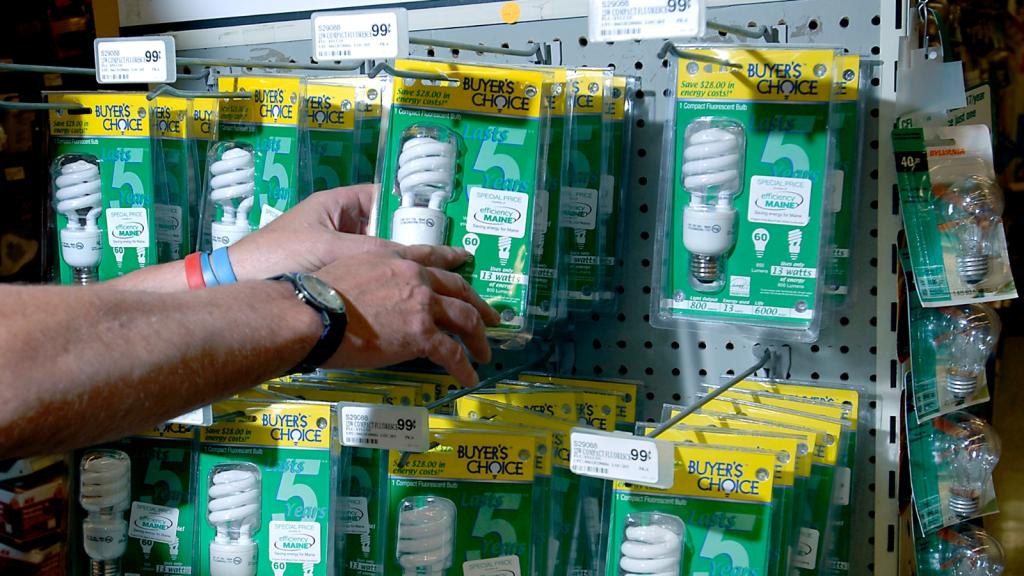
The Arizona House is about to vote on a totally insane bill that could prevent that state from doing even the tiniest smidgen of environmentally friendly work. Solar and wind projects that used a dollar of government funding would be made illegal. State universities could have to stop all sustainability-related research. State buildings wouldn't even be able to use CFL lightbulbs.

The bill, SB 1507, has already passed the Senate, and the House has given it initial approval. The final House vote is coming on Monday. The bill would make it "illegal for any government entity in the state to abide by any tenet or principle" of the Rio Declaration, the Arizona Capitol Times reports. These are incredibly broad principles like, for instance, "enact effective environmental legislation."

Think about that one for a second. If this bill passes, it will be illegal in Arizona to pass effective environmental legislation. (Ineffective? Hey, go for it!)

this story continues
 

Comments

Modern-day DeLorean? Airplane runs on trash

Photo by Paul O'Donnell.

One man's trash is another man's airplane fuel.

Adventure-seeker Andy Pag aims to obtain funding and become the first person to fly a trash-fueled plane from one end of the U.K. to the other. His aircraft, a microlight plane, will be powered by gasoline made from un-recyclable plastics like bags and packaging.

The fuel is made by a British company using Fischer–Tropsch synthesis--a process of making synthetic fuel that dates back to before WWII. Pag says the fuel is worth highlighting because it produces limited CO2, and reduces the volume of plastics that otherwise would go to landfills.

this story continues
 

Comments

Power Shift turns Bank of America ATMs into truth-dispensing machines

What are you supporting when you leave your money in the oily hands of Bank of America? Among other evils, investment in coal-fired power plants and the bankrolling of climate change. Normally you don't think about that. You just get your money and scoot away. But Power Shift activists forced ATM users to think twice about what they were really doing by mindlessly punching buttons when they turned a bunch of Bank of America ATMs into "automated truth machines."

this story continues

Follow Grist

RSS feed
Advertisement
Advertisement
advertising