Skip to content Skip to site navigation

Climate & Energy

Comments

Occupy Sandy: Once welcomed, now questioned

An incomplete section of the destroyed Rockaway Beach boardwalk in late May.
squirrel83
An incomplete section of the destroyed Rockaway Beach boardwalk in late May.

Nearly eight months after Hurricane Sandy destroyed almost three miles of historic boardwalk along the Rockaway peninsula at the southern end of New York City, the shore hums with sounds of $140 million worth of beach recovery: circular saws, jack hammers, and tractors. While construction continues around the clock, officials have reopened beaches in hopes that a vibrant tourist season will kick-start the local economy; on this hot June day, a handful of surfers catching breaks on the city's only legal surfing beaches is one tangible sign that the work to remediate 1.5 million cubic yards of displaced sand [PDF] has been successful.

Now, beyond immediate relief work and the big-ticket city spending -- the A train is finally rumbling along elevated tracks to Far Rockaway -- community organizers can rattle off a shopping list of daily small-dollar needs that don't usually get their own entries in big-name relief agency spreadsheets: community garden maintenance, recovering lost furniture, or hiring a killer grant writer to ensure the money keeps flowing.

As relief turns to long-term recovery, community activists have their eyes on a group they know has some money left unspent: Occupy Sandy.

After Superstorm Sandy hit New York last October, Occupy Wall Street -- the global protest movement against economic inequality that started in downtown Manhattan -- set up a new group, Occupy Sandy, and mobilized thousands of supporters to raise more than $1.37 million, according to finances made public on its website.

But here's the thing: Roughly $1 out of every $5 raised -- nearly $300,000 -- remains unallocated. According to interviews with Occupy Sandy organizers, it's been more than three months since the group began the process of giving this remaining money over to community groups in the hardest-hit areas. Only a fraction of the $150,000 that has already been allocated to the Rockaways has so far been disbursed.

Meanwhile, as Americans face an ever-increasing number of natural disasters and extreme weather events, more recent victims like those in tornado-devastated Moore, Okla., are looking to Occupy Sandy as a model to replicate, warranting a closer look at how the group balances its books.

Comments

Biking basics for folks who’ve always wanted to ride, but didn’t dare [VIDEO]

The BasicsYou say you want to get around the city without spending the $9,000 to maintain and operate a car each year, and maybe get some exercise while you're at it? You don’t have that kind of cash. And you know, the planet. But those bike lanes can look pretty intimidating, with all the mustachioed hipsters on their superbad fixies, the spandex-clad adrenaline junkies, and the cars whizzing by.

What you need is a video that squeezes basic bicycle skills into four action-packed minutes, replete with a sick sound track and just maybe a crazy stunt or two.

Well, you’re in luck:

Comments

Indianapolis to get nation’s largest EV sharing program

Bolloré Group's Indianapolis EV-sharing program would mimic its French ones.
mariordo59
Bolloré Group's Indianapolis EV-sharing program would mimic its French ones.

Are you a fan of electric vehicles who doesn't want to own your own car?

Get thee to Indy.

A company that operates electric-vehicle sharing programs in France is looking to expand, and its executives have settled on Indianapolis for their first American foray. Bolloré Group's $35 million plan will provide 500 shared cars and 1,200 charging stations at 200 locations throughout Indiana's capital. The company's inaugural American initiative will be modeled on its French Autolib program, with sharing slated to begin next year.

Comments

Obama says a climate plan is coming next month, so climate hawks delay lawsuit

Obama
Shutterstock/ mistydawnphoto
"Sit tight, guys. Climate rules are coming soon, I swear."

A cavalry of lawyers representing states and environmental groups was expected to launch a legal assault against the Obama administration this week over its slow movement on climate rules, but the charge was postponed at the 11th hour.

What changed? Obama has been telling donors that he plans to unveil new climate change regulations as part of a larger climate strategy next month.

Those regulations are expected to include a long-awaited rule on carbon dioxide emissions from new power plants, which would likely make it impossible to build new coal plants unless they have carbon-capture technology. The administration has been delaying release of that rule, reportedly working to improve it so it can better withstand the inevitable industry lawsuits. That delay in turn prompted states and environmental groups to threaten their own lawsuit.

From Reuters:

Comments

Facing climate reality, cities look for ways to adapt

The East Village.
jesseandgreg
The East Village after Hurricane Sandy.

Since the 2007 release of PlaNYC, New York City Mayor Michael Bloomberg’s sustainability vision, the city has chipped away steadily at its carbon emissions, cutting them to 13 percent below 2005 levels already. But nothing New York does on its own to mitigate climate change can save the city from future Sandys and the sea-level rise that will make such storms even more destructive going forward.

Last week, Bloomberg unveiled an ambitious, expensive plan to fortify the city against the kind of extreme weather that's fast becoming the “new normal.” The event amplified a message more local leaders are embracing: Climate change is already upon us, and adapting to it will be essential to prevent massive losses of money and life.

On Monday, the mayors of Washington, D.C., Denver, Nashville, and 42 other U.S. cities signed a “Resilient Communities for America" agreement, pledging “to prepare and protect their communities from the increasing disasters and disruptions fueled by climate change.” According to a press release about the campaign, $1 spent on disaster preparation saves $4 in potential losses (consider that Hurricane Sandy caused almost $20 billion of damage). The local leaders also called for more support and cooperation from the federal government. Although, as Bloomberg himself has pointed out, cities are in an ideal practical position to start taking immediate climate action, the scale of work to be done to strengthen urban infrastructure requires all the federal dollars they can get.

The Associated Press explains how, in green circles, a focus on adaptation was once frowned upon, out of concern that it would distract from efforts to address the source of the problem or downplay its importance. That concern still exists, but as a climate-changed world becomes reality much faster than a global climate solution, government officials figure they’d better prepare for the worst.

Read more: Cities, Climate & Energy

Comments

Wind farms seek federal OK to kill eagles, pissing off both left and right

eagle near wind turbine
Watch out!

It’s not easy to unite the right-wing Heartland Institute and bird-loving environmentalists.

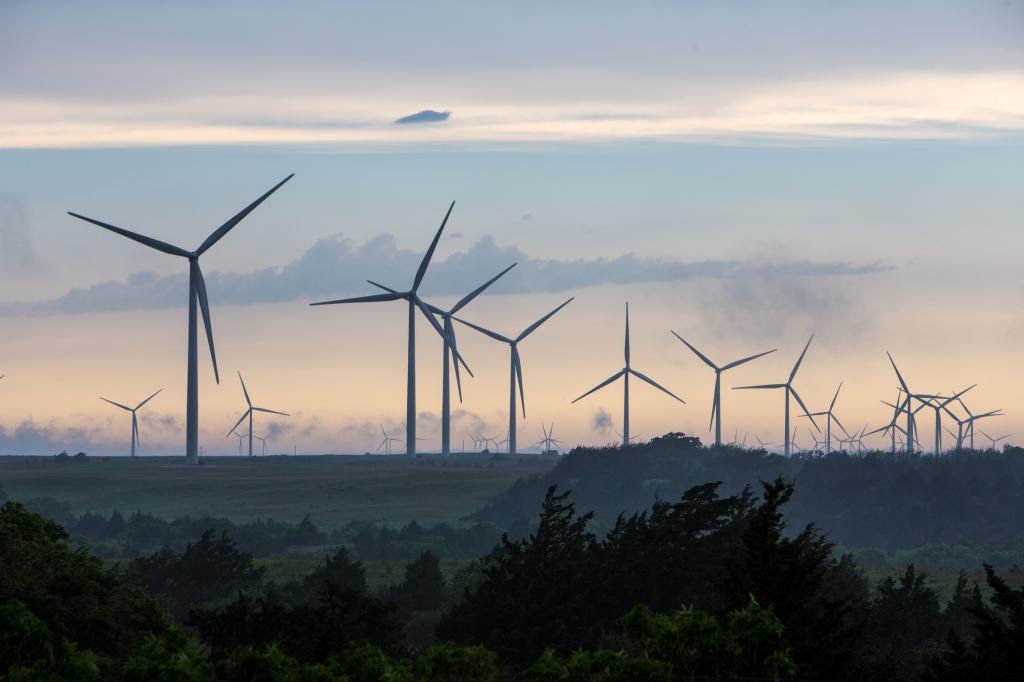
But that’s what some wind energy developers appear to be doing by proposing to the federal government that they be allowed to kill bald eagles and other protected species with their turbines.

Across the country, 14 wind projects have applied to the U.S. Fish and Wildlife Service for permits that would let them "take" -- aka harm or kill -- a certain number of eagles each year. That includes four wind farms in California, one in Minnesota, and one in Oklahoma.

The Oklahoma project could be the first in the nation to actually receive such a permit. The company behind it, Wind Capital Group, wants permission to kill up to three bald eagles every year for 40 years on its proposed 94-turbine wind farm. A Native American tribe in the area is protesting, as are some conservation groups. The Daily Ardmoreite reports:

Comments

Awesome animated GIF of a supercell thunderstorm makes severe weather look mesmerizing

This will make you really glad you're looking at your computer and not out the window:

supercell_16803

Read more: Climate & Energy

Comments

Al Gore, raising the heat on Obama, calls Keystone an “atrocity”

al-gore
Center for American Progress Action Fund
The Goracle does not like Keystone.

From one Nobel Peace Prize winner to another, this whole Keystone XL thing is an "atrocity."

Al Gore has been calling on Barack Obama to step up the fight against climate change and Keystone, most recently during an interview with The Guardian:

The former vice-president said in an interview on Friday that he hoped Obama would follow the example of British Columbia, which last week rejected a similar pipeline project, and shut down the Keystone XL.

"I certainly hope that he will veto that now that the Canadians have publicly concluded that it is not safe to take a pipeline across British Columbia to ports on the Pacific," he told the Guardian. "I really can't imagine that our country would say: 'Oh well. Take it right over parts of the Ogallala aquifer', our largest and most important source of ground water in the US. It's really a losing proposition." ...

Comments

Oyster hatcheries put heartburn meds in the water to fight ocean acidification

Slurp.
Slurp.

Taylor Shellfish Company, an oyster hatchery in Quilcene, Wash., is trying to combat ocean acidification by putting a sodium carbonate solution in the water. First having drugs in the water was bad, and now it’s ... good? Jeez, Nature, MAKE UP YOUR MIND.

Oyster hatcheries are dropping the equivalent of Tums and other antacids into water to make it easier for naked mollusk larvae to build their shells... [O]cean waters [are] turning ever more corrosive as they absorb a fraction of the carbon dioxide humans are pumping into the atmosphere. The acidification, in turn, makes it harder for oyster larvae to build their shells.

Read more: Climate & Energy, Food

Comments

Climate change 101 with Ernest Moniz: “Count.”

basic math
Shutterstock
Basic math.

For the sake of any slow ones in the room, how can we be so sure that humans are responsible for climate change?

Basic mathematics is a good place to start.

That's how Energy Secretary Ernest Moniz explained his confidence that humanity is to blame for climate distruption. He was addressing Rep. David McKinley (R-W.Va.), a climate skeptic, during a House Energy and Commerce subcommittee hearing on Thursday. McKinley was questioning whether humans or natural cycles were "primarily" responsible for climate change.

"The rise in CO2 emissions in the last half century is clearly tracked to our global increased energy use," Moniz replied. "I know how to count. I can count how many CO2 molecules have gone out from fossil fuel combustion and I know how many additional CO2 molecules are in the atmosphere."

Don't miss a green thing!
Get Grist in your inbox every morning.