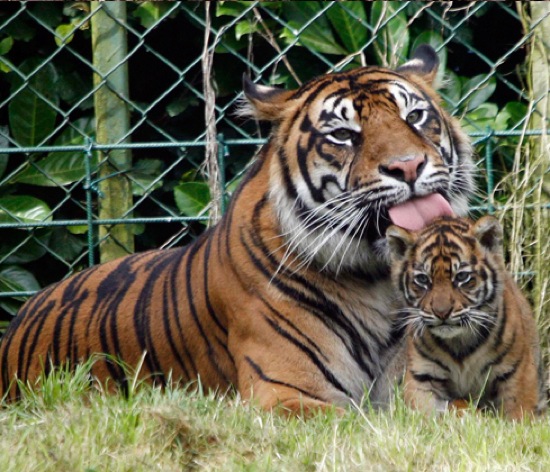
We love wildlife! We love watching it in high definition on our TV screens while David Attenborough says something droll to ease the trauma of looking at a whale penis. (SO FLEXIBLE.) But apparently we don’t love it so much that we’re dedicated to keeping it around.
A new report [PDF] from the World Wildlife Fund (WWF) found that in the past few decades, wildlife populations have declined by about 30 percent:
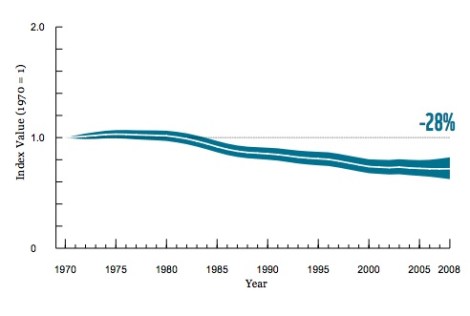
But this average figure masks the fact that in certain ecosystems, it’s way worse. The tropics have lost 50 percent of their animals, and in tropical freshwater ecosystems, the figure’s closer to 70 percent.
WWF measures these changes by looking at the population size of vertebrates in different regions and tallying average changes over time. They explain it as being comparable to a stock market index — the species that they pick are like companies tracked by the Dow Jones Industrial Average. And if biodiversity is a market, it’s crashing.
A message from
Your support keeps our climate news free.
Grist is the only award-winning newsroom focused on exploring equitable solutions to climate change. It’s vital reporting made entirely possible by loyal readers like you.
At Grist, we don’t believe in paywalls. Instead, we rely on our readers to pitch in what they can so that we can continue bringing you our solution-based climate news. Donate today to keep our site free.