For everyone who was hoping the Obama administration's proposed new rules for natural gas drilling on public lands would make a difference, the just-released new draft amounts to a big "frack you."
Federal rules governing fracking on public lands are being updated, ostensibly to help manage the boom that's polluting America's groundwater and shaking free vast volumes of cheap natural gas. Environmentalists were disappointed a year ago when the Department of Interior released a fracker-friendly draft of the new rules. But they submitted reams of comments and had hoped that the proposed regulations would be tightened up in this draft.
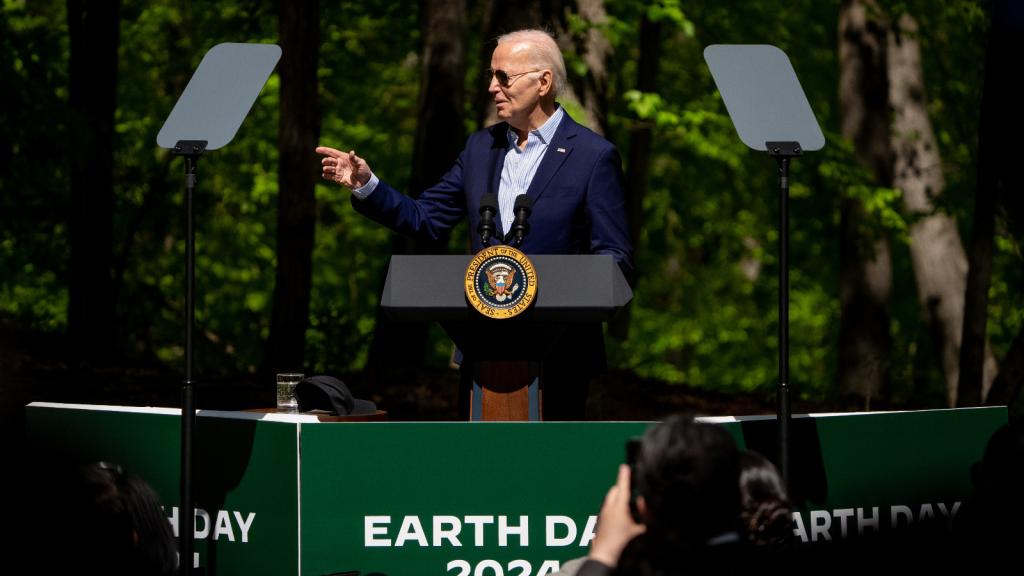
Sen. Lindsey Graham (R-S.C.) stopped throwing a temper tantrum and took a deep breath for long enough Thursday to allow the Senate to unanimously confirm Ernest Moniz as secretary of energy.
The Massachusetts Institute of Technology physics professor and fossil fuel-industry fan was confirmed with a 97-0 vote. The vote had been delayed more than three weeks by Graham in protest over $200 million of planned nuclear energy budget cuts in his state.
Moniz served as an energy undersecretary in the Clinton administration and he is replacing Steven Chu, also a physicist, who is stepping down from the department's top job.
While most of Washington, D.C., is consumed with the faux scandals du jour, in a few corners of Congress, actual work is getting done. A day 329 days late and a dollar $20 billion short, perhaps, the farm bill, an every-five-years legislative train[wreck], lumbers slowly forward.
Both the House and the Senate agriculture committees have just passed their own versions of the massive piece of legislation that controls U.S. agricultural policy as well as the federal nutrition program formerly known as food stamps (now called SNAP). A full House and Senate vote is the next step. Congress tried and failed to pass a farm bill last year. The question now is whether Congress can do it this time.
Actually, the question really is whether Congress will ever pass a farm bill again. For the first time, those close to the legislative process are starting to have their doubts. And that may be a really bad thing.
Bah, humbug, you say! The farm bill is larded with bipartisan subsidies for the largest-scale farmers who grow commodities like corn, soy, and cotton. It’s also the bill that authorizes the federal crop insurance program, which has grown like gangbusters over the last decade. Last year (thanks to the drought) farmers received over $17 billion in insurance payouts -- almost all of which benefited large-scale commodity agriculture. A chicken pox on all their coops!
That not an unreasonable reaction. But also at stake in the farm bill are billions of dollars for conservation programs that help farmers mitigate the environmental effects of their work, and pay them to set aside marginal farmland as wildlife habitat. It also contains millions in federal funds that support organic farmers, help younger and “new” farmers get their start, and prop up local food efforts, organic research, and farmers markets.
In September 2007, a rising star of Alaskan politics dared to take on one of the toughest, most challenging issues for any leader: climate change. That summer, seasonal ice cover had fallen to its lowest extent since satellite records began in 1979, leaving much of the Arctic as open water. A few months earlier, Al Gore had won an Oscar for An Inconvenient Truth.
It seemed as if the timing was right to deal with climate change, and so the politician approached a group of high-level officials to develop a climate change strategy for Alaska.
Their leader was Sarah Palin, the then-governor of Alaska before her entry into national Republican party politics. "Climate change is not just an environmental issue. It is also a social, cultural, and economic issue important to all Alaskans," said Palin, announcing two new working groups on climate change.
"As a result of this warming, coastal erosion, thawing permafrost, retreating sea ice, record forest fires, and other changes are affecting, and will continue to affect, the lifestyles and livelihoods of Alaskans," she went on.
The focus on climate was temporary. Once Palin joined the Republican ticket as the running mate to John McCain in the 2008 presidential elections, Palin dismissed climate science as "snake oil." The causes of climate change -- and its remedies -- remain disputed territory in Alaska.
It appears ag-gag bills can't even hoof it in farm country: Tennessee joins a roster of states who are strangling ag-gag bills before they can reach the killing floor.
Tennessee lawmakers had narrowly approved a bill that would have required anybody who filmed animal abuses to turn over the footage to law enforcement within 48 hours or risk being fined. That would have prevented undercover animal activists from documenting systematic animal abuse by agricultural workers, helping factory farms get away with cruelty.
But Gov. Bill Haslam (R) called BS on the bill and said that he plans to veto it. From a statement issued by the governor on Monday:
First, the Attorney General says the law is constitutionally suspect. Second, it appears to repeal parts of Tennessee’s Shield Law [which protects journalism] without saying so. If that is the case, it should say so. Third, there are concerns from some district attorneys that the act actually makes it more difficult to prosecute animal cruelty cases, which would be an unintended consequence.
What do you do when the federal government won't let you plant a sustainable, super-useful crop on your own land? Well, if you're Ryan Loflin, you do it anyway.
The 40-year-old farmer from Springfield, Colo., has been scheming for months. "I believe this is really going to revitalize and strengthen farm communities," Loflin told the Denver Post in April. Now he's leased 60 acres of his father's alfalfa farm to plant and tend the hundreds of hemp starters he's already been grooming.
Hemp, for those who aren't familiar, is a variety of cannabis that -- sorry kids! -- won't get you high. Strong, nutritious, and super sustainable to grow, hemp is used for everything from rope to cereal. It requires few herbicides, and has even been called carbon negative by some boosters. And while it's illegal to grow it in the U.S., it's not illegal to sell. Right now imported hemp -- the only legal kind -- accounts for about $500 million in annual U.S. sales, according to the Hemp Industries Association.
"Hello, world? Hey, John Kerry here. Just wanted to apologize for all those decades of America's non-leadership on that crazy global warming thing. But now we've decided to start making some nice sounds about the issue. Hope you can hear me making them over the din of the Arctic ice breaking up behind me."
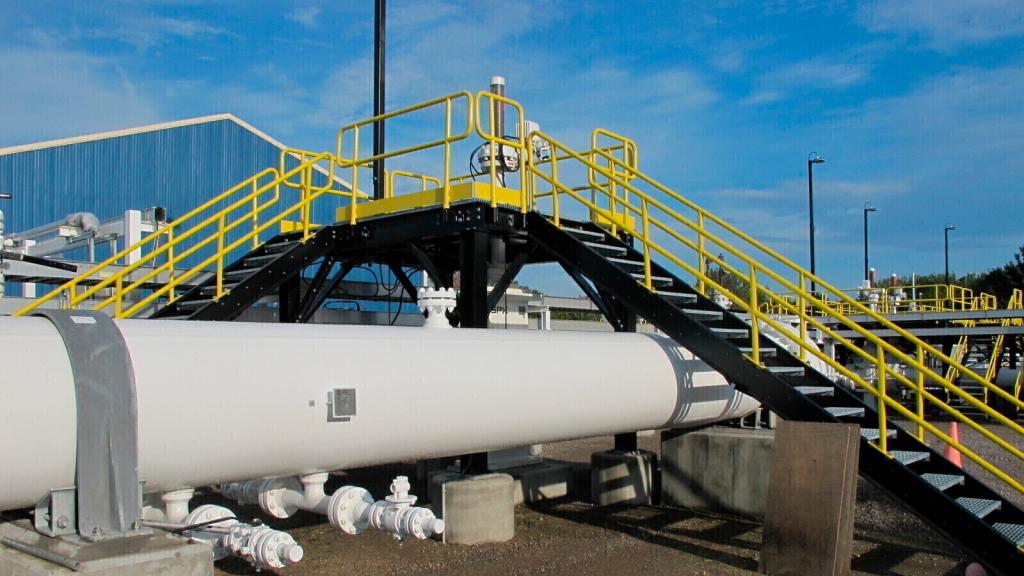
OK, so the Secretary of State didn't actually say that. But the leader of the department that will rule on the climate-changing Keystone XL pipeline proposal has begun apologizing for the nation's lack of progress in tackling climate change.
“I regret that my own country -- and President Obama knows this and is committed to changing it -- needs to do more and we are committed to doing more,” Kerry said Tuesday, referring to climate change, in a press conference with Sweden's prime minister.
Kerry is in Sweden to attend meetings in the country's northernmost city of Kiruna of the Arctic Council, an intergovernmental forum for governments that have a stake in the fate of the fast-melting region. As the Arctic melts, new shipping routes and oil fields are opening up, and the international community is going to need to coordinate and temper the scramble to cash in on these new opportunities.
"We come here to Kiruna with a great understanding of the challenge to the Arctic as the ice melts, as the ecosystem is challenged, the fisheries, and the possibilities of increased commercial traffic as a result of the lack of ice raises a whole set of other issues that we need to face up to," Kerry said during the press conference. "So it’s not just an environmental issue and it’s not just an economic issue. It is a security issue, a fundamental security issue that affects life as we know it on the planet itself, and it demands urgent attention from all of us."
The Obama administration on Friday released the National Strategy for the Arctic Region [PDF]. The strategy pledges to "enable our vessels and aircraft to operate ... through, under, and over the airspace and waters of the Arctic, support lawful commerce ... and intelligently evolve our Arctic infrastructure and capabilities." All done sustainably and in harmony with other nations, of course. But the 11-page document is not so much a detailed strategy document as it is a vague wish-list for the future of the region, and no federal funds have been committed to turn the strategy's goals into reality.
That said, the attention that the U.S. is affording the Arctic Council is politically significant. From the BBC:
Mr. Kerry, who held one of the first US Senate hearings on climate change as early as 1988 with then-Senator Al Gore, is hoping to put the spotlight on the issue of climate change again, after efforts to make concrete progress faltered during President Barack Obama's first term.
Despite a multitude of international crises, Mr. Kerry insisted on attending the meeting of the once-obscure council.
Climate change has countries as far away as India also paying attention to the Arctic -- and seeking observer status in the council.
What the Arctic most needs, of course, is a fast and deep cut in the world's greenhouse gas emissions. Actions leading to that -- like, say, rejecting the Keystone XL Pipeline -- will carry more weight than press-conference words.
One of the great features of California's cap-and-trade program is that all the money that the state raises by selling carbon allowances to polluters is supposed to be plowed back into initiatives that help cool the climate. So not only does the program limit and reduce carbon emissions; it also forces polluters to pay to undo some of the harm that they cause.
But with such a big stack of green sitting there, staring the notoriously cash-poor state of California in its desperate face, how can a government resist?
And so it's starting to look as though $500 million raised by selling carbon allowances could be funneled away from green programs and loaned instead to the state's general fund. The L.A. Times reports:
Gov. Jerry Brown sparked controversy Tuesday when he proposed to shift $500 million out of the state’s Greenhouse Gas Reduction Fund and loan it to the state general fund as part of the effort to balance the budget. ...
Tea Partiers who watched gleefully as the sequester slashed government spending are welcome to douse forest fires near their homes with teapots full of Earl Grey this summer. Across-the-board budget cuts mean federal wildfire fighting efforts could be overwhelmed.
The U.S. Forest Service will hire 500 fewer firefighters this year and 50 fewer fire engines will be available than previously expected, Agriculture Secretary Tom Vilsack announced this week. The Interior Department also plans to pare back its firefighting crews.
Susie Cagle
The seasonal firefighting jobs are going up in smoke because of Congress's inability to come up with a national spending plan. President Obama called for spending cuts and tax increases to help balance the budget, but Republicans would have none of the latter.
Shutterstock / George LamsonA California condor -- is it expendable?
Is it OK to slaughter hundreds of thousands of birds every year in the name of clean energy? Is it OK for a luxury home developer to kill California condors in its quest for profits?
The Obama administration seems to think so. It is flexing little to none of the legal muscle needed to encourage wind energy companies to avoid killing eagles, hawks, and other birds that can be fatally drawn into their spinning turbines.
An Associated Press investigation revealed that the administration has never fined or prosecuted a wind farm for killing a bird. Many of the avian victims of the fast-growing wind sector are protected under the Migratory Bird Treaty Act, and some are protected by the Bald and Golden Eagle Protection Act.