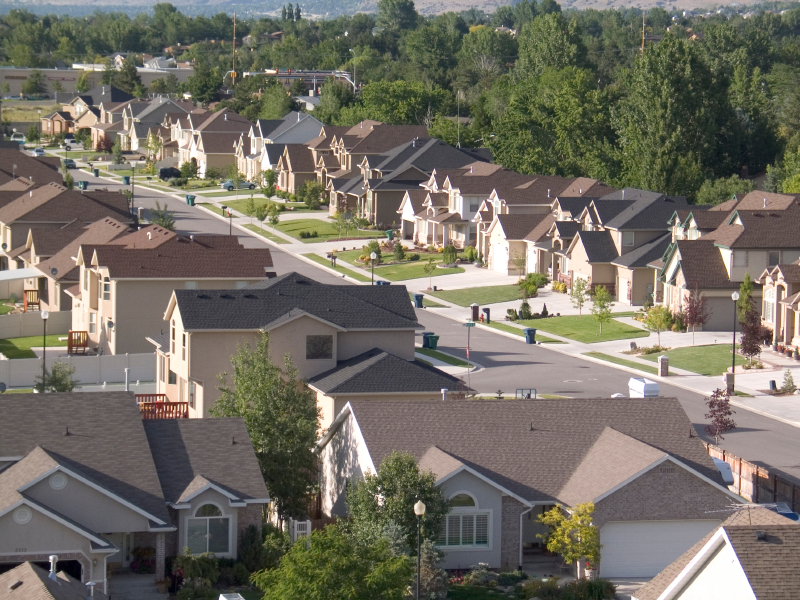
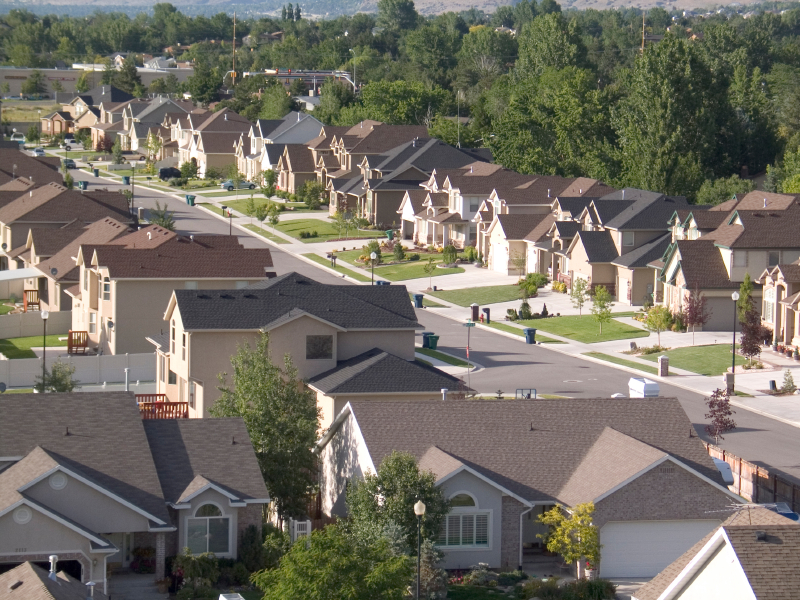
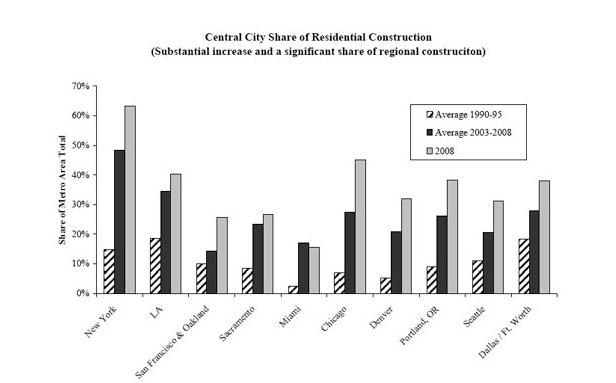
 Today in conventional wisdom–busting news, we learn that grimy old cities are attracting more residential construction than the bright suburban frontier. Urban redevelopment is outpacing fringe sprawl by a solid margin, according to a new EPA study of the nation’s 50 largest metro areas. It’s a “fundamental shift in the real estate market,” says the report [PDF].
What’s more, the study finds, it’s not that regional policies are herding people back into urban neighborhoods. Personal preference seems to be driving much of the change. Turns out more people are deciding they want to live near walkable neighborhoods, transit lines, other urban stuff.
Overall construction has tanked in the last few years, of course. But the proportion of home building that happens in central cities has doubled since 2000 in 26 of those metro areas. Here we can see it:
 Environmental Protection Agency
The Obama administration’s new Partnership for Sustainable Communities—a joint venture of the EPA, Transportation Department, the Department of Housing and Urban Development—should be glad to see the housing market’s already trending this direction.
More from Greenwire: ‘Smart Growth’ Taking Hold in U.S. Cities, Study Says
A message from
Your support keeps our climate news free.
Grist is the only award-winning newsroom focused on exploring equitable solutions to climate change. It’s vital reporting made entirely possible by loyal readers like you.
At Grist, we don’t believe in paywalls. Instead, we rely on our readers to pitch in what they can so that we can continue bringing you our solution-based climate news. Donate today to keep our site free.