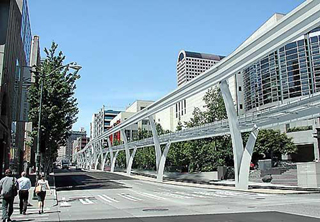
Futuristic as they look, monorails never really got a toehold outside of airports, Disney World, and I Can Haz Cheezburger. Now elevated single-track trains might be getting a second chance to become the transportation of the future.
Part of the problem with monorails is that they’re slow, and part of it is that they’re really really visible. Monorail track is probably less ugly, in an absolute sense, than elevated train track, but for NIMBYists it’s six of one, half a dozen of the other. But for transportation-starved areas like Osaka, Japan (which has the longest monorail line in the world) and Sao Paolo, Brazil, they may be the cheapest and least disruptive option for mass transit.
Building a prefab concrete track above the city takes a hell of a lot less money — and creates a hell of a lot less headache — than tunneling out subway lines. Depending on location, building a monorail can cost half as much as building a subway. And unlike buses, the monorail is immune to traffic — so even if it’s slow, at least it’s always the same slow.
A message from
Your support keeps our climate news free.
Grist is the only award-winning newsroom focused on exploring equitable solutions to climate change. It’s vital reporting made entirely possible by loyal readers like you.
At Grist, we don’t believe in paywalls. Instead, we rely on our readers to pitch in what they can so that we can continue bringing you our solution-based climate news. Donate today to keep our site free.