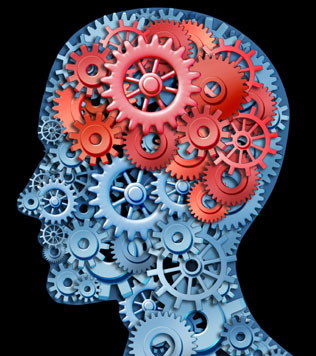
Maybe the reason we can’t do anything about the existential crisis of climate change — or, indeed, any of the other existential crises we’re facing at present — is that 80 percent of humanity has what’s known as an “optimism bias.” (If you’re reading this, I’m willing to bet you’re among the “lucky” 20 percent whose perceptions of reality are demonstrably realistic.)
People who have an optimism bias do irrational things in the laboratory, like systematically ignoring concrete information about risk, reports Scientific American Mind. For example, when test subjects were informed that they had underestimated their odds of contracting a disease or being victimized by a criminal, they failed to revise their estimates, “clinging to their earlier belief that they would probably avoid the bad luck.”
In contrast, when test subjects were told they were too pessimistic about a particular outcome, they enthusiastically over-revised their estimate of the odds in their favor.
Other studies have found that lacking the optimism bias is a reliable indicator of depression and anxiety. Humans, in other words, are built to see the world as a sunnier place than it is — it’s a survival instinct. This sort of reasoning made sense throughout most of our evolution, when the majority of causes of misfortune — bad weather, communicable diseases, freak accidents — were beyond our control. But now, for the first time in history, we can predict, at least in broad strokes, the decades-hence consequences of our actions. Too bad our brains aren’t constructed to do anything about that information.
A message from
Your support keeps our climate news free.
Grist is the only award-winning newsroom focused on exploring equitable solutions to climate change. It’s vital reporting made entirely possible by loyal readers like you.
At Grist, we don’t believe in paywalls. Instead, we rely on our readers to pitch in what they can so that we can continue bringing you our solution-based climate news. Donate today to keep our site free.