This story was originally published by ProPublica. Sign up for their newsletter, The Big Story, to receive stories like this one in your inbox.
For the past several years, Georgia Power has gone to great lengths to skirt the federal rule requiring coal-fired power plants to safely dispose of massive amounts of toxic waste they produced.
But previously unreported documents obtained by ProPublica show that the company’s efforts were more extensive than publicly known. Thousands of pages of internal government correspondence and corporate filings show how Georgia Power made an elaborate argument as to why it should be allowed to store waste produced before 2020 in a way that wouldn’t fully protect surrounding communities’ water supplies from contamination — and that would save the company potentially billions of dollars in cleanup costs.
In a series of closed-door meetings with state environmental regulators, the powerful utility even went so far as to challenge the definition of the word “infiltration” in relation to how groundwater can seep into disposal sites holding underground coal ash, according to documents obtained through multiple open records requests.
Earlier this month, Georgia Power was on its way to getting final approval from the state to leave 48 million tons of coal ash buried in unlined ponds — despite evidence that contaminants were leaking out. Georgia is one of three states that regulate how power companies safely dispose of decades worth of coal ash, rather than leaving such oversight to the U.S. Environmental Protection Agency itself.
But last week, the EPA made clear that arguments like the ones Georgia Power has been making violate the intent of the coal ash rule, setting up a potential showdown among the federal agency, state regulators, and the deep-pocketed power company. In a statement last week, the EPA said that waste disposal sites “cannot be closed with coal ash in contact with groundwater,” in order to ensure that “communities near these facilities have access to safe water for drinking and recreation.”
The EPA’s action follows a joint investigation by Georgia Health News and ProPublica that found Georgia Power has known for decades that the way it disposed of coal ash could be dangerous to neighboring communities.
“The coal ash rule was clear from the beginning, but industry had tried to inject uncertainty into plain language,” said Lisa Evans, an attorney who specializes in hazardous waste law for the environmental advocacy nonprofit Earthjustice. “The EPA has made it crystal clear what the plain language of the coal ash rule means.”
Georgia’s environmental regulators said it’s too soon to determine exactly how the EPA’s actions will play out in the state. In a letter dated Jan. 11, the EPA asked the Georgia Environmental Protection Division to review whether coal ash permits it has issued to Georgia Power are “consistent” with the federal agency’s guidance. Georgia Environmental Protection Division spokesperson Kevin Chambers, who declined to answer questions about Georgia Power’s lobbying or make any regulators available for an interview, said that the state agency is “awaiting further clarification” from the EPA on how the announcement will impact future permits for Georgia Power’s ash ponds. The agencies are scheduled to meet about the issue later this month.
John Kraft, a spokesperson for Georgia Power, said in a statement that the company intends to “comply with environmental regulations.” The utility has repeatedly denied that its coal ash ponds have contaminated residents’ drinking water or caused health problems in communities near its plants. He declined to answer ProPublica’s questions about the company’s lobbying efforts.
“We are evaluating EPA’s position,” Kraft said. “We will continue to work with them, as well as Georgia EPD, to safely close our ash ponds.”

For those living near coal ash ponds, the EPA’s decision couldn’t come soon enough. Gloria Hammond, a longtime resident of the tiny rural town of Juliette, Georgia, relied for decades on a private drinking well to pump water to her home from an underground aquifer. But two years ago, a sample of her well water taken by an environmental advocacy group revealed unsafe levels of contaminants often found in coal ash. Now, Hammond drives 10 minutes to a Baptist church to access a supply of clean drinking water.
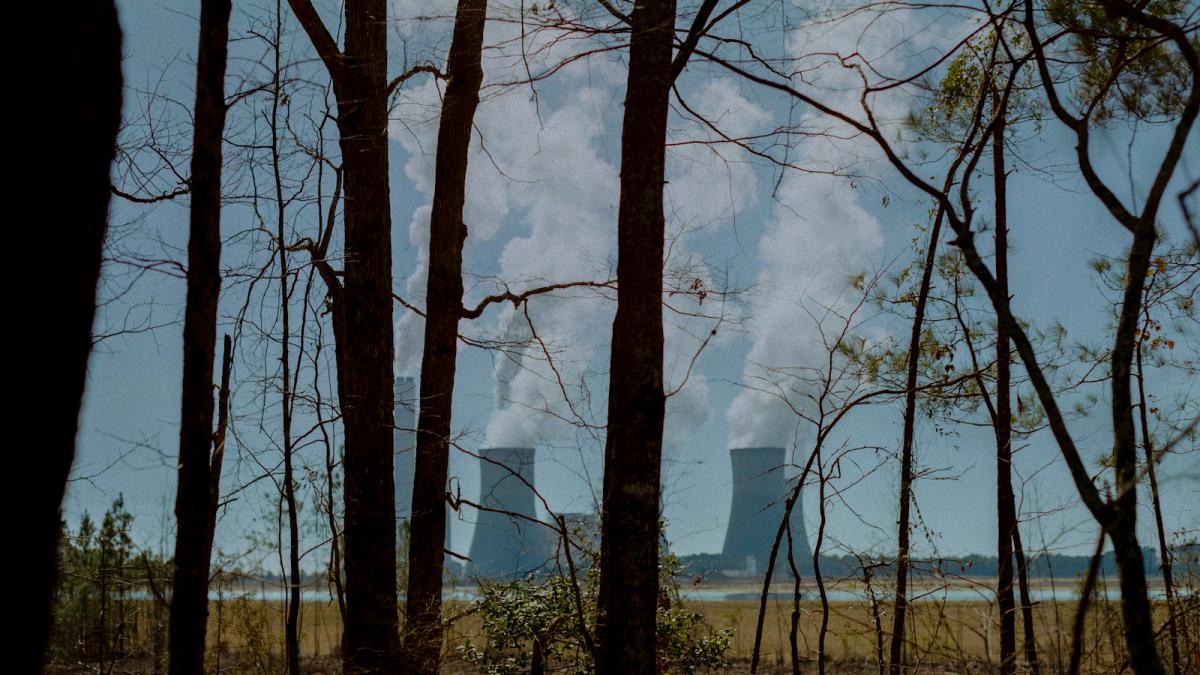
She and others suspect those contaminants leaked into Juliette’s groundwater from a nearby disposal site at Plant Scherer, the largest coal-fired plant in the Western Hemisphere. The disposal site, less than a mile from Hammond’s house, holds nearly 16 million tons worth of coal ash in an unlined pond.
“They need to get the coal ash out of the drinking water,” Hammond said.
In early 2019, Chuck Mueller, GEPD’s top waste official, was grappling with a pivotal question that would impact thousands of Georgians for decades to come: How much of Georgia Power’s coal ash could legally remain buried in a pond without a protective liner? The utility had proposed disposing of 48 million tons — roughly half of its existing coal ash — that way. Mueller asked employees of his branch to figure out the answer.
After draining water from the ponds where ash is stored, Georgia Power is required to move the resulting dry ash into a landfill with a liner designed to prevent groundwater contamination — unless it can meet a set of requirements to leave the waste buried in an unlined disposal site.
The federal rule, which was enacted in 2015, allows utilities to bury the waste in an unlined ash pond only if they “control, minimize, or eliminate” water from coming into contact with the buried waste “to the maximum extent feasible.” Stan Meiburg, a former EPA acting deputy administrator, says the rule is important because allowing water to mix with coal ash can lead to toxic heavy metals found in the waste migrating beyond the disposal site.
State regulators tasked with answering Mueller’s question read through dense Georgia Power filings and concluded that ash ponds at Plant Scherer, along with those at four other sites — Plants Hammond, McDonough, Wansley, and Yates — contained waste that is submerged in groundwater, which some experts and regulators believe violates the federal coal ash rule.
Those findings were sent to one of Mueller’s top aides, William Cook, who oversees the state’s solid waste management program. Cook regularly met in private with Georgia Power representatives to get progress reports on the closure of the company’s ash ponds. That spring, Georgia Power representatives argued that state regulators could narrowly interpret the definition of a single word — “infiltration” — in the federal coal ash rule. The company believed this interpretation would allow millions of tons of waste to be left submerged in groundwater.
Georgia Power hoped to store coal ash in a way that only prevented water — such as rain falling from the sky — from seeping through a cover over the dry ash. They hoped regulators would disregard the presence of any groundwater that would soak the dry ash and potentially carry its heavy metals toward drinking wells.
Georgia Power representatives “believe that EPA would have written it in” if they wanted specific kinds of infiltration removed, Cook scribbled in his legal pad.
When Georgia Power representatives referenced an EPA document key to their understanding of “infiltration,” Cook asked his colleagues to review the document — which is 1,237 pages. They struggled to reconcile the case Georgia Power was making with the text of the regulation itself. John Sayer, head of environmental monitoring for the solid waste program, emailed his wife, an issues manager at the Centers for Disease Control and Prevention, for advice on the meaning of the word “infiltration,” which he wrote had caused “contention” in this context.
Eventually, Sayer emailed a colleague that he’d found a federal report that noted “groundwater would qualify as infiltration.” But Georgia Power kept pressing GEPD officials to narrow its definition of infiltration to only include rainwater falling from the sky. After months of research by Sayer and other state employees, Mueller was left to make the decision.
Later that summer, Chris Bowers, a senior attorney with the Southern Environmental Law Center, sent Mueller a report that highlighted the flaws in Georgia Power’s plans. As part of the SELC report, a veteran hydrogeologist named Mark Hutson analyzed the plans for ash ponds at the five plants where waste was below the water table. Huston concluded those plans “will not control, minimize, or eliminate” water from coming into contact with the dry ash.
At a subsequent meeting with GEPD, Bowers shared another state’s approach to the meaning of infiltration. Duke Energy Indiana had asked state regulators to let the company bury coal ash in an unlined pond in the southwest part of that state. When state regulators realized Duke Energy Indiana had not described how it would comply with federal guidelines to prevent groundwater from wetting the dry waste, regulators told the company they would only approve the plan if the company could stop infiltration “from any direction.” (Duke Energy Indiana later responded that removing the ash could cause a “very high safety risk” at the site. State regulators ultimately allowed some coal ash to remain buried there, so long as the company took steps to minimize groundwater from soaking the waste.)
Environmental regulators in other states such as North Carolina have forced utilities to scrap plans that didn’t comply with this portion of the coal ash rule. But Georgia Power, as well another power company in Ohio, pushed ahead with their controversial plans. The financial stakes were high. At Plant Scherer alone, installing a liner could cost $1 billion, according to one state official.
“Georgia Power wanted to rewrite the rule to say there’s a limitation it doesn’t have,” said Frank Holleman, a senior attorney with SELC. “It’s a preposterous proposal.”
One of Bowers’ clients, an environmental group called the Altamaha Riverkeeper, was grappling with this very issue in Juliette. The group soon discovered that water in the wells of Hammond and dozens of other Juliette residents contained concerning levels of contaminants found in coal ash. The group was worried that groundwater might be moving from the coal ash pond toward residents’ wells.
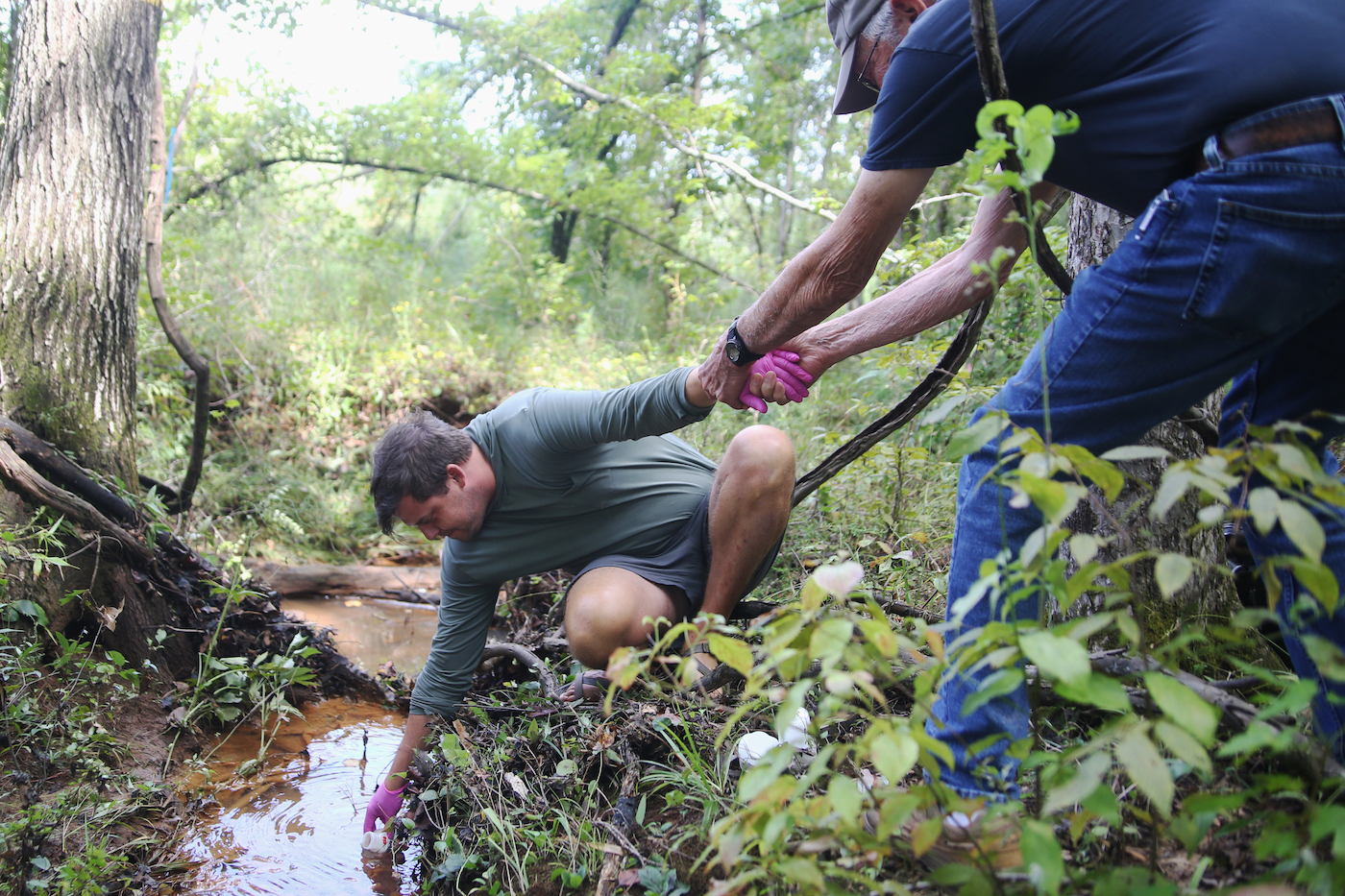
After the test results were publicized, Fletcher Sams, head of the Altamaha Riverkeeper, attended a closed-door meeting in February 2020 with several Juliette residents, local officials, state lawmakers, and Georgia Power lobbyists. (ProPublica and Georgia Health News described parts of the meeting in a story last year.) The environmental advocate told attendees that his samples had revealed concerning levels of boron, calcium, and sulfate — all indicators of coal ash. There was also evidence of a contaminant researchers had linked to cancer, hexavalent chromium, which had previously been discovered in some California drinking wells by environmental advocate Erin Brockovich. Georgia Power has acknowledged the presence of boron, calcium, and sulfate but said that the hexavalent chromium is “naturally occurring.”
Sams, along with the Juliette residents, hoped Georgia Power would excavate Plant Scherer’s coal ash and put it in a lined landfill. But Aaron Mitchell, one of the utility’s top environmental lobbyists, insisted the company’s plan complied with environmental standards. However, after being peppered with questions by Sams, Mitchell acknowledged that the coal ash would still be submerged in groundwater if its plan to bury the waste was approved by state regulators.
Hearing that, Sams turned to the lone state regulator in the room, Chuck Mueller. He asked Mueller if Georgia Power’s plans to let water come into contact with dry ash met the state’s environmental standards.
“It’s allowed by the rules,” Mueller replied.
Shortly after Joe Biden was elected president, he chose a new EPA administrator with deep knowledge about the perils of coal ash. Michael Regan was the head of the environmental agency in North Carolina, a state that had seen one of the nation’s worst coal ash disasters in 2014, when a ruptured pipe sent 39,000 tons of coal ash pouring into the Dan River. Six years later, Regan convinced the state’s largest utility to excavate coal ash from its unlined ponds, which was done in order to protect residents from possible groundwater contamination.
Following Regan’s confirmation, environmental advocates urged federal officials to address the language in the coal ash rule that Georgia Power had tried to exploit. GEPD pushed ahead with the narrower definition of infiltration.
In June 2021, three months after Georgia Health News and ProPublica’s investigation into Georgia Power’s coal ash handling practices in Juliette, EPA officials met with GEPD to discuss the issue of infiltration. According to records obtained by ProPublica, state regulators said that Georgia Power could leave waste below the water table because the company had placed monitoring wells around the edge of those ash ponds to detect if heavy metals were migrating toward nearby residents’ homes.
The following month, GEPD began the process of issuing permits for unlined ponds where ash would remain submerged in groundwater. State regulators issued a draft permit for the first of these sites, one of Plant Hammond’s ash ponds, a step that then allowed the public to comment on the closure plan. Chambers, the GEPD spokesperson, said that the agency used “the commonly accepted meaning of ‘infiltration’” — and determined that Georgia Power’s proposal was “allowable under the rule.”
Last week, the EPA rejected the premise that groundwater legally could remain in contact with the dry ash — a statement that will likely impact Georgia Power’s closure plans at Scherer and four other plant sites. In its letter to GEPD, the EPA urged the state regulators to review the reasons why the federal agency intended to deny a plan to bury waste at southeast Ohio’s General James M. Gavin Power Plant, one of the largest power stations in the country. In that proposed decision, the EPA noted that the plant operators had failed to demonstrate how their closure plan would prevent infiltration.
The EPA’s filing notes that “infiltration” explicitly means “any liquid passing into or through” the coal ash pond “from any direction, including the top, sides, and bottom of the unit.” To Sams, the EPA’s announcement means that Georgia Power and GEPD cannot move forward with an “incorrect interpretation” of the country’s coal ash regulation. The EPA “restated in bold-crayon-block letters what we’ve been saying: You can’t store this waste full of toxic metals in groundwater,” Sams said.
Meiburg, the former EPA deputy administrator, said utilities could still challenge the agency’s clarification on the concept of infiltration because it did not go through the full rule-making process. But if GEPD ultimately approves permits that are less protective than what the federal regulation requires, the EPA has the power to strip Georgia of its ability to issue permits, according to Evans, the Earthjustice attorney.
Gloria Hammond, for her part, sees the EPA’s announcement as an important first step toward someday restoring the quality of Juliette’s groundwater. In the coming months, GEPD is expected to make a decision about Georgia Power’s permit at Plant Scherer. After feeling long ignored by environmental regulators, she hopes that GEPD requires Georgia Power to remove the ash from Juliette’s aquifer for good.
“I’m praying Georgia will take that into consideration,” Hammond said. “I hope they follow the EPA.”