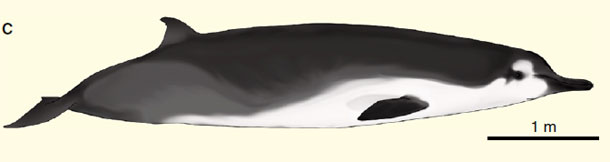
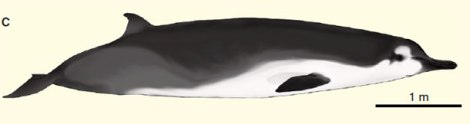
The first time anyone came across evidence of the spade-toothed beaked whale’s existence was in 1872, when a partial skull was found in New Zealand. Over the years, two other skull pieces turned up, in New Zealand and Chile, one in 1950, one in 1986. But no one had ever seen the whale in the flesh, let alone alive.
Then, in 2010, two whales showed up on New Zealand’s Opape Beach. They died soon after they were found. And it wasn’t until much later that anyone realized that these whales were spade-toothed beaked whales — the first of their kind ever to be seen by human eyes.
The biologists who discovered this depressing fact explain why we know so little about beaked whales like these spade-toothed ones.
[The whales] are thought to be exceptionally deep divers, foraging for squid and small fish and spending little time at the surface. Due to similarities in their external morphology, species are very difficult to distinguish and, given their elusive habits, are rarely seen at sea.
And they’re hard to identify, too. Different beaked whales are colored differently, but their skin fades quickly once they’ve died. The only other obvious difference between spade-toothed beaked whales and others is the teeth of the grown-up males. So if you’re too bummed out by this story, just tell yourself that scientists are seeing spade-toothed whales all the time, and just confusing them for other whales. It could happen, right?
A message from
Your support keeps our climate news free.
Grist is the only award-winning newsroom focused on exploring equitable solutions to climate change. It’s vital reporting made entirely possible by loyal readers like you.
At Grist, we don’t believe in paywalls. Instead, we rely on our readers to pitch in what they can so that we can continue bringing you our solution-based climate news. Donate today to keep our site free.