Avast, me hearties! Seems the landlubbers ’round here have it in for me column. But I refuse to Arrr. I. P.
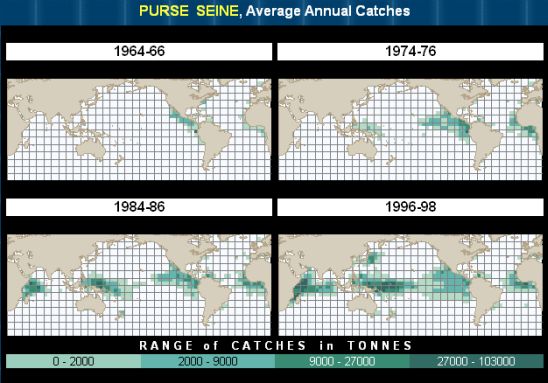
I’ve returned, peg-leg and all, with a quick post about the atlas resources on the fisheries pages of the U.N.’s Food and Agriculture Organization. These maps illustrate tuna and billfish catches over time and by fishing method.
As you can see below, the use of purse seine nets — a method that results in large amounts of bycatch (including dolphins, sharks, sea turtles, and juvenile fish) — has increased dramatically, even in the last few decades. That’s just one example of the depths of these charts.
As usual, I recommend the Monterey Bay Aquarium’s Seafood Watch resources for more information about the various fishing methods used by commercial fisheries and for the ever-handy pocket guide for all your restaurant and fish-counter needs.
A message from
Your support keeps our climate news free.
Grist is the only award-winning newsroom focused on exploring equitable solutions to climate change. It’s vital reporting made entirely possible by loyal readers like you.
At Grist, we don’t believe in paywalls. Instead, we rely on our readers to pitch in what they can so that we can continue bringing you our solution-based climate news. Donate today to keep our site free.