
NASADebris from one of Curiosity’s tungsten blocks.
Being a robot rolling around on the surface of Mars is a little like being the first one to walk on freshly fallen snow. In an untouched landscape, everything you do looks kind of cataclysmic. In that sense, we’re sympathetic to NASA’s Curiosity rover — it may have had the best intentions to take only pictures and leave only awesome Morse code footprints. But its mere arrival on Mars scattered the planet with debris. There’s humanity for you. Even our science pollutes.
Above is a scar from one of the 165-pound Tungsten blocks that Curiosity jettisoned just before it hit the Martian atmosphere. And here’s some junk from where its sky crane hit the ground:
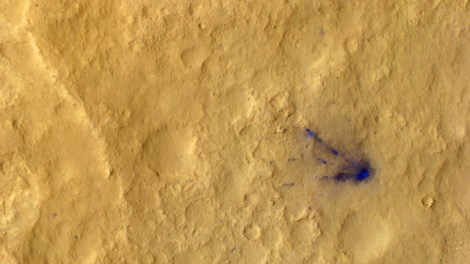
NASAImpact debris from Curiosity’s sky crane.
And here’s a map of all the bullshit Curiosity’s been strewing around:
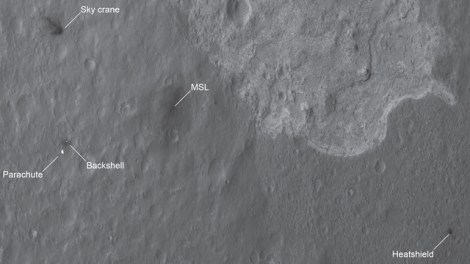
NASAAll kinds of fuckery.
We’re big Curiosity fans, and we have a lot of admiration for the folks at NASA’s Jet Propulsion Laboratory (not even just the hot ones). But maybe next time they build a machine to explore a pristine world, they could give it a little trashbag and a mechanical clean-up arm.