Latest Articles
-
Impressions from the Seafood Summit in San Diego
My plunge into the complex world of sea stewardship has been invigorating but also overwhelming. I find myself among literally hundreds of people who know various aspects of the topic intimately. My mind buzzes with ideas to develop and questions to ask -- more than can be done in the span of a few days.
I'll be developing Grist's coverage of the impacts and potential of seafood production over the next weeks. In the meantime, here are some impressions:
-
Obama taps green Seattle-area leader as deputy secretary of HUD
Ron Sims. The Obama administration has tapped Ron Sims, the county executive of King County, Wash., to serve as deputy secretary at the U.S. Department of Housing and Urban Development. Sims has earned a national reputation for his environmental work in the county, which includes Seattle (home of the Grist mothership). Sims, whom the Obama […]
-
Nuclear meltdown in Finland
This is the radioactivity-free kind of meltdown, as Helsingin Sanomat reported:
The Finnish nuclear power company Teollisuuden Voima (TVO) is seeking damages of EUR 2,400 million from the consortium of Areva and Siemens for delays in the construction of Finland's fifth nuclear reactor in Olkiluoto.
Makes one look forward to what might happen if a truly litigous country had a major nuclear Renaissance fueled by, say, taxpayer money (see The nuclear bomb in the Senate stimulus plan).
The Finnish newspaper has a great photo of "The Olkiluoto III nuclear reactor construction site in December 2008."

Here are more details on the meltdown between the partners in this debacle:
-
Restructuring the U.S. transport system
Aside from the overriding need to stabilize atmospheric carbon dioxide levels to stabilize climate, there are several other compelling reasons for countries everywhere to restructure their transport systems, including the need to prepare for falling oil production, to alleviate traffic congestion, and to reduce air pollution. The U.S. car-centered transportation model, with three cars for every four people, that much of the world aspires to will not likely be viable over the long term even for the United States, much less for everywhere else.
The shape of future transportation systems centers around the changing role of the automobile. This in turn is being influenced by the transition from a predominantly rural global society to a largely urban one. By 2020 close to 55 percent of us will be living in cities, where the role of cars is diminishing. In Europe, where this process is well along, car sales in almost every country have peaked and are falling.
With world oil output close to peaking, there will not be enough economically recoverable oil to support a world fleet expansion along U.S. lines or, indeed, to sustain the U.S. fleet. Oil shocks are now a major security risk. The United States, where 88 percent of the 133 million working people travels to work by car, is dangerously vulnerable.
Beyond the desire to stabilize climate, drivers almost everywhere are facing gridlock and worsening congestion that are raising both frustration and the cost of doing business. In the United States, the average commuting time for workers has increased steadily since the early 1980s. The automobile promised mobility, but after a point its growing numbers in an increasingly urbanized world offer only the opposite: immobility.
While the future of transportation in cities lies with a mix of light rail, buses, bicycles, cars, and walking, the future of intercity travel over distances of 500 miles or less belongs to high-speed trains. Japan, with its high-speed bullet trains, has pioneered this mode of travel. Operating at speeds up to 190 miles per hour, Japan's bullet trains carry almost a million passengers a day. On some of the heavily used intercity high-speed rail lines, trains depart every three minutes.
Beginning in 1964 with the 322-mile line from Tokyo to Osaka, Japan's high-speed rail network now stretches for 1,360 miles, linking nearly all its major cities. One of the most heavily traveled links is the original line between Tokyo and Osaka, where the bullet trains carry 117,000 passengers a day. The transit time of two hours and 30 minutes between the two cities compares with a driving time of eight hours. High-speed trains save time as well as energy.
Although Japan's bullet trains have carried billions of passengers over 40 years at high speeds, there has not been a single casualty. Late arrivals average 6 seconds. If we were selecting seven wonders of the modern world, Japan's high-speed rail system surely would be among them.
-
Dirty water and clean transit in the Mountain State
Sometimes the news is random, and sometimes it aligns itself into tidy patterns and themes. Today is West Virginia day!
To wit:
• A group of residents in Boone County, W. Va., has sued coal giant Massey Energy and several subsidiaries for polluting their groundwater. The suit asks for replacement water supplies and compensation for personal and property damages. Meanwhile, a sympathetic group has raised enough funds to begin delivering clean water to the residents. (See their lurid toilet tank photos.)
-
Does anyone think battery swap-out is useful or even needed for electric vehicles?
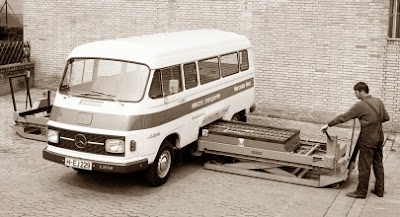
The Washington Post ran a very good article on electric vehicles Saturday. I recommend it to anyone who wants an overview of the important issue of where American companies will source their batteries. The article notes:
GM plans on a battery pack big enough to last 40 miles, at which point a small gasoline engine will take over. Some rival companies are considering a smaller battery pack that might go only 20 miles, still enough to serve the needs of many local commuters without adding as much weight and cost.
That was my point in the post, "Has GM overdesigned the Volt: Is a 40-mile all electric range too much?"
Like pretty much all recent articles on EVs, this one highlighted the uber-marketers of the EV world:
Shai Agassi, the chief executive of Better Place, which is building electric car infrastructure in Israel, Hawaii, Northern California and several other places, thinks electric cars should have batteries only. He proposes setting up swap stations where motorists on long trips could exchange a depleted battery for one fully charged.
"We just don't think that the answer to how to extend the battery is to put a power plant in our trunks," he said.You can see a computer simulation of the Project Better Place battery exchange station here.
I recently asked my EV wonk friends what they thought of the battery swap-out model, and I will reprint some of their answers below. I have never actually found anyone who thought it was a viable idea. Where, for instance, would it be done? Sunday's New York Times asserts:
-
Michigan governor to outline comprehensive energy plan
Michigan Gov. Jennifer Granholm (D) will use her annual State of the State address tonight to announce that her administration will consider “all feasible and prudent alternatives before approving new coal-fired power plants” in the state. Granholm will also call on the state to reduce by 45 percent its reliance on electric plants powered by […]
-
Will Barbara Boxer back a big increase in highway funding in the stimulus bill?
Transit advocates are irate at reports from Capitol Hill that Sen. Barbara Boxer (D-Calif.), chair of the Environment and Public Works Committee, might support an increase to highway funding in the economic-stimulus bill. The news comes on the same day that Boxer unveiled a rough outline for climate legislation that she intends to push through […]
-
The World Bank offers to loan developing countries the funds to pay for climate change adaptation
What would you say if someone drove a truck into your house, then jumped out and offered you a loan to help rebuild?
After you stopped screaming at them, which might take a while, you'd demand that they pay for damages that they caused, of course. Over time though, if no one forced the truck driver to pay for the damages, you might be tempted to take the loan. Sure, its a rip-off, but at least you get the money you need to rebuild.
This is exactly what's happening today with much needed funding for adaptation to climate change impacts in the developing world. The World Bank, backed by Northern taxpayers, is "offering" to loan the developing world the money needed to adapt to climate change impacts.
Ethically, this is abhorrent.
-
Two projects uniting veterans and green jobs
Two grassroots projects recently came to my attention aimed at finding green employment for vets, too many of whom return to no jobs, many bills, and much debt, creating an awful lot of strain on them and their families. Veterans Green Jobs was conceived to create "solutions for three of the most urgent issues of our time: the rebuilding of a sustainable green economy, reversing deteriorating environmental conditions and climate change threats, and the need to reintegrate over a million military service veterans from the Iraq and Afghanistan wars who are in need of healing and meaningful new careers."
And in San Diego, Archi's Acres Veterans Sustainable Agriculture Training program's three-month, 40 hour-per-week course offers returning vets both hands-on training and textbook learning in organic production, from seeds to sales. Started by ex-Marine Colin Archipley, a three-tour veteran of the Iraq war, it's making a big difference for its participants. Check this great story from a local TV network on its impact both in terms of new skills learned and the therapeutic effect of growing food:
Hats off to you, Colin.
