Latest Articles
-
Progressive realism
Check out Robert Wilson's essay on "progressive realism" in the Sunday NYT.
The basic idea is that ...
... the national interest can be served by constraints on America's behavior when they constrain other nations as well. This logic covers the spectrum of international governance, from global warming (we'll cut carbon dioxide emissions if you will) to war (we'll refrain from it if you will).
And it is based on a fundamental change in international relations:
[T]echnology has been making the world's nations more interdependent — or, as game theorists put it, more non-zero-sum. That is, America's fortunes are growing more closely correlated with the fortunes of people far away; fewer games have simple win-lose outcomes, and more have either win-win or lose-lose outcomes.
This principle lies at the heart of progressive realism. A correlation of fortunes — being in the same boat with other nations in matters of economics, environment, security — is what makes international governance serve national interest. It is also what makes enlightened self-interest de facto humanitarian.Word.
-
Jacobs does Gore
 You have to wade through a painful Flash site to see them, and go to San Francisco to buy them, but hipster designer Marc Jacobs has a line of Al Gore t-shirts, tote bags, and trucker hats (click on "special items"). Apparently they're all the rage this season.
Are there Gristmill readers in San Francisco? Email me.
(via The Notion)
-
Brown gets down
 Discovery News tells us that a biofuel crisis is looming. Lester Brown is concerned that two billion (about a third of the way across this window) desperately poor people may soon find their food in our gas tanks:
 -
Global warming: The spectator sport
A chunk of rock twice the size of the Empire State Building will soon fall from the Eiger, one of Switzerland's most famous peaks. Tourists from around Switzerland are flocking to the site, near the diminishing Grindenwald Glacier. Geologists blame global warming, because as the ice melts, water gets into existing cracks and opens them wider.
-
Hertsgaard on the environmental movement
 Mark Hertsgaard's cover story in The Nation this week is a long look at the current fortunes and reconfigurations of the environmental movement: "Green Goes Grassroots."
To eco-geeks like yours truly, it's a familiar story: the movement realizes it's gotten top-heavy and D.C.-centric, too reliant on wonky techno-language, too depressing, and too insular. So it is:
- pouring more money and resources into supporting local organizing;
- trying to speak in simple language;
- focusing on solutions and can-do spirit; and
- creating alliances with a variety of other interest groups.
I've heard all this before. My worry has been that it is, in a phrase made famous by hapless terrorist wannabes loudly arrested by the Bushies in the run-up to the mid-terms, "more aspirational than operational." Hertsgaard's piece does marshal some solid examples, but not quite enough to make a convincing case there's a real, broad, sustained change taking place. I hope there is.
The piece touches briefly on a subject that's extremely important and too-little-discussed inside the movement (for obvious reasons): the role of foundations. This captures the problem well:
-
![]()
![]()
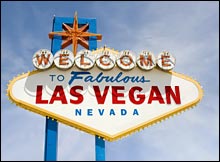
Sustainable and vegetarian cuisine is on show in Sin City
Quick: Where can you eat vegan doughnuts for breakfast, vegetarian Chinese for lunch, and 13-bean soup for an afternoon snack? Hint: In the same city, you can feast on sustainable fish for dinner, prepared by one of the country’s celebrity chefs, and Kind Apple Cobbler for dessert — the “raw” version. New York? Maybe. Seattle? […]
-
In Goodell Company, unabridged
 In 2001, around the time Dick Cheney's secret-recipe energy plan made its debut, Jeff Goodell was in West Virginia reporting on coal's rising fortunes. He'd been sent to do a story for The New York Times Magazine, but the material spilled over into a new book, Big Coal: The Dirty Secret Behind America's Energy Future. It's a journey from the mines of Wyoming, across the plains by rail car, into the belly of the turbines in the east, and all the way to China, following the tale of the black rock that still, after all these years, afflicts and enables us.
As the fossil fuel that isn't running out, coal's been rebranded as a means to achieve energy independence. With the assistance of a friendly administration in the U.S. and burgeoning demand from China and India, the industry looks set to build hundreds of coal-fired power plants in coming years. And despite the gasification/sequestration PR, the momentum is strongly behind old-school plants that laden the air with particulates and the atmosphere with greenhouse gases.
Goodell recently visited Grist HQ for a leisurely chat about coal's past, present, and unsettling future. Here follows a full transcript; for the abridged version, go here.
-
Journalistic courage
It isn't about environmental reporters specifically, but the thoughts of veteran journalist Walter Pincus about courage should be required reading for them too:
Journalistic courage should include the refusal to publish in a newspaper or carry on a TV or radio news show any statements made by the President or any other government official that are designed solely as a public relations tool, offering no new or valuable information to the public.
Word.
(via TPM)
-
Help wanted: Web geek and word worm
Hey Gristmillers. In case you haven't heard, Grist's editorial and production teams are each seeking an intern to work in our lovely new office.
So, if you possess some HTML and Photoshop skills, or are a fact-checker extraordinaire, and want to work with some of the coolest people in Seattle, check these internships out.
-
![]()
![]()
An interview with Jeff Goodell, author of Big Coal
In 2001, around the time Dick Cheney’s secret-recipe energy plan made its debut, Jeff Goodell went to West Virginia to report on coal’s rising fortunes. He’d been sent to do a story for The New York Times Magazine, but the material spilled over into a book, Big Coal: The Dirty Secret Behind America’s Energy Future, […]