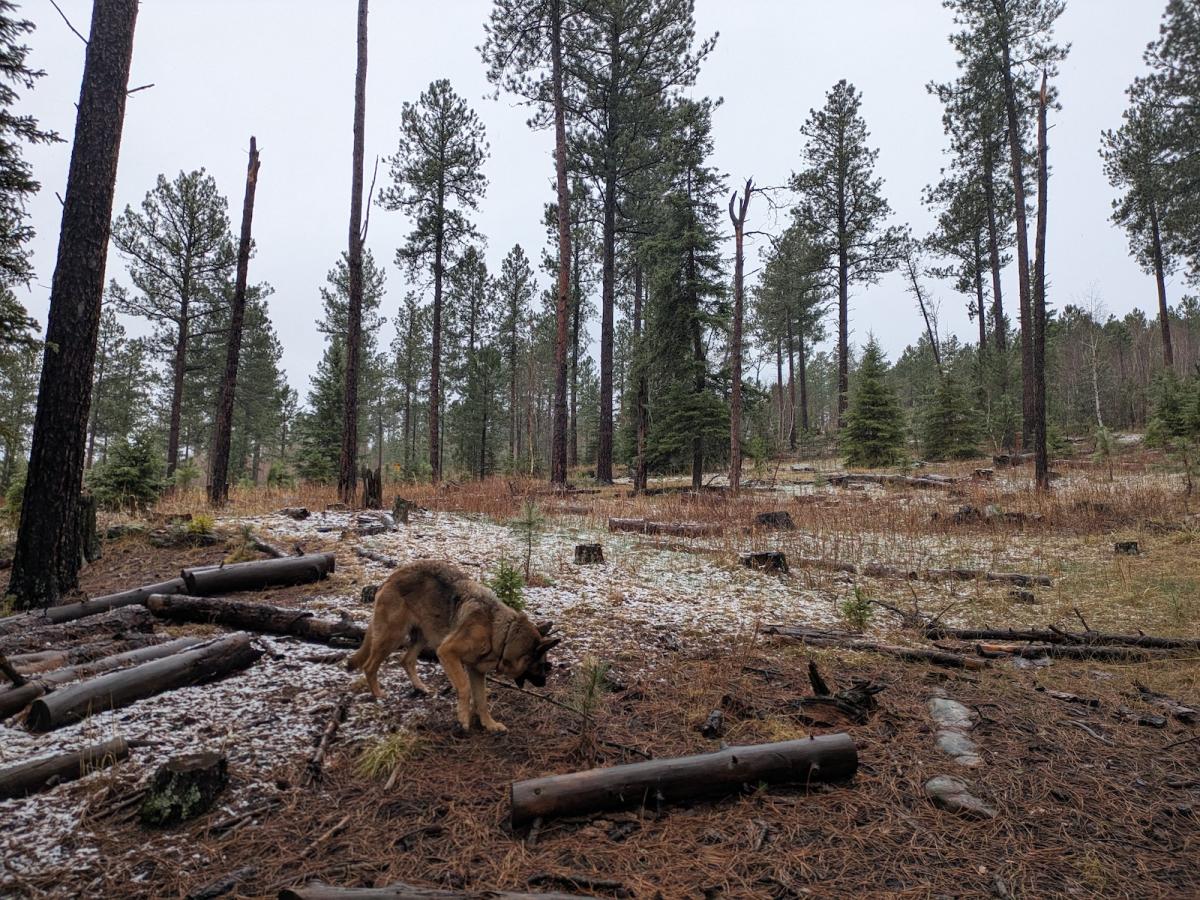
Driving into the Black Hills National Forest, as the road gains elevation, raindrops hitting the windshield slow down and start swirling in the air. It’s snowing in late April, a welcome sight in an area that’s been in a climate change-linked drought.
Today, most visitors to the Black Hills will still see lots of big trees that are intentionally left standing by the highways — the “yellowbarks,” trunks lightened by age, standing guard like the buttresses of a cathedral. The Forest Service calls this “scenic integrity”; detractors call it a “green screen.”
That’s because if you pull off on side roads, you’ll soon come to wide plots of land that have been commercially logged. Whitetail deer are running freely; the landscape looks more like a field with a few trees than a forest with a few stumps. Invasive grassland species are creeping in, like bromegrass grass, leafy spurge, spotted knapweed, tansy, and Canada thistle.
Ponde... Read more