
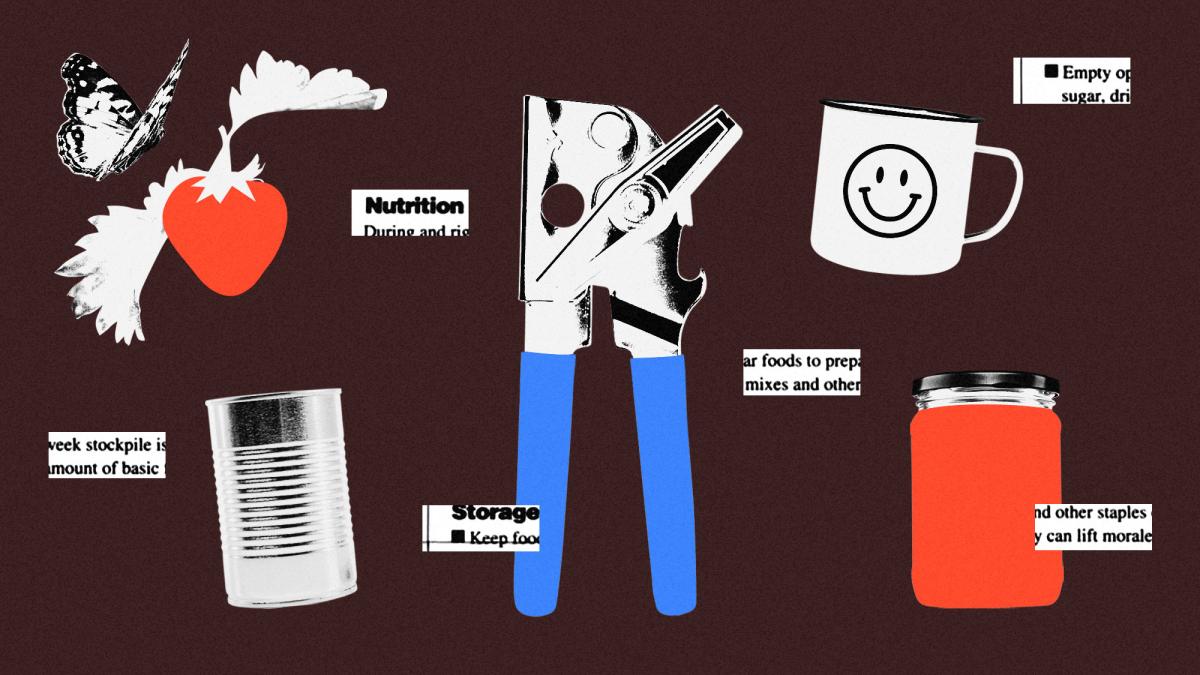
Some people spend more time than others imagining what they’ll do when the world ends. Survivalist movements have long urged adherents to focus on the details: How much food and water will you need if the power goes out? Where are the flashlights and extra batteries? What’s in your go bag? For years, this kind of forward thinking was the object of ridicule. Preppers were cast as paranoid, fixated on worst-case scenarios that would never come to pass — remember Y2K?
But six years ago, the COVID-19 pandemic made prepping go mainstream. Suddenly, everyone at the grocery store was calculating how much toilet paper, Lysol, and canned tomatoes they’d need to get through lockdown. These moments revealed the difficulty of knowing yourself in a crisis: I remember a trip to Trader Joe’s with my roommate, the day New York City’s own lockdown was announced, where I instinctively grabbed a bag of frozen meatballs despite never really liking meatballs in the first place. I bought them, and they sat untouched in my freezer for the next 12 months — when I finally made them it was out of guil... Read more