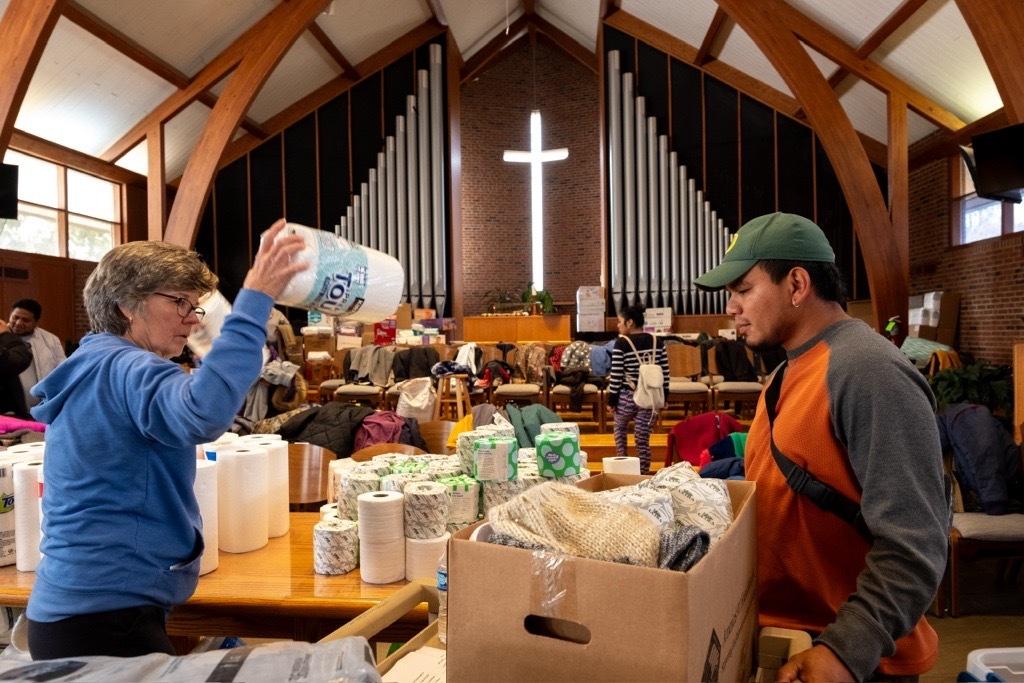
In the days and weeks after Hurricane Helene, people throughout western North Carolina and beyond found themselves thrust into new situations, forced to learn new skills to help themselves and their neighbors.
Community centers, churches, and fire departments flung open their doors, and for months, they buzzed with activity. Stacks of clothes covered altars. Tools and equipment filled spare rooms. Residents learned how to strip homes to the studs and built networks for bringing food, water, and other essential supplies to one another.
Now, two years later, people want to turn these ad hoc efforts — which supported communities through the loss of power, water, internet, and other crucial services — into more permanent fixtures of local disaster response, called “resilience hubs.”
“It’s become one of those terms, I think, that sometimes feels a little nebulous to people,” McKenzie Jones, a director with Urban Sust... Read more


