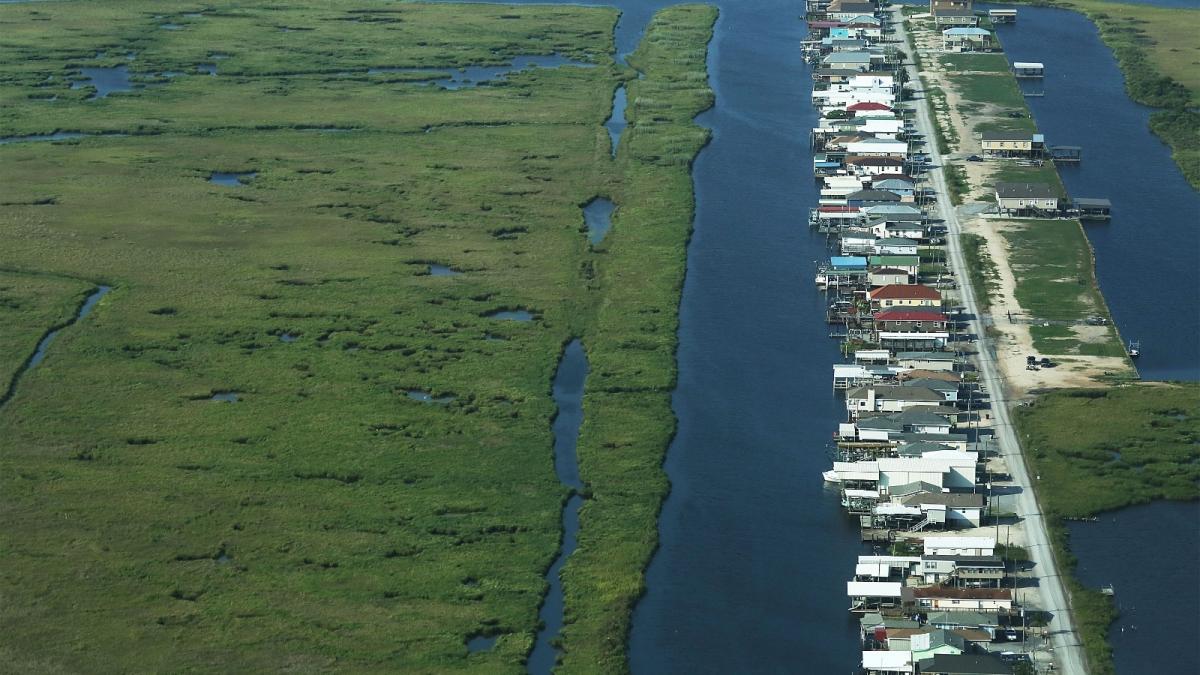
For millions of years, the Mississippi River flowed unchecked, carrying roughly 400 million metric tons of sediment down to Louisiana, where it spilled into the Gulf of Mexico to create new land. But in the early 20th century, a series of dams and river-training structures were built to prevent flooding — leaving the river tamed and unable to produce new terrain at anywhere near its previous pace. Oil and gas development, which ripped broad canals through vulnerable marshland, made matters worse.
As sea levels rose, existing land subsided, and more brutal storms battered the coast. Louisiana lost more than 2,000 square miles of wetlands over the last century, a slow dismantling exacerbated by climate change. About a football field or more land disappears every 100 minutes, and the state’s southern parishes are expected to lose another 3,000 square miles by 2050 unless drastic action is taken. After years of devastating hurricanes, many of Louisiana’s southernmost towns have been emptying out.
Complex r... Read more