Articles by Tom Philpott
Tom Philpott was previously Grist's food writer. He now writes for Mother Jones.
All Articles
-
Would new food-safety legislation 'criminalize organic farming'? No
The Internets are abuzz with accounts of a House bill, allegedly sponsored by Monsanto and pushed through Congress by its lackeys, that would "criminalize organic farming" and even backyard gardening. The object of frenzy: H.R. 875, known as the Food Safety Modernization Act of 2009, a bill that attempts to bolster the broken food-safety system.
Here's how one critic, whose work circulates widely on sustainable-food listservs, characterizes it:
The bill is monstrous on level after level -- the power it would give to Monsanto, the criminalization of seed banking, the prison terms and confiscatory fines for farmers, the 24 hours GPS tracking of their animals, the easements on their property to allow for warrantless government entry, the stripping away of their property rights, the imposition by the filthy, greedy industrial side of anti-farming international "industrial" standards to independent farms -- the only part of our food system that still works, the planned elimination of farmers through all these means.
Wait, did she just say "the planned elimination of farmers"?
I've been reading hysterical missives about H.R. 875 for weeks. I could never square them with the text of the bill, which is admittedly vague. For example, the bill seeks to regulate any "food production facility" which it defines as "any farm, ranch, orchard, vineyard, aquaculture facility, or confined animal-feeding operation."
But then again, the USDA already regulates farms. And "24 hours GPS tracking of ... animals"? Not in there. "Warrentless government entry" to farms? Can't find it.
More recently, reading around the web, I found more reasoned takes on H.R. 875. The bill may not be worth supporting -- and from what I hear, it has little chance of passing. But it hardly represents the "end of farming," much less the end of organic farming. The Organic Consumers Association, an energetic food-industry watchdog, recently called the paranoia around H.R. 875 the "Internet rumor of the week."
-
Popular fumigant found to be a potent greenhouse gas
Update [2009-3-14 16:17:10 by Tom Philpott]:The original version of this post, titled "Strawberry Surprise," contained errors that I regret. I had mistakenly read the below-linked account of an MIT study to mean that sulfuryl fluoride was registered for use by the EPA as a pre-planting fumigant for strawberries. Actually, the chemical is registered only for post-harvest use on food, as well as a structural fumigant for termites. I also reversed the phrases "methyl bromide" and "methyl iodide" on two occasions. Again, I regret these errors.
-----------------
Chemical fumigants are a staple of the industrial-food system. They're used to sterilize soil before planting large monocrops, and also to control pests in stored food like grain and dried fruit. The building industry, too, uses them, mainly to fight termites. In the past, fumigants have caused much environmental damage, and tend to be quite toxic for humans, too. Now comes news that the building industry's new favorite fumigant -- sulfuryl fluoride -- is a greenhouse gas 4,800 times more potent than carbon dioxide, according to a recent MIT study.
-
A one-time cheerleader for hyper-consumerism lays down his pom-pom
We have created a system for growth that depended on our building more and more stores to sell more and more stuff made in more and more factories in China, powered by more and more coal that would cause more and more climate change but earn China more and more dollars to buy more and more U.S. T-bills so America would have more and more money to build more and more stores and sell more and more stuff that would employ more and more Chinese ...
We can't do this anymore. -
![]()
![]()
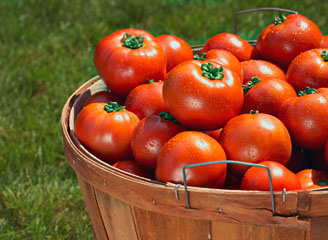
The human cost of industrial tomatoes
Do you know who picks your tomatoes? As Tom Philpott discovers during a trip to Florida tomato country, farmworkers suffer low wages, squalid living conditions, and even slavery.