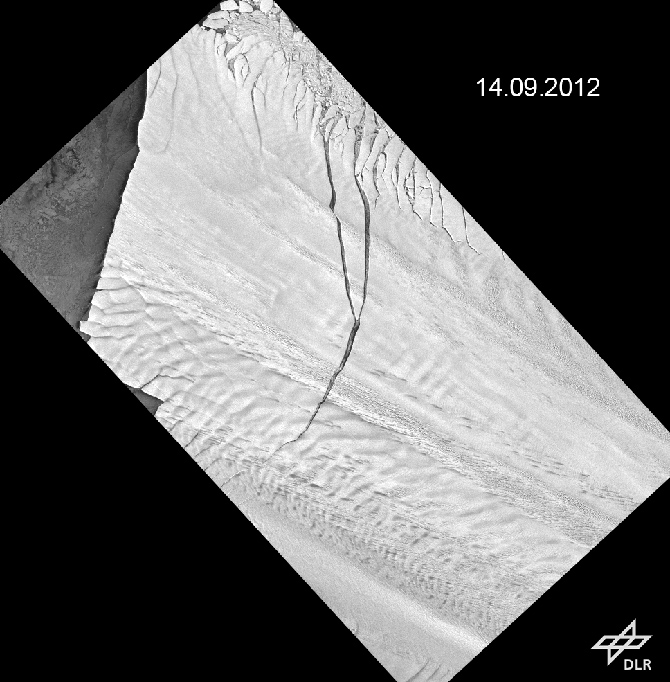
See this crack? The one that looks sort of like a wishbone, right above that dark swath?
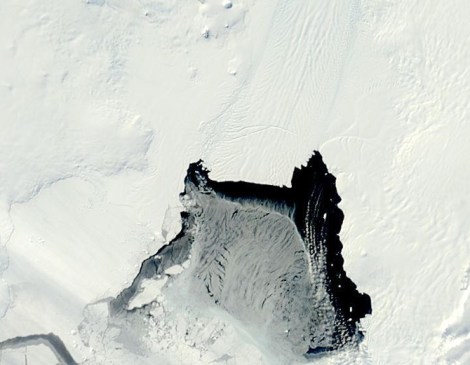
It might look like a hairline fracture from that far above, but it’s actually massive:
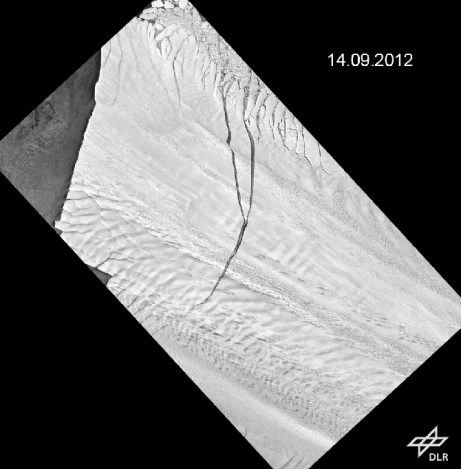
It’s a crack in the Pine Island Glacier ice shelf, which NASA calls “one of the largest and fastest-moving glaciers in Antarctica.” The crack is 18 miles long. That’s longer than the length of Manhattan, by more than four miles.
That bit of glacier on the other side of the crack? If it breaks off, it would create a floating iceberg. An iceberg longer than Manhattan. That wouldn’t just sink a ship, it would obliterate it.
A message from
Your support keeps our climate news free.
Grist is the only award-winning newsroom focused on exploring equitable solutions to climate change. It’s vital reporting made entirely possible by loyal readers like you.
At Grist, we don’t believe in paywalls. Instead, we rely on our readers to pitch in what they can so that we can continue bringing you our solution-based climate news. Donate today to keep our site free.