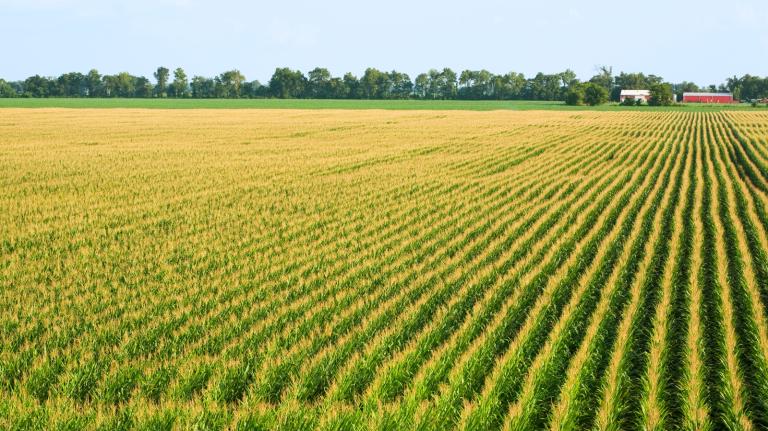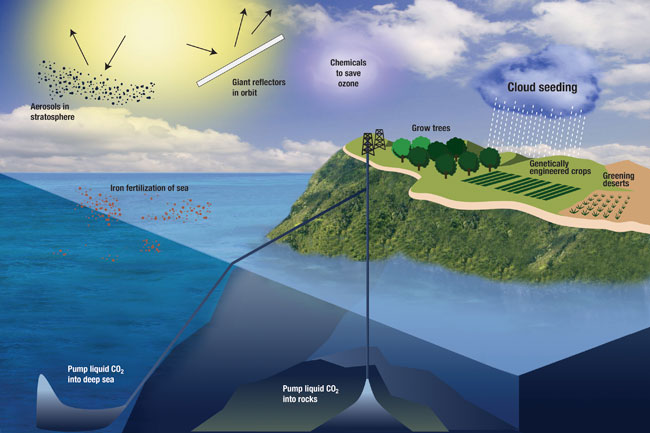
Adding tiny, sunlight-blocking particles to the upper atmosphere — a.k.a. the “artificial volcano” approach to geoengineering — could help crops avoid the effects of global warming, lowering temperatures so that they’re more to plants’ liking, says a new study appearing in Nature Climate Change. (Here’s the press release.)
Of course, geoengineering won’t solve the problem of ocean acidification, which has the potential to kill just about everything in the ocean we’re fond of, from the tiniest coccolithophore to the mightiest whale.
Another problem is that geoengineering could lead to “political conflict,” which in this case is probably a euphemism for war. Previous studies showed that sulfate aerosol geoengineering — the kind explored in this study — has the potential to shut down the Indian monsoon, which could lead to mass starvation in that part of the world.
Like all geoengineering schemes, it also sounds extremely supervillainy, but that one probably comes out about even on the benefit/drawback scale.
A message from
Your support keeps our climate news free.
Grist is the only award-winning newsroom focused on exploring equitable solutions to climate change. It’s vital reporting made entirely possible by loyal readers like you.
At Grist, we don’t believe in paywalls. Instead, we rely on our readers to pitch in what they can so that we can continue bringing you our solution-based climate news. Donate today to keep our site free.