You may not know it, but you’ve benefited from the National Center for Atmospheric Research.
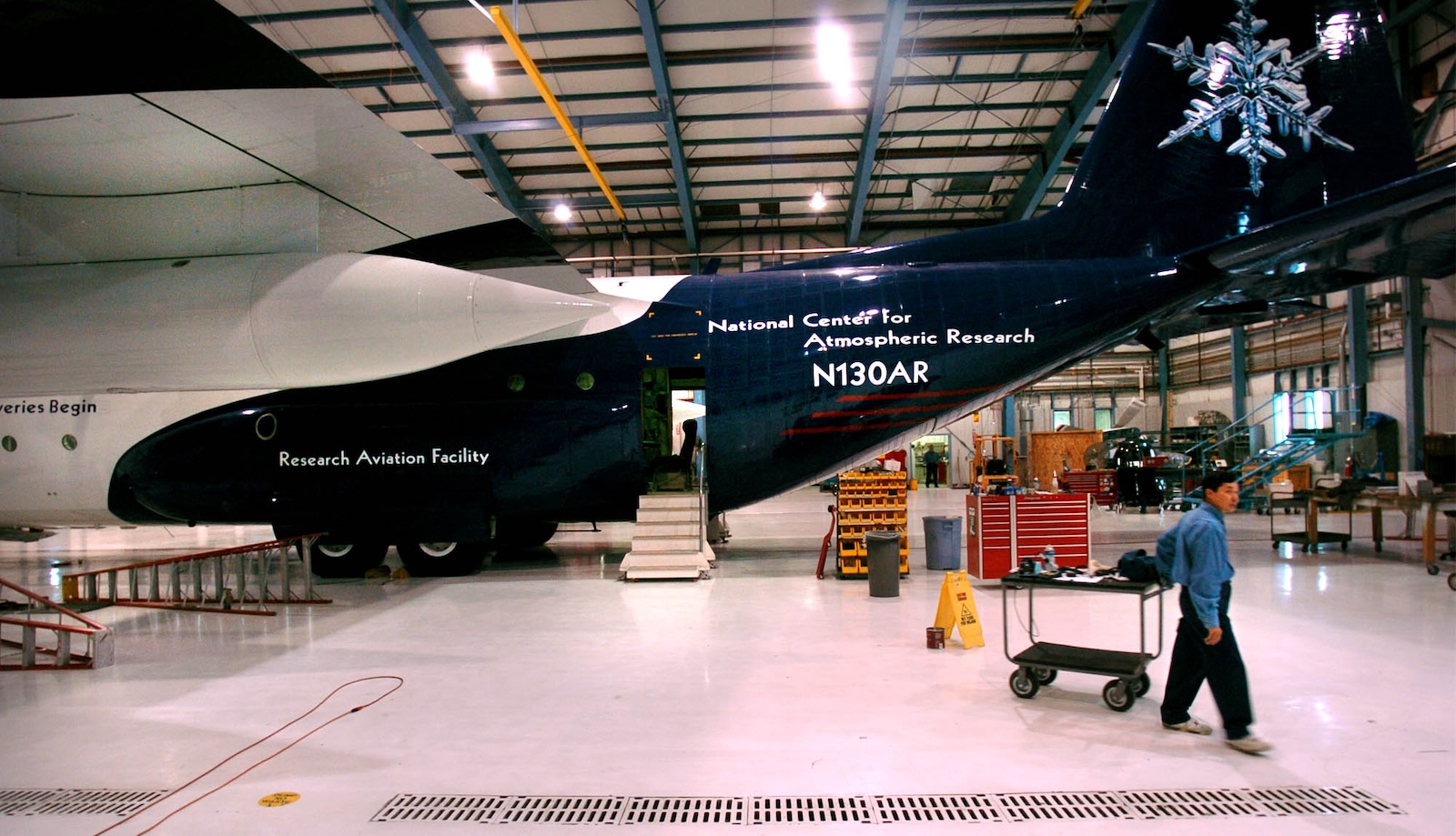
For more than half a century, the federally funded lab has been instrumental in the development of weather models that have improved the forecasting of extreme events like hurricanes, thus saving lives. Your go-to weather app can predict the future thanks in large part to the lab, also known as NCAR. Its researchers also study atmospheric pollutants like wildfire smoke by flying planes through plumes, helping protect public health. More broadly, NCAR has been a towering leader in the advancement of climate science, gathering reams of data and developing sophisticated models of Earth systems.
That last bit is why Russell Vought, director of the White House’s Office of Management and Budget, announced that the Trump administration plans to dismantle the operation. “This facility is one of the largest sources of climate alarmism in the country,” Vought wrote Tuesday on X. “A comprehensive review is underway & any vital activities such as weather research will be moved to another entity or location.”
In a separate statement released Wednesday, the National Science Foundation, which established NCAR in 1960, said it “remains committed to providing world-class infrastructure for weather modeling, space weather research and forecasting, and other critical functions. To do so, NSF will be engaging with partner agencies, the research community, and other interested parties to solicit feedback for rescoping the functions of the work currently performed by NCAR.”
The plan has been met with widespread alarm and a backlash in the scientific community. “NSF NCAR’s research is crucial for building American prosperity by protecting lives and property, supporting the economy, and strengthening national security,” wrote Antonio Busalacchi, president of the University Corporation for Atmospheric Research, which manages NCAR on behalf of the NSF. “Any plans to dismantle NSF NCAR would set back our nation’s ability to predict, prepare for, and respond to severe weather and other natural disasters.”
If NCAR is dismantled, the void can’t be filled by other groups working in isolation, researchers say. “It’s the latest in a long string of moves that are serving to weaken weather and climate science in the United States,” said Kristina Dahl, vice president for science at the research group Climate Central. “And ultimately, we all as residents of the country will pay the price, whether that’s now or 10 years down the road.”
The consequences of killing NCAR would reverberate internationally, too, as the center is a pillar of the science community globally. Its weather and climate databases, for instance, are critical resources for researchers everywhere. “It would be a huge blow not just to American science, but to weather and climate science, prediction, disaster resilience, all around the world,” said Daniel Swain, a climate scientist at University of California Agriculture and Natural Resources, in a livestream Wednesday. (Swain is also a research partner with NCAR.) “And I would even go so far as to say it would be an unbelievable, really genuinely shocking self-inflicted wound to American competitiveness writ large at a very high level.”
While the National Center for Atmospheric Research employs more than 800 people, its work extends to almost everyone in the weather, climate, and disaster research communities, Swain added — and by extension, the people who collaborate with those fields. Swain called NCAR a “singular institution” that doesn’t really have a comparable entity either in the U.S. or abroad. Its research and models are omnipresent, used by policymakers, scientific institutions, and industries trying to adapt to climate change.
Researchers can also tap into NCAR’s supercomputing resources for crunching complicated data. “It’s really a starting point for university-based researchers across the country who want to run experiments with climate models,” Dahl said. “Because very, very few facilities in the nation have this kind of computing capacity.”
With their relatively tiny budgets compared to the costs of disasters, NCAR and federal agencies, like the National Oceanic and Atmospheric Administration, actually pay huge dividends for American society, in property and lives saved. (The NSF provided $123 million to NCAR in 2025, accounting for more than half the lab’s budget.) With ever-better forecasts for hurricanes, for instance, officials know which coastal communities to evacuate as a storm approaches. Conversely they also know who they don’t need to evacuate, preventing distress and saving money. By helping forecast wind events, NCAR helps electrical utilities and communities prepare for the conditions that have sparked and fanned so many fires across the American West. (In May, the Trump administration stopped updating a federal database of billion-dollar disasters. But according to Climate Central, which has resurrected that database, the U.S. had 14 of them in the first half of 2025.)
Overall, by better understanding how climate change is supercharging disasters, the country can better adapt to what’s coming as the planet relentlessly warms. “The research done at NCAR is an investment by every single tax-paying citizen in the United States, and it benefits all of us,” said Marc Alessi, a fellow focusing on climate attribution science at the Union of Concerned Scientists. “We are able to predict the weather days in advance, giving warning for hurricanes, extreme precipitation events, and droughts.”
Like with so many other attempts from the Trump administration to attack science, restructure federal agencies, and force states to abandon climate action, this is starting as a plan, not a finality. Which means people can still call their representatives to oppose the proposal, Swain said. “This is something where there’s extremely little public support and a very possibly bipartisan congressional opposition,” Swain added, “if the right people are made aware of the issue quickly enough.”
Correction: This story has been updated to correct Daniel Swain’s affiliation. He is with University of California Agriculture and Natural Resources.
A message from
Your support keeps our climate news free.
Grist is the only award-winning newsroom focused on exploring equitable solutions to climate change. It’s vital reporting made entirely possible by loyal readers like you.
At Grist, we don’t believe in paywalls. Instead, we rely on our readers to pitch in what they can so that we can continue bringing you our solution-based climate news. Donate today to keep our site free.