Climate Culture
All Stories
-
Umbra on adult tricycles
Dear Umbra, I want to reduce my carbon footprint. I already take a commuter train to work, but the station is down a steep hill from my house, so I drive the first mile or so in the morning and back up the hill at night. The train station has lock-ups for cycles and I’m […]
-
The WSJ reports on lavish second-home gardens
I got a bit of flack for my post on “lazy locavores” earlier this week. Riffing off of a New York Times “trend” piece, I questioned the practice of “outsourcing one’s veggie patch” — paying someone to install, tend, and harvest a home veggie garden. I accused folks who use such services of having a […]
-
From Feud to Fashion
Toby … or not Toby Former feuders Toby Keith and the Dixie Chicks tried to put a boot in global warming’s ass by appearing together in a “we” campaign ad. But plans were nixed when they couldn’t reconcile their differences schedules. Seems they’re still not ready to make nice. Photo: John Shearer/Wire Image Grin and […]
-
More school districts consider four-day week
As energy costs rise, rural school districts across the country may follow the lead of the 100 or so schools in 16 states that offer classes just four days a week. Cutting out a day of heating, cooling, and transportation fuel — which can be significant in spread-out districts where school buses might travel 100 […]
-
![]()
![]()
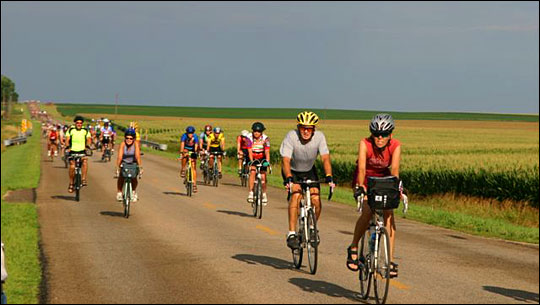
After a mass bike ride across Iowa, a slow-food chef picks up the pace
Do the ride thing. Photo: David Wade Every year for the last 36, Iowa plays host to a unique event. At the beginning of the last full week of July, more than 15,000 people dip the rear tires of their bicycles in the Missouri River — and seven days and about 450 miles later, they […]
-
California’s Prop 2 could end the worst farm-animal abuses and set a national precedent
When Californians go to the polls in November they can set a precedent for the rest of the country by ending the worst animal and environmental abuses and simultaneously increasing the safety of our national food supply.
It's an election year and we all know what that means -- big money, big events, and big promises. As the rest of the country listens endlessly to the political propaganda of the last few desperate months before November, California voters are being fed an entirely different mouthful of issues -- the living conditions of the billions of farm animals slaughtered in this country every year. This weekend the Humane Society of the United States will hold a series of cross-country parties to mark the celebration of their historical ballot initiative in California: the Prevention of Farm Animal Cruelty Act or Proposition 2.
-
Like Cocoon, only in real life
Caring for the world is good for geezers -- and the world too!
(I can use "geezer" because ... hey, you kids, get off my lawn!)
-
Your granite countertop may emit radon and radiation
Heads up, yuppies: Must-have granite countertops may emit worrisome levels of radon and radiation. While granite is known to contain radioactive uranium, which emits radon gas as it decays, the vast majority of countertops emit far less radiation than what we’re constantly exposed to from outer space and the earth’s crust. But as demand for […]
-
Umbra on clean coal
Dear Umbra, I noticed that several of the presidential primary debates were sponsored by clean coal. This was announced during breaks and several commercials aired. I have since seen several more commercials and online advertisements. Is clean coal an oxymoron? Is this a PR stunt or are there any real environmental benefits to clean coal […]
-
Javatrekker and God in a Cup on the culture of coffee production
When I jumped on a plane one year ago and headed off to Guatemala with Seattle-based coffee roaster Caffé Vita, there was little more than the occasional blog post telling "the story behind coffee." The majority of the writing about coffee I could find was focused on the history of the bean-like-seed: stories of cunning Dutch merchants, over-caffeinated whirling dervishes, and besieged Austrians, but nothing talking about the places and people that presently grow the second most valuable crop on the planet.

When Vita and I dropped down in Guatemala City, I didn't know a damn thing about the bean: where it was grown, the politics that drive it, the human factor that shapes it, let alone the variety of ways it is processed, tested, sold, shipped, and ritualized. I simply knew that I adored the stuff when it was prepared in a careful manner. Now, with trips to farms in Ethiopia, Brazil, and Guatemala and with several thousand of my own words under my belt I can honestly say -- I still really don't know a damn thing about the bean. But I am happy to refer authors who do. Here are a couple of books that might not make The New York Times' bestsellers list, but certainly will give you a slight peek inside the dynamic world of coffea arabica.