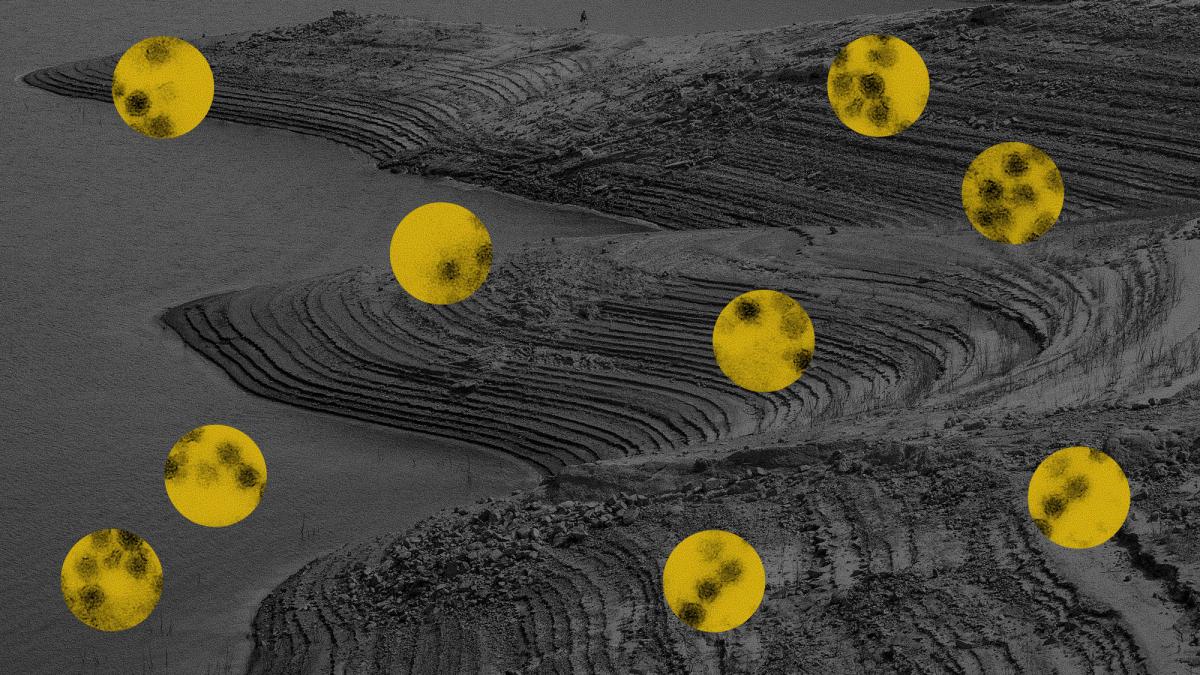
The world has become hotter and, in many places, drier than ever before in recorded history. Just this summer, as some U.S. states battle over rights to the Colorado River, major reservoirs are at historically-low levels. In Puerto Rico, extended drought has exacerbated an infrastructure crisis, leaving residents to suffer weeks-long stretches without water. In Europe, the Danube and Rhine rivers reached record lows, causing nuclear plants to shut down, devastating crops, and revealing long-lost relics from WWII. More than 60 percent of farmland in Italy is affected by critical drought.
Emerging research shows that a drier world is often a sicker one, too. A new paper, published last week in the journal Trends in Ecology and Evolution, takes stock of nearly 100 scientific studies of diseases found throughout the animal kingdom — from humans to large mammals, fish, amphibians, and insects — to reveal how drought can help deadly infections and parasites spread.
The majority of human parasites and many pathogens need water to thrive. And while cases of some infectious diseases — like schistosomiasis, a dangerous flatworm infection also known as snail fever, and malaria — sometimes fall dramatically when ponds and lakes dry up, others — like cholera, West Nile virus, and dengue — end up booming.
This is called the “drought-disease paradox,” said Tara Stewart Merrill, an aquatic disease ecologist at the Cary Institute of Ecosystem Studies and coauthor of the paper. “It’s so counterintuitive,” she said. “We think a water-borne disease should thrive only when there’s plenty of water, but in some cases they thrive when there’s less water.”
She and her collaborator and coauthor, Pieter Johnson, a professor at the University of Colorado Boulder, became interested in how drought would affect these pathogens several years ago while studying parasites in pond ecosystems in California. Suddenly, Stewart Merrill said, more than half of their study sites dried up.
“Beyond drought screwing up our study, we then started having conversations about how drought might be shaping disease transmission in ecosystems around the planet,” Stewart Merrill said.
Research on climate change and infectious disease is a relatively young but fast growing field. Until recently, many studies focused on how rising temperatures, but not drought, affect the spread of diseases, Stewart Merrill said.
Now, their paper shows how scientists are beginning to untangle the complexities of diseases and the water cycle. Understanding how drought affects the spread of certain diseases could also help scientists better predict which diseases will spread and be the most problematic for humans in the future.
As fossil fuels warm the planet and change the climate, the hotter atmosphere sucks more water from the landscape and holds onto it longer, leading to more intense and prolonged droughts. According to a United Nations report, 77 percent of the world is drier than it was three decades ago.
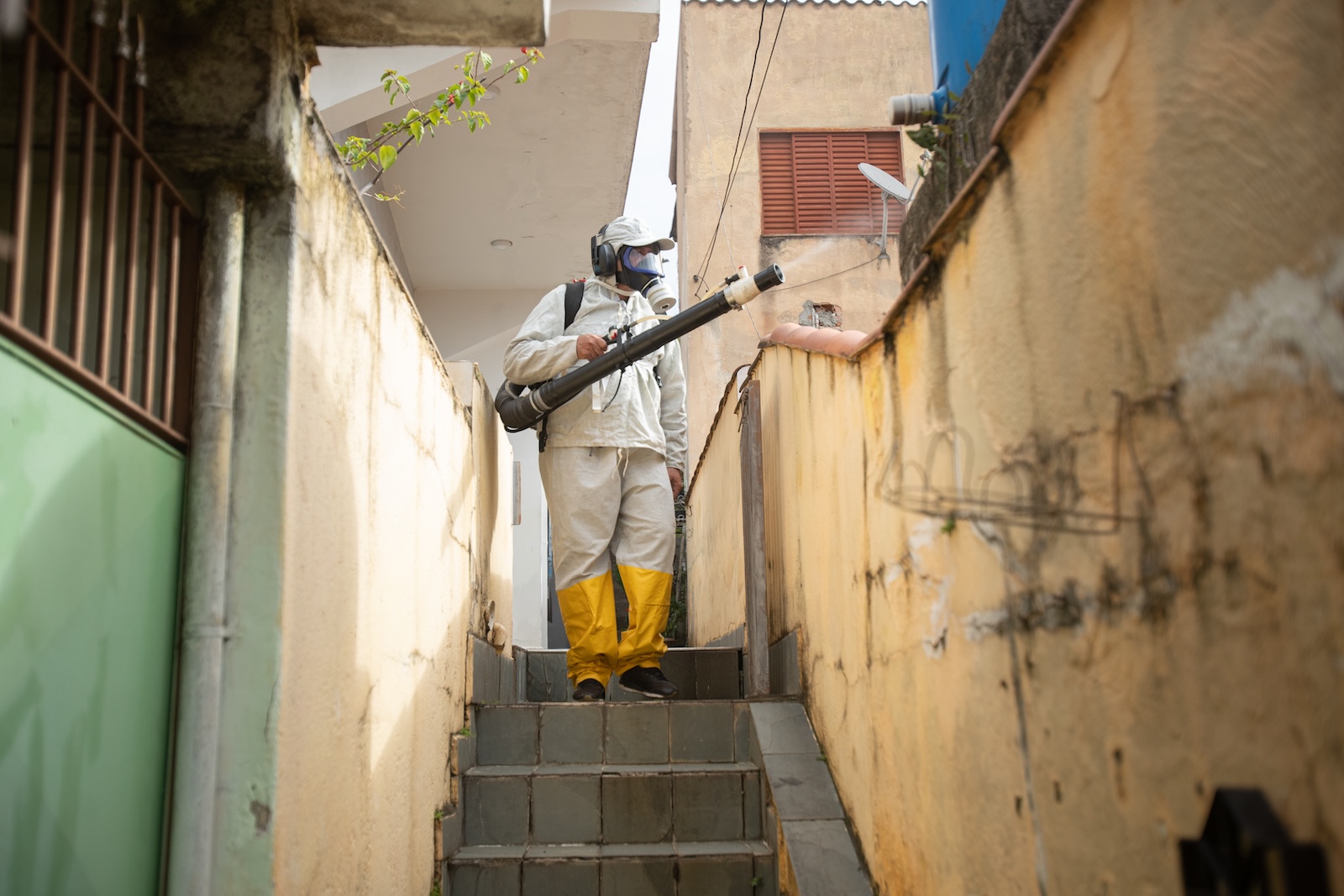
The consequences for human health have already been felt. Droughts in California throughout the 2000s led to thousands of excess cases of valley fever, and in 2014, a superdrought contributed to the state’s second-highest cases of West Nile virus. In 2017, a drought in Somalia led to nearly 80,000 cases of cholera, which killed more than a thousand people. And in Brazil, where millions are afflicted with dengue each year, researchers have found that the risk of infection can rise a few months after drought.
Andre Lucas / Getty Images
Tracking disease is fundamentally about the movement of animals that carry it, said Georgia Titcomb, a wildlife disease ecologist and assistant professor at Colorado State University.
“Throughout history, living things have been moving to get water, and so when there are massive changes to the way water is distributed on the landscape, we’re going to also expect big changes in the ways animals move to access that water,” she said. “That’s going to remove some opportunities for transmission, and introduce new ones too.”
For example, Titcomb said, picture watering holes in the African savannah, surrounded by animals like zebras, elephants, rhinos, and giraffes. During droughts, some of them dry up. More animals crowd around the remaining pools. These crowded areas are also full of dung from those animals, making it easier for parasites that lay their eggs in feces to spread and thrive, and more likely that the animals will encounter parasites.
Titcomb’s paper, included in the new review, found that after periods with less rainfall, parasites thrived — with more than 100,000 eggs found per each kilogram of dung.
Research in other areas has found similar dynamics: When drought results in fewer bodies of water, birds carrying West Nile virus can come into closer contact with mosquitos, resulting in more mosquitos that carry the disease and can infect humans. Drought can also make bodies of water warmer, creating conditions in which some dangerous mold, algae, and bacteria can thrive.
In other cases, drought can diminish disease. Hotter, saltier, and less oxygenated water can become unsurvivable for certain pathogens, bacteria, fungus, and parasites, the paper found.
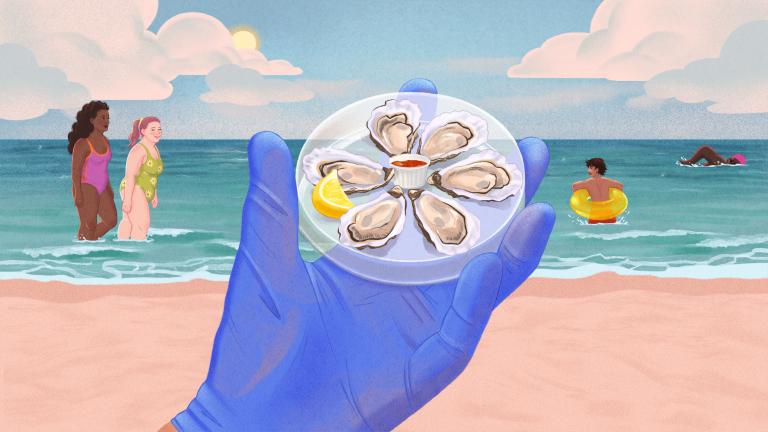
The severity of the drought also matters. Vibrio vulnificus, a bacteria that infects oysters and causes 80,000 cases of food poisoning in the United States each year, initially spreads during a drought but can be eliminated entirely if it goes on long enough.
And heavy periods of precipitation can also make an outbreak worse when a drought eventually comes, said Samantha Sambado, a biologist and postdoctoral researcher at Stanford University who was not affiliated with the study. This phenomenon, known as ‘weather whiplash,’ is becoming increasingly common as the planet warms.
The fungus that causes valley fever, for example, grows during wet winters, and then dries and spreads as wind-borne dust in the summer, she said. “It’s a classic case of, climate change will make this worse,” she said.
The new paper sheds important light on these dynamics, Sambado said. “It’s going to be really foundational for how we teach disease ecology,” she said.
In the coming years, improvements in satellite monitoring technology could make it easier for scientists to track water as it shifts around the planet, she said. Paying attention to how humans respond to drought and manipulate the movement of Earth’s water will become increasingly important, too: Building dams or using more irrigation on crops can create conditions that spread or foster disease. Increasingly unpredictable weather can make it harder for communities to manage their water with disease prevention in mind.
“Water touches almost every aspect of life,” Sambado said. “How do we manage this resource, knowing the future will be warmer?”
Correction: An earlier version of this article misspelled Samantha Sambado’s name and misstated a United Nations finding about how much drier the world has become.