This story is made possible through a partnership between Grist and The Flatwater Free Press, Nebraska’s first independent, nonprofit newsroom focused on investigations and feature stories.
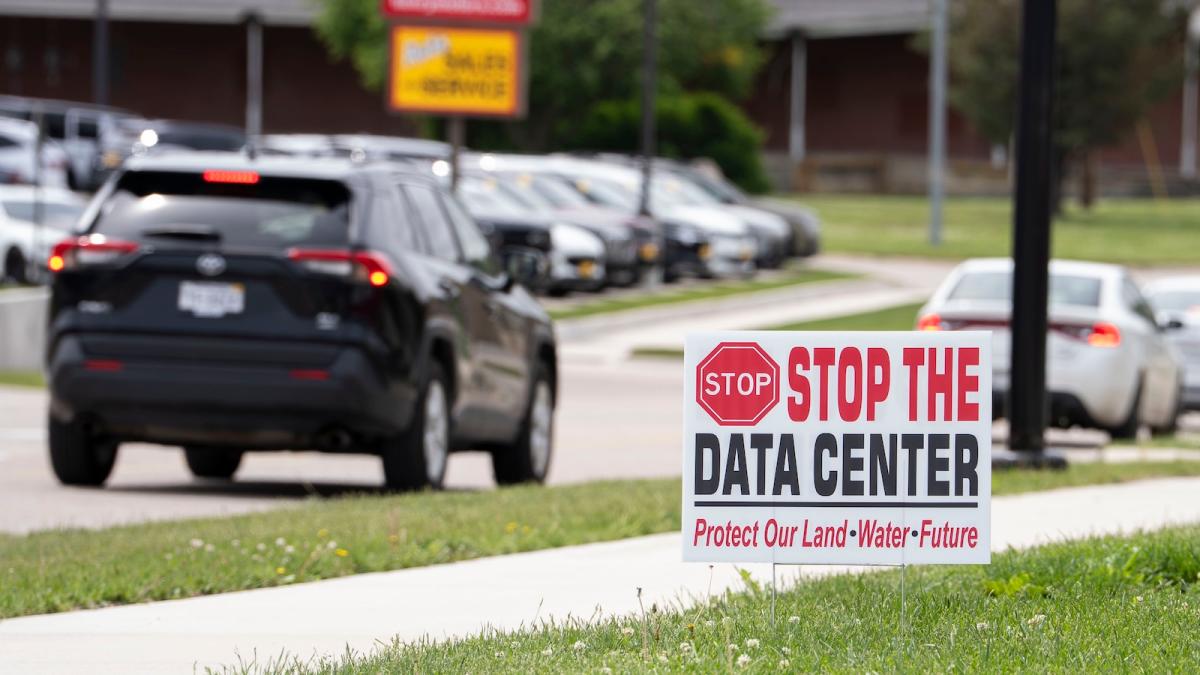
Standing before the Otoe County Board and a room of neighbors, Wynee Benedict ticked through a long list of concerns.
Do we have enough water for them? Who pays for their power? What if they create a heat island?
The source of Benedict’s worries: data centers. Since learning earlier this year that their county, south of Omaha and a little east of Lincoln, could become home to a new data center, Otoe residents have been abuzz with questions and concerns like Benedict’s, leading some residents to call for a temporary ban on the industry.
That’s effectively what the board did last month, voting to suspend the permits needed for a new data center for up to a year, according to commissioner Chuck Cole. The pause is intended to give county officials more time to study how the developments fit into the county’s future plans and to update its regulations accordingly.
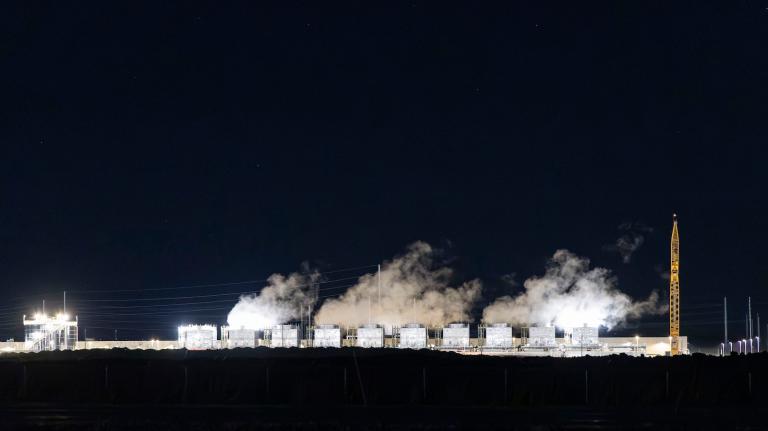
Around the country, opposition to data centers is growing. The massive, resource-guzzling buildings needed to power artificial intelligence and our digital infrastructure have emerged as a galvanizing issue. Local governments from California to Maine have adopted or are considering temporary bans. And at least 14 states so far this year have weighed statewide moratoriums.
Elsewhere in Nebraska, Madison County set requirements for data centers to get a special permit, which allows added oversight and public input. In Gage County, the planning and zoning commission will hold a hearing on a data center moratorium later this month.
And more will likely follow suit thanks to a recent change in state law forcing counties to make a decision on certain development projects within a specific amount of time, said Jon Cannon, executive director of Nebraska Association of County Officials. The goal, according to the bill’s supporters, was to prevent counties from needlessly delaying projects. But the law could have an unintended consequence.
“I think that you’re likely to see a number of counties that say, ‘We need to get our regulations in order,’ and … they may put moratoriums on a lot of things, not just data centers,” Cannon said.
Data centers are just the latest in a long line of controversial developments, like wind and solar, that counties in Nebraska and other states have grappled with. And much like those other developments, attitudes toward data centers could vary from county to county, Cannon said. He advises developers to communicate with residents in rural Nebraska early and transparently about large projects.
“When people are aware of something coming to town, because, ‘Oh, my neighbor told me that he just signed this big contract for a right of way’ — when people find out that way, they get very excited, and not in a good way,” Cannon said.
From an environmental standpoint, it’s hard to know how much data centers are impacting Nebraska. There’s no centralized information source for their location, ownership, and water usage.

But that is expected to change.
Lawmakers approved a bill this year aimed at increasing transparency. It requires data centers to annually report the names of their owners and developers, physical size, location, annual electricity demand, annual water usage, and any sales and use tax exemptions and incentives they receive.
That information will likely be helpful to local officials, like those in Otoe County, as they weigh regulations.
Other Otoe County residents echoed the concerns expressed by Benedict, who referenced reporting by the Flatwater Free Press and Grist about a proposal by Google to build a massive new Nebraska data center. The proposed data center could require more than triple the electricity the entire city of Lincoln uses during the hottest months of the year, when electricity use spikes.
The proposal, detailed in documents shared at a private utility meeting in January, did not identify a specific location. However, Flatwater reported that a potential partner in the overall project — the Omaha-based private energy developer Tenaska — had optioned large chunks of land in southeast Nebraska, including Otoe and Gage counties. The news sparked discussions in both counties.
However, some residents who spoke at the Otoe County board meeting appeared to have different views on whether to temporarily ban data centers.
“We have said ‘no’ to a lot of things, almost a knee-jerk reaction. Maybe we need to say ‘yes’ to a few things,” resident Jim Nemec said at the meeting, adding that he understood the need for a temporary ban to study the issue. “But I also worry about the intention or impression it gives. Are we sending out the impression that business is closed here?”
In the end, Benedict is happy that the commission voted for the moratorium. Now, she and her neighbors are turning their attention to researching the consequences these developments may have. “We needed regulations on the books prior to a data center coming to this county,” Benedict said. “We don’t want to have to play catch-up and regulate something that’s already here.”