This coverage is made possible through a partnership between Grist and Interlochen Public Radio in northern Michigan.
The U.S. Army Corps of Engineers issued a key permit for a plan to update an aging segment of the Line 5 pipeline crossing the Straits of Mackinac in Michigan, waterways that tribal nations say are central to their ways of life.
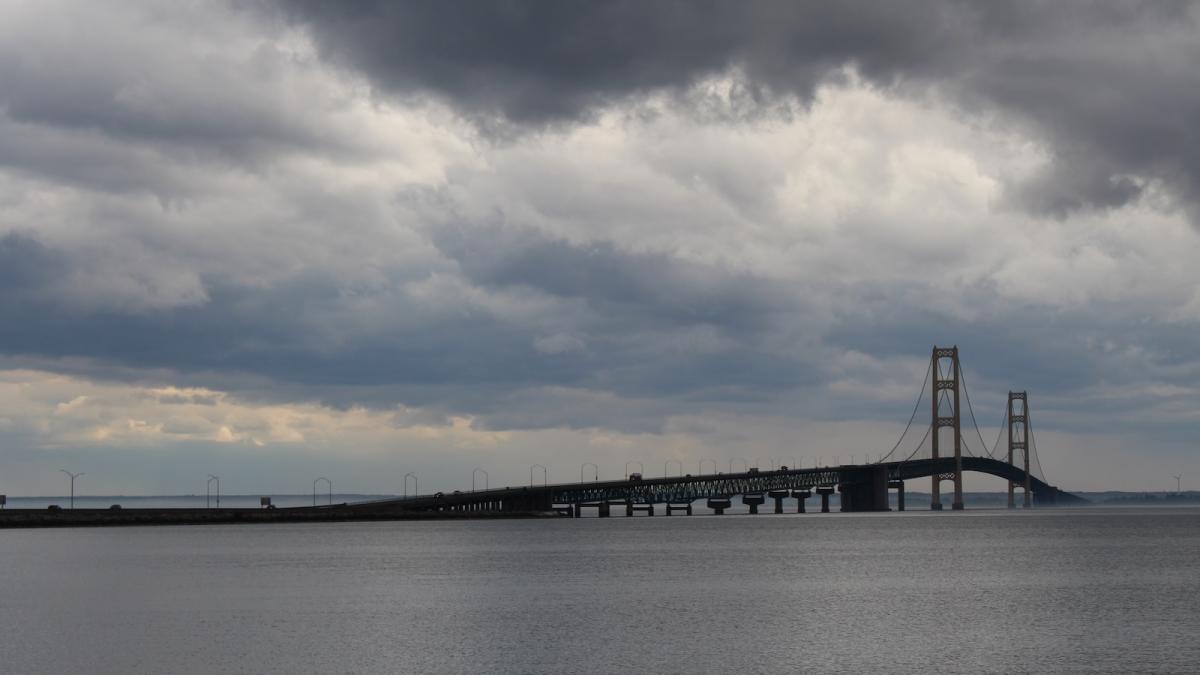
It’s a procedural win for Line 5 owner Enbridge Energy, but comes amid ongoing legal and regulatory hurdles at the state level that are preventing the start of construction. The pipeline carries oil and natural gas liquids 645 miles from Superior, Wisconsin, through Michigan to Sarnia, Ontario, and Enbridge wants to replace a 4-mile segment that lies on the bottom of the ecologically sensitive straits with a new one, buried in a tunnel under the lakebed.
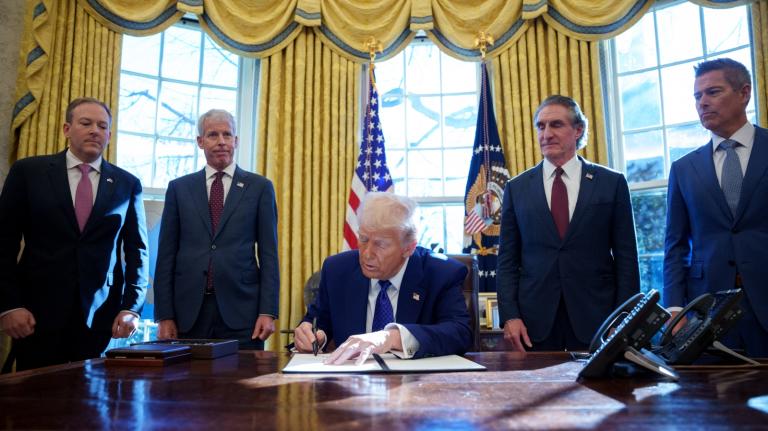
In a statement issued with the decision, the Army Corps said the project wasn’t contrary to the public interest, complied with Clean Water Act guidelines, and “would not abrogate or impermissibly impair tribal treaty rights.” Review of the permit was fast-tracked under President Donald Trump’s executive order last year declaring a “national energy emergency.”
For Michigan tribes that have fought for years to shut down the pipeline, the federal permit approval was “disrespectful and ludicrous,” said Austin Lowes, chairman of the Sault Ste. Marie Tribe of Chippewa Indians.
“They’re acutely aware of the impact that this project will have on Indian Country, and they just flat-out ignored it,” Lowes said. “It’s one of the most disgusting things that I’ve ever been confronted with as a tribal leader.”
According to the Army Corps itself, tunnel construction would have permanent adverse impacts on wetlands, vegetation, land use, and cultural resources. The straits are sacred to Anishinaabe peoples — the waters feature prominently in their creation story and serve as burial grounds for ancestors. Five tribal nations also hold treaty rights to fish and hunt in these waters, rights that predate Michigan’s statehood and are protected by federal law under the 1836 Treaty of Washington.
“Us surrendering and ceding that land came with certain expectations and rights,” Lowes said. “And one of those expectations was that we would be consulted any time decisions were going to be made on the federal level that would impact our way of life, and the tunnel project certainly does that.”
The agency determined that despite any negative impacts on surrounding lands and property, the proposed tunnel would reduce the environmental risks associated with the pipeline, such as leaks caused by a direct hit from a boat’s anchor. “The benefits of the project outweigh its detriments,” the Army Corps stated. Its scope of analysis was focused on the construction impacts, and not the risk of an oil spill or greenhouse gas emissions beyond the tunnel site, which the agency said is the responsibility of the federal Pipeline and Hazardous Materials Safety Administration.
Last year, seven Michigan tribal nations withdrew from discussion with the Army Corps over the permit, saying that regulators ignored tribal expertise, input, and concerns, and undermined treaty rights. The withdrawal also came after the Army Corps suggested that the review process would likely be fast-tracked under President Trump’s emergency executive order.
“A project that’s going to take somewhere between six and 10 years to build is certainly not a response to a national energy emergency, and it won’t change the amount of fossil fuels transported,” said Debbie Chizewer, managing attorney at Earthjustice, a legal nonprofit supporting Michigan tribes in litigation against Enbridge.
The Army Corps’ “flawed” review likely has wider impacts for all tribal nations, said David Gover, who is Pawnee and Choctaw and a managing attorney at the Native American Rights Fund, which is supporting Earthjustice.
“This notion that, ‘Yeah, we understand that this will permanently destroy your resting relatives, but we don’t care, and we got to move ahead. We got to have these fossil fuels’ — that challenges tribal sovereignty,” Gover said.
Enbridge spokesperson Ryan Duffy said in a statement that the permit approval is “a significant step forward” for the project, and reflects years of “rigorous review” from the federal agency. The company “is committed to protecting the Great Lakes, the region’s natural and cultural resources, and the waterfront communities that depend on them, while also ensuring reliable energy for the region,” the statement said.
Even with a federal stamp of approval, Enbridge can’t start on tunnel construction without all state permits. The Michigan Department of Environment, Great Lakes, and Energy is still deliberating on a wastewater discharge permit, with a decision expected before the end of September.
And last month, a nearly unanimous Michigan Supreme Court sent an approved state permit back to regulators for a more thorough review, saying that the public service commission didn’t consider the full range of impacts to the environment.
Separate from the tunnel project, Line 5 faces legal challenges from groups that have fought to shut down the pipeline for years, including Michigan Governor Gretchen Whitmer’s administration. The state is appealing a federal judge’s decision that said the governor had no authority to shut down the pipeline in 2020.
This spring, a unanimous ruling from the U.S. Supreme Court paved the way for state court proceedings on whether the aging pipeline can continue operating in the straits. The case will continue after Governor Whitmer’s appeal is resolved.
Lawyers working with some Michigan tribes said they’re exploring legal options to challenge the Army Corps’ permit.
“Tribes have been here since time immemorial. We’re not going anywhere,” Gover said. “This is just another fight that Indian Country takes on and makes certain that those treaties that we signed are meaningful and honor our jurisdictions and sovereignty.”
Correction: An earlier version of this article misspelled Debbie Chizewer’s name.