Peggy Shepard walked into her living room on Tuesday morning when her husband told her Jesse Jackson, the civil rights titan from South Carolina, had died. “Immediately tears started coming,” said Shepard, co-founder and executive director of WE ACT for Environmental Justice, a New York City-based nonprofit.
Nearly 40 years ago, Jackson had altered the course of Shepard’s life. In the late 1980s, she was working as an editor at Time-Life Books, when a colleague mentioned an organizing meeting for Jackson’s 1988 presidential campaign in Manhattan’s Greenwich Village. “I walked into this Saturday meeting, and I walked out on air,” Shepard recalled. “Two hours later, I’m the press secretary for the Jackson campaign in Manhattan.”
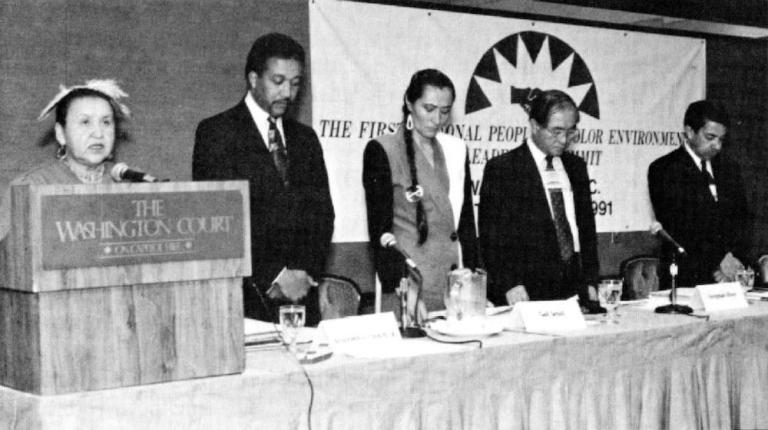
That campaign — which would prove groundbreaking for Shepard and the country — pushed issues that had rarely been centered in national politics. Jackson made environmental justice, a term Americans were largely unfamiliar with at the time, a key plank of his second presidential run. He called for a national energy policy that would make offshore oil drilling obsolete, a plan to phase out nuclear energy, measures to reduce tailpipe pollution from cars, a conservation strategy to restore the nation’s wetlands and forests, and a federally sponsored workforce in the style of the New Deal Civilian Conservation Corps. (The Biden administration launched a similar program, the American Climate Corps, in 2024, but shuttered it days ahead of President Trump’s return to office last year.)
“Being in the Jesse Jackson campaign led to everything I’m doing right now,” said Shepard of the volunteer job that took her across New York City and exposed her to stark disparities between neighborhoods, especially in pollution burdens. “If I hadn’t gone to that Saturday meeting, I’m not sure that I’d be sitting here today in this position.”
Jackson marched with Dr. Martin Luther King Jr., transformed American politics with his two historic presidential campaigns, and inspired countless organizers — including environmental justice advocates — along the way. In his later years, he began making connections between segregation in Greenville, South Carolina, where he was born, and the toxic drinking water in Flint, Michigan.
He died Tuesday at his South Side Chicago home, surrounded by family. He was 84. Jackson had been in declining health since a 2015 Parkinson’s diagnosis that was later revised to progressive supranuclear palsy, a neurodegenerative disorder.
“Our father was a servant leader,” the Jackson family said in a statement. “We shared him with the world, and in return, the world became part of our extended family.”
Cheryl Johnson, who runs the Chicago-based environmental justice nonprofit People for Community Recovery, was about 10 years old when she first saw Jackson in person. It was a grade-school field trip to the Rainbow PUSH Coalition, the prominent civil rights nonprofit he founded in 1971, headquartered on the South Side. The towering figure left a lifelong impression on her.
“I always remember he would say, ‘up with hope, down with dope,’” she said, recalling Jackson’s stockpile of charismatic appeals. “To see him fighting, at that particular time, for the right to be black in America, was an inspiration for me that I followed for many, many years,” Johnson said.
From the television set to magazine covers, Johnson grew up with Jackson in the background. Her mother, Hazel Johnson, founded People for Community Recovery, one of the first environmental justice organizations in the country, and worked with Jackson several times during the Clinton administration. Today she’s remembered as “the mother of the environmental justice movement.” Cheryl Johnson never worked directly with Jackson on environmental issues in Chicago, but the two “would have discussions on the phone,” she said. “He got it.”
Jackson was often pragmatic, not allowing environmental concerns to outweigh what he believed Black communities needed. In 2021, he successfully urged Illinois lawmakers to propose legislation making it easier to build a natural gas pipeline to the rural Pembroke Township south of Chicago, once referred to as the largest Black farming community in the Northern U.S.
“A secure source of energy would help kickstart other development — and in turn create jobs and generate hope,” Jackson wrote in an op-ed in support of the plan. As of this year, the pipeline is delivering natural gas to over 100 residents.
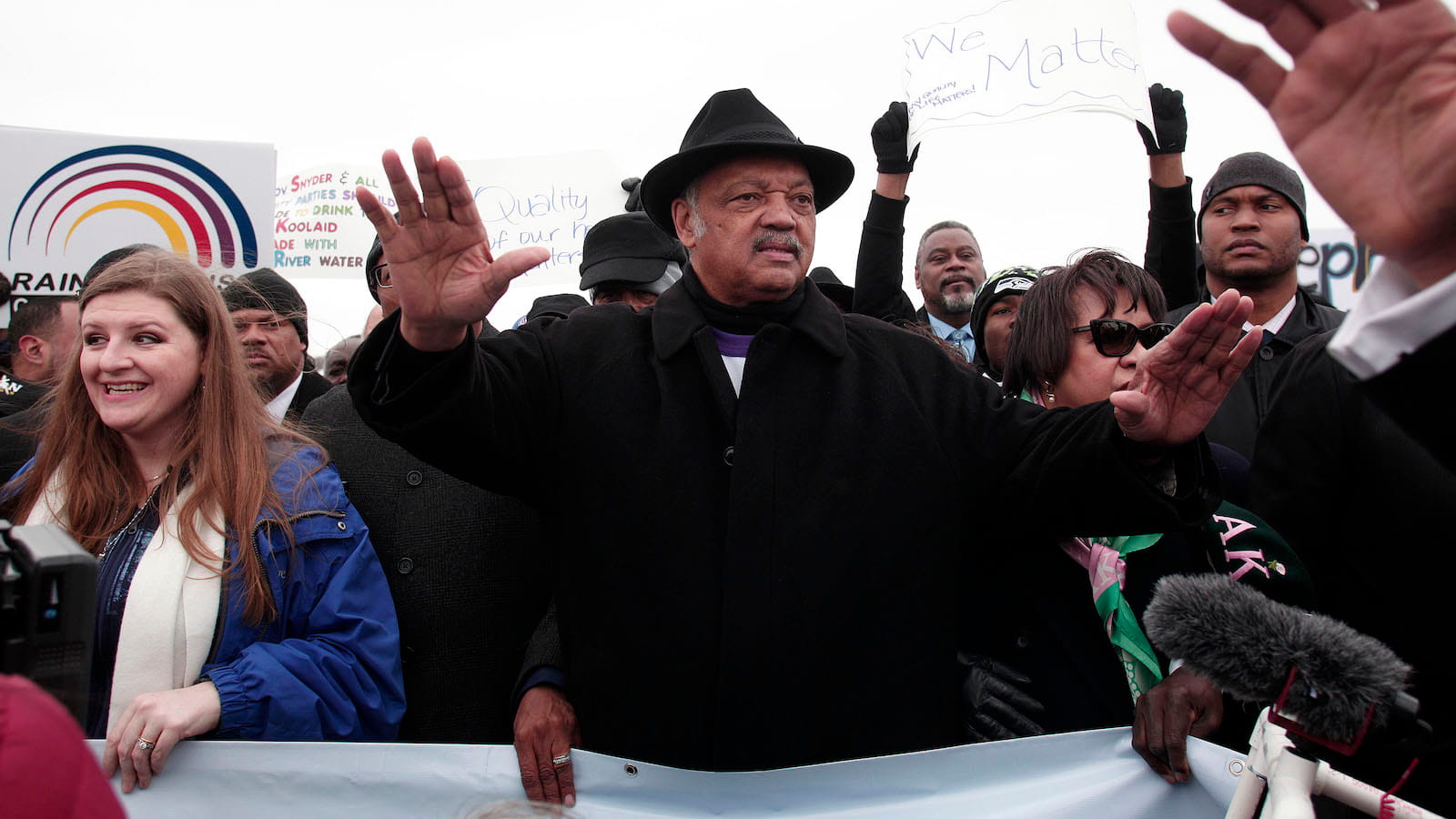
Jackson also took an active interest in the Flint water crisis, showing up repeatedly and lending support. In early 2016, Melissa Mays filed a lawsuit against the city of Flint, Michigan, for exposing nearly 100,000 residents to unsafe water contaminated with lead, a toxic metal linked to developmental delays, cardiovascular issues, and infertility.
Mays, a longtime Flint resident and a then-emerging clean water activist, remembers sitting in front of cameras and answering questions about her lawsuit when, unexpectedly, Jackson walked through the doors. “He walks right up to us to ask if he can say something,” she said.
Not long after, Jackson declared that officials should put “tape around the city, because Flint is a crime scene.” Mays said the moment validated her concerns and in part kicked off a longtime friendship between the two. Jackson returned to Flint repeatedly, helping turn the water crisis into national news and criticizing the Obama administration for not sufficiently responding to the crisis. He made his last public appearance in Flint in 2024 to visit the Flint Southwestern Classical Academy to highlight the importance of voting.
“He was not afraid of anybody,” Mays said.
A message from
Your support keeps our climate news free.
Grist is the only award-winning newsroom focused on exploring equitable solutions to climate change. It’s vital reporting made entirely possible by loyal readers like you.
At Grist, we don’t believe in paywalls. Instead, we rely on our readers to pitch in what they can so that we can continue bringing you our solution-based climate news. Donate today to keep our site free.