Climate Food and Agriculture
All Stories
-
Regulating biosolids
Biosolids are regulated under what’s known colloquially (to those who speak colloquially about sewage) as the 503 Sludge Rule, which came into effect in 1993. Technically titled “40 CFR 503 — Standards for the Use and Disposal of Sewage Sludge,” it’s complicated enough that EPA came out with a “Plain English” guide to help make […]
-
![]()
![]()
Ethanol waste: it’s what’s for … breakfast?
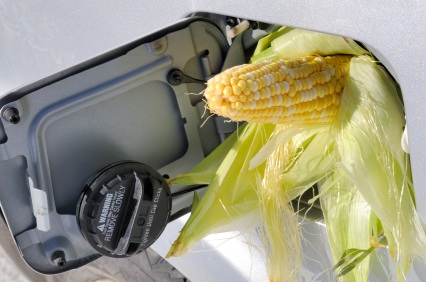
It’s food, no fuel, no food…For the ethanol industry, much depends on distillers grains, the stuff that’s left over after corn has been fermeneted and distilled to make alcohol. Corn ethanol’s energy balance (net energy produced minus energy consumed in production) is razor thin; it only goes positive when you factor in generous credits for […]
-
![]()
![]()
Another win for the Coalition of Immokalee Workers
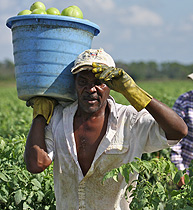
Photo: Scott RobertsonOver the past week, much attention has been focused on the “B” part of that classic U.S. sandwich, the BLT. The swine flu outbreak has quite rightly raised questions about the environemtal/public health implications of modern industrial hog production. Almost lost amid the furor was much happier news about the “T” part of […]
-
![]()
![]()
Smithfield brings home McDonald’s corporate responsibility prize
Larry Pope“Oh, my goodness. I think I’m extremely proud of — of how we are from a corporate social responsibility standpoint. And, in fact, McDonald’s just gave us their first award as the most — for their corporate social responsibility. The fist time they’ve given that, they gave it to us.” –Larry Pope, CEO of […]
-
Now is not the time for timidity
I agree with the calls for some amount of caution in the search for a smoking gun in the swine flu pandemic. There’s always the danger of over-reaching and turning your target into an object of sympathy. But really, the science IS behind us on this one. The head virologist of the CDC has indeed […]
-
![]()
![]()
Jumping to conclusions in health matters may have adverse side effects
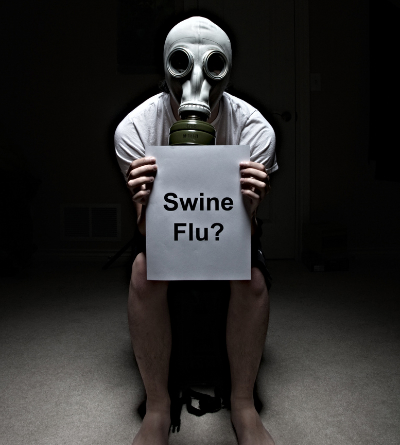
The past week, the Netiverse has erupted with stories linking the Granjas Carroll confined animal feeding operations (CAFOs) near La Gloria, Vera Cruz, Mexico, with the outbreak of a strain of H1N1 influenza, commonly called “swine flu,” that has triggered concerns about possible flu pandemic reminiscent of the one that claimed tens of millions of […]
-
![]()
![]()
CDC: swine flu strain has genetic roots in U.S.A.
(Another hat tip to the increasingly essential Tom Laskawy.) In an interview with Science Magazine, CDC chief virologist Ruben Donis essentially confirmed the reading of the current swine flu strain made by New Scientist: that it evolved from a strain that cropped up in U.S. hog farms in 1998. Both New Scientist and Donis emphasize […]
-
![]()
![]()
Smithfield is listening!
What’s that you say? Smithfield claims that they are awaiting the results of “additional” tests on the pigs at their Veracruz, Mexico, CAFO — the facility at the heart of speculation here on Grist and elsewhere as the source of the current swine flu outbreak — to determine if any pigs are infected. And just […]
-
CDC chief confirms U.S. origin of flu strain
H/t to Fair Food Fight for this one. In a Q&A with ScienceInsider, the CDC’s chief virologist Ruben Donis confirms what Columbia researchers declared: the current H1N1 swine flu virus is “all swine” in origin, the human and avian components present in the current virus date to the 1998 swine flu outbreak, and that this […]
-
![]()
![]()
Don’t jump to conclusions on swine flu and pork production
Editor’s Note: Tom Philpott’s April 28 piece on the swine flu pandemic, which raised the question of whether there is a link between the virus’ emergence in Mexico and the presence nearby of factory-scale pork farms, sparked a vigorous debate on the Society for Environmental Journalists listserv. Merritt Clifton was one of several writers to […]