Jody Horton
Most laying hens in the U.S. are raised in cages with up to eight other birds, with barely enough space to turn around, much less walk. They eat antibiotic-laced feed made from genetically engineered grain and the ground-up feathers of other chickens. Raising chickens this way is so inhumane it has been banned in the European Union and it will be banned in California starting in 2015, but a full 95 percent of laying hens in the U.S. still live in cages. Like so many other parts of this country’s conventional food system, the practice keeps prices low and profits up by not accounting for its hidden costs to human health and the environment.
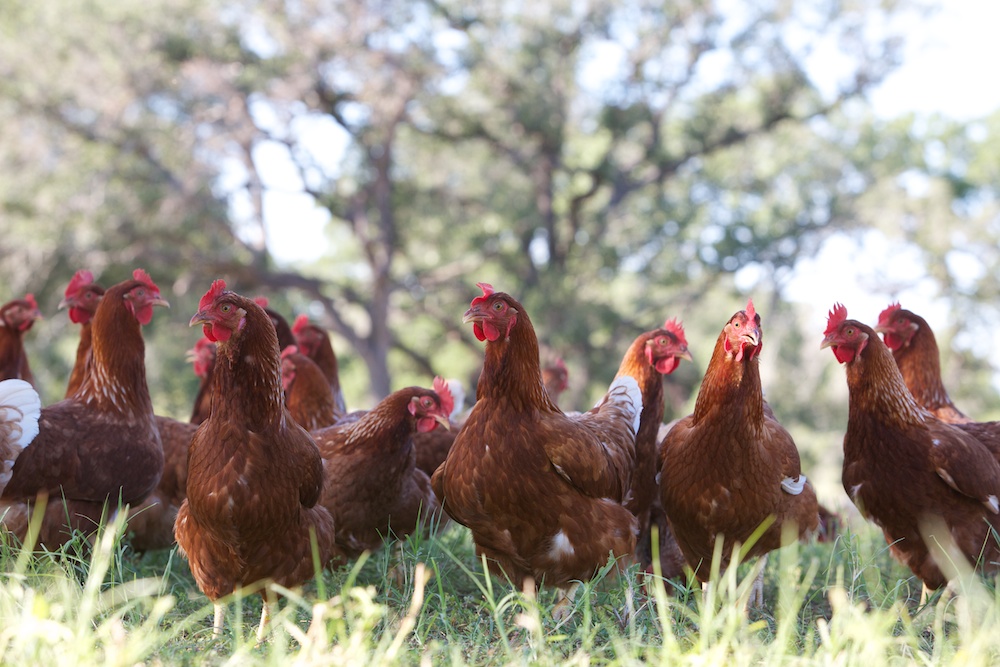
Austin’s Vital Farms is working to change that. Since 2007, the company has been selling its pasture-raised organic eggs — sourced from a network of small family farms in Texas and nearby states — at Whole Foods and other natural grocery stores around the country. The largest producer of this type of egg in the country, Vital Farms made $4.9 million in revenue last year. With this kind of clout, the company can offer support, guidance, and market access for egg producers looking to transition to raising birds on pasture — slowly but surely building the ranks of humane chicken farms in the U.S.
Third-generation Arkansas egg farmer Michael Cox is one of those producers. His family had already converted its operation to a cage-free, organic one, but the birds were still confined indoors (USDA organic standards require that the birds have “access to the outdoors,” but that can mean nothing more than a small porch attached to the henhouse). “We had heard about [pasture-based farming] and were really interested in doing it, but didn’t know where to start or who to talk to,” Cox says.
Cox got in touch with Vital Farms when CEO Matt O’Hayer called to inquire about buying feed, and that first phone call led to a visit to Vital Farms’ 27-acre site in south Austin, where O’Hayer first perfected the pasture-based model he now passes on to farmers like Cox. Now, in addition to producing eggs sold under the Vital Farms name, Cox connects with other farmers in his area interested in switching over to a pasture-raised operation. He said he sometimes gets a dozen phone calls a week from curious farmers.
Jody Horton
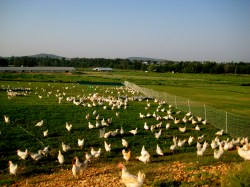
For conventional egg producers, the Vital Farms model — and the higher prices its humanely raised eggs command — has undeniable appeal: “You can find a farmer who used to raise 60,000 or 70,000 birds for Tyson, and we can give them 15 or 20 percent of the birds they’ve had, and they can actually make a better living,” Cox explains. “It’s a win-win for everybody; it’s better for farmers and birds.”
Farming has always been a physically grueling occupation. Just as processed foods and energy-sucking appliances offered relief from the drudgery of housework, industrial agriculture made farming much less laborious. “I can see how, as conventional farming got bigger, some farmers thought, ‘This is so much more convenient,’” says Aurora Porter, Vital Farms’ director of marketing and communication. “But then one day you don’t want to go in the henhouse anymore because it’s too depressing.”
It’s not just that working in a conventional henhouse is a giant bummer. There’s also the cycle of debt that traps farmers, who risk losing their contracts with corporations like Tyson if they don’t make the costly equipment upgrades the company demands every few years.
“We spent a lot of years in the commodity market,” Cox says. “It’s not a pretty place to be. It’s kind of a grow-or-die mentality.”
While raising birds on pasture promises higher profits in the long run, it also requires an up-front investment in things like fencing, mobile henhouses, outdoor feeders, and, of course, enough land for the birds to roam. That investment, Cox says, is “not a tremendous amount of money, but most of these farmers are used to living paycheck to paycheck, growing for the man.” Plus, the pasture-based model is still enough of a niche that most big agricultural lenders won’t give loans to farmers hoping to switch to it.
Converting to pasture-raised, then, makes more sense for some farmers than others, says Porter. She talks about one of Vital Farms’ partners in Georgia who lost his Big Ag contract when the corporation abruptly pulled out of his county, leaving a half-dozen local producers stranded. For that farmer, the time was right to start over with something different.
So far, Vital Farms hasn’t been able to help its partner producers financially. But now the company is experimenting with crowdfunding to help a California farmer join the team. His farm is organic, but he wants to move his birds onto pasture — which can cost at least $80,000, Porter says. If the campaign succeeds, Vital Farms hopes to continue expanding, widening its network of pasture-based farms and ultimately getting more humanely raised eggs on grocery store shelves.
“There’s so many people willing to pay a fair price for eggs if they know the birds are being treated well and the farmer is actually making a living,” Cox says.
A message from
Your support keeps our climate news free.
Grist is the only award-winning newsroom focused on exploring equitable solutions to climate change. It’s vital reporting made entirely possible by loyal readers like you.
At Grist, we don’t believe in paywalls. Instead, we rely on our readers to pitch in what they can so that we can continue bringing you our solution-based climate news. Donate today to keep our site free.