McDonald’s has a pretty unsavory reputation when it comes to public health. Lately the company has taken some steps to improve its image, launching vegetarian restaurants in India and putting fresh apples into Happy Meals. But there’s something at the core of its business that has at least the potential to do some good for both our waistlines and a different kind of waste: our waste of food. McDonald’s offers flexible portions.
Walk through those golden arches and you have your choice of a cheeseburger, double cheeseburger, quarter pounder with cheese, or double quarter pounder with cheese. Chicken nuggets? Do you want four, six, nine, or 20? Fries with that or no? It’s choice, and we Americans love choice. But it also means only ordering (and only spending money on) the food we actually intend to eat.
Of course, simply providing choice is not the whole picture. How many people actually opt for the plain single hamburger when the double is just a few cents more expensive? Turns out, not many.
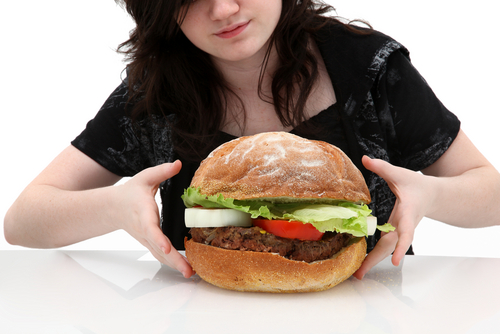
In 1955, McDonald’s introduced a new product line — french fries. The original portion weighed 2.4 ounces (and had 210 calories). Today, that product is known as a small order of french fries, and is normally overlooked for the super size, at 7.1 ounces (and 610 calories). What’s more, the largest order of french fries in the United States is a whopping 37 percent larger than the largest size available in the United Kingdom. That’s a lot of fried potato.
Consider how portion sizes of some other common foods have grown over the past 40 or so years:
- From 1982 to 2002, the average pizza slice grew 70 percent in calories.
- The average chicken Caesar salad doubled in calories.
- The average chocolate chip cookie quadrupled in calories.
- Portion sizes can be two to eight times larger than USDA or FDA standard serving sizes [PDF].
- Our plates have grown to hold all those portions, too. The surface area of the average dinner plate expanded by 36 percent between 1960 and 2007.
This has meant a lot of additional calories that we’re routinely eating but probably don’t need to be. But it’s also meant a pretty shocking increase in the amount of food we’re discarding. Today, we waste 50 percent more calories than we did in the ’70s. The average American today wastes 10 times as much food as their counterpart in Southeast Asia.
Food waste is a complex issue with many drivers, but ever-expanding portion sizes are undoubtedly one of them. But while much attention has been paid to the resulting impacts on obesity, there has been relatively less focus on the ways in which increased portion sizes have contributed to the growing amount of food that gets wasted.
“Plate waste,” the food left on the plate after a meal is finished, is a significant contributor to food waste in restaurants. On average, diners leave 17 percent of meals uneaten, and 55 percent of these potential leftovers are not taken home. At the heart of the problem is the fact that for restaurants and cafeterias, food costs represent a relatively low portion of operating costs when compared to things like labor and rent. Put simply, they need to make a certain amount of money per customer to stay afloat, and since throwing more food on the plate makes the value go up in most people’s eyes, that’s exactly what they do. From a business perspective, this makes perfect sense. From a social or environmental perspective, the costs are pretty staggering.
Consider that we use 50 percent of our land and 80 percent of our fresh water every year to grow food, 40 percent of which never gets eaten. That’s a lot of resources going to waste. And when that wasted food ends up in landfills, it releases methane, a greenhouse gas 23 times more powerful than carbon dioxide and a major contributor to global warming. Consider also that this is all happening at a time when one in six Americans today is food insecure, meaning that at any given time, they might not have the means to get enough food. Just a 15 percent reduction in food waste could free up enough food to feed 25 million people.
And it’s not just restaurants.
Homes are not exempt from the large-portion trend. The Cornell Food and Brand Lab reports that serving sizes in the Joy of Cooking cookbook have increased 33.2 percent since 1996 alone. That is, a recipe that used to “serve 10” now “serves seven” (or the ingredient amounts are greater for the same number of servings). In some cases, this leads to overeating. In others, it simply leads to extra food that ends up in the trash.
So what’s the fix? Well, for starters, more restaurants can take a page from McDonald’s book and start offering half orders and a la carte options. Popular restaurants and cafes like T.G.I. Friday’s, Au Bon Pain, and Cheesecake Factory already offer smaller portion options. Now the rest of the industry should follow suit. Restaurants can also do away with “split plate” charges, which actually penalize customers for only ordering what they’ll eat and eating what they order.
For McDonald’s part, offering a small portion but highly incentivizing purchase of something twice the size is still problematic. If the restaurant is going to truly be a partner in this public health crisis, it needs to use all its persuasive techniques to truly help people eat better, not just list the option on the menu.
As consumers, we should know that many restaurants offer half orders at a reduced price even if it’s not on the menu. And if they don’t, just take home the leftovers. And then remember to eat them. When you’re at home, be realistic about what you’ll eat, save leftovers, and consider replacing your plates. Simply switching to a smaller plate could mean eating fewer calories, bringing with it important health benefits and the potential to waste less food and save more money.
A message from
Your support keeps our climate news free.
Grist is the only award-winning newsroom focused on exploring equitable solutions to climate change. It’s vital reporting made entirely possible by loyal readers like you.
At Grist, we don’t believe in paywalls. Instead, we rely on our readers to pitch in what they can so that we can continue bringing you our solution-based climate news. Donate today to keep our site free.