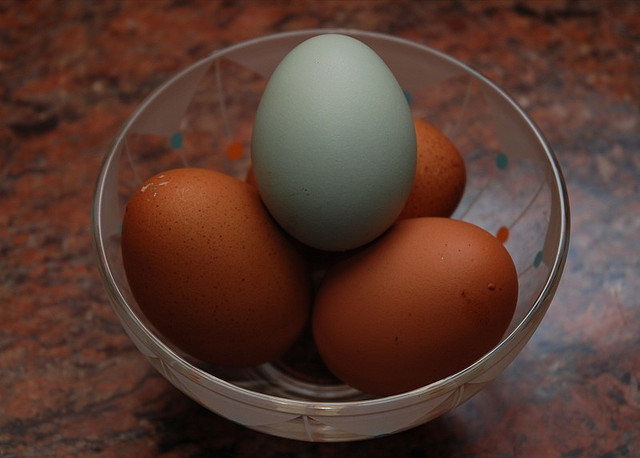
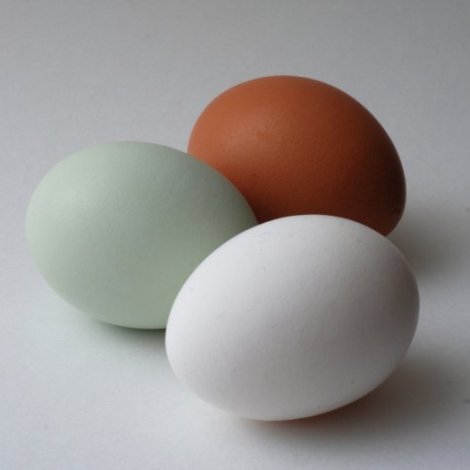
Do you like blue eggs and ham and infectious diseases? Then you will love these blue eggs, which get their weird color from a harmless retrovirus.
There are a few breeds of chicken that are known for their tendency to pop out the occasional blue egg — Araucanas in Chile and Dongxiang and Lushi chickens in China. (These breeds don’t show up often in the U.S., so you’re unlikely to find a blue egg at your local farmers market.) Among these particular chickens, there’s a high incidence of the EAV-HP retrovirus, a type of virus that slips its own manufactured DNA into the DNA of its hosts. EAV-HP inserts a gene called oocyan (which as far as I can tell literally means “blue egg”), which makes the eggshells absorb a pigment called biliverdin from the chicken’s uterus.
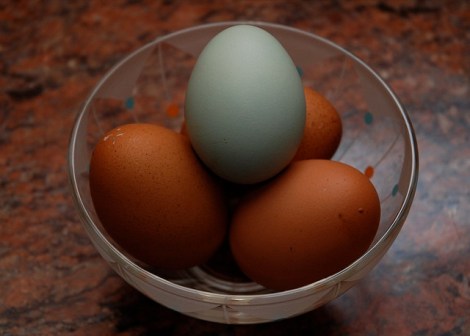
EAV-HP isn’t harmful to humans, but frankly, “oh, the virus makes the egg absorb chicken uterus bile pigment, it’s perfectly safe,” doesn’t sound too appetizing to me. They look awfully pretty, though! Let’s get some Araucanas and have a labor-free Easter this year.
A message from
Your support keeps our climate news free.
Grist is the only award-winning newsroom focused on exploring equitable solutions to climate change. It’s vital reporting made entirely possible by loyal readers like you.
At Grist, we don’t believe in paywalls. Instead, we rely on our readers to pitch in what they can so that we can continue bringing you our solution-based climate news. Donate today to keep our site free.