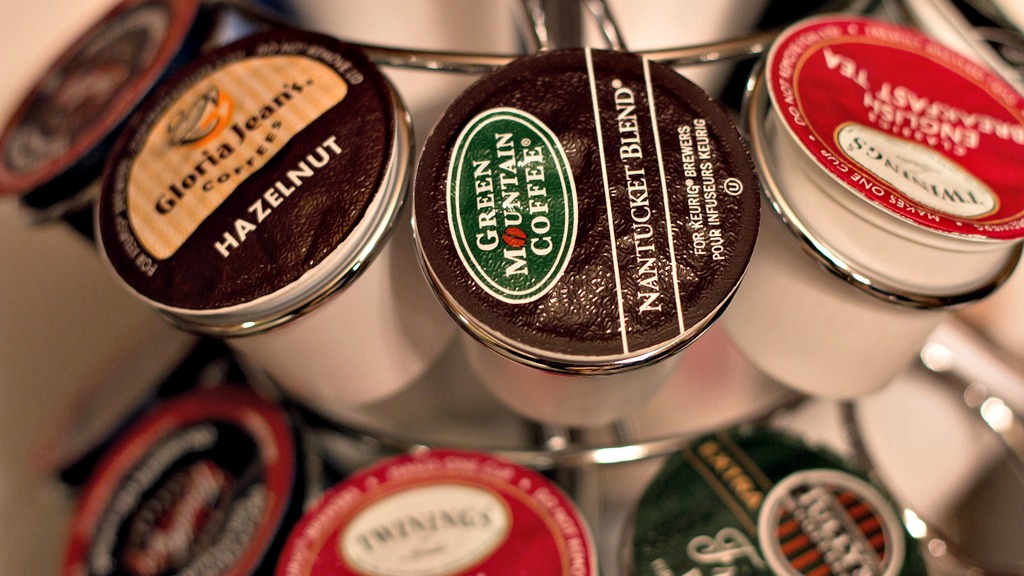
K-Cups seem like the complicated Starbucks order of today: an expensive, caffeinated way to express your oh-so-unique taste and personality. Who needs to run out for a tall caramel macchiato when you can make a single serving of Wolfgang Puck’s Jamaica Me Crazy medium roast in the comfort of your kitchen?
Except all those little plastic cups add up to some massive trash. Ten and a half loops around the equator, in fact, according to Mother Jones. Kind of ridic for a company owned by a fair-trade, organic coffee brand, no?
Plus, the #7 plastic blend is BPA-free, but that doesn’t mean it’s safe. Even if all that plastic magically disappeared into the ether on disposal, its manufacture could still be making workers sick, writes MoJo:
One concern with this plastic mix is the presence of polystyrene, containing the chemical styrene, which Hoover warns is especially worrisome for workers. A possible carcinogen, styrene can wreak havoc on the nervous systems of those handling it, according to the Centers for Disease Control and Prevention …
Keurig would not tell me what types of plastic go into its #7 blend, saying the information was proprietary, nor would it confirm or deny the presence of polystyrene in the mix.
If that weren’t bad enough, Keurig taxes you for being bad at math: K-Cups cost you more than twice what a bag of beans does — about $50 a pound. Damn, son! If you refuse to surrender your Keurig, reusable filters or biodegradable pods are the way to go.
A message from
Your support keeps our climate news free.
Grist is the only award-winning newsroom focused on exploring equitable solutions to climate change. It’s vital reporting made entirely possible by loyal readers like you.
At Grist, we don’t believe in paywalls. Instead, we rely on our readers to pitch in what they can so that we can continue bringing you our solution-based climate news. Donate today to keep our site free.