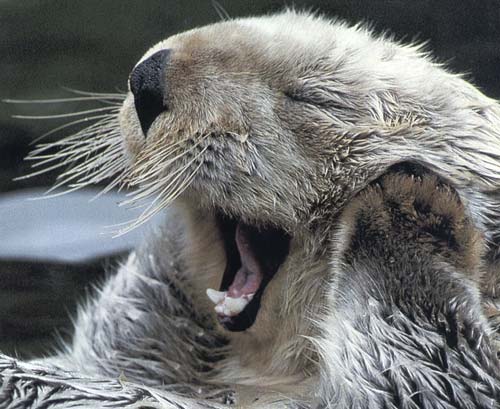
“Not tonight, dear, I’m self-conscious about my dong.”
If you needed another reason why we don’t want harmful pollution in our waterways, try this one on for, ahem, size: Endocrine-disrupting chemicals in U.K. rivers may be shrinking otters’ penises.
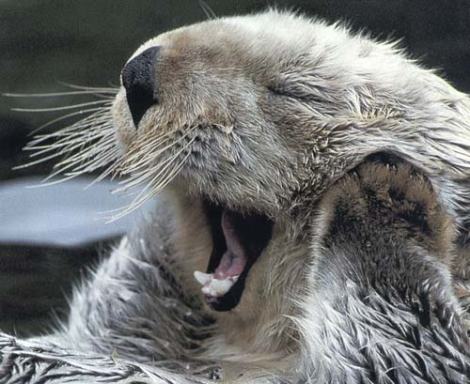
“Noooooooooooo! My weenie!”
Researchers surveying otters in England and Wales found that the average weight of their penis bones has decreased over time. This of course raises an important question: “Otters have BONES in their PENISES??” The answer is yes; like other mustelids and rodents, male otters have a wang-bone called a baculum, because mustelids and rodents are a walking boner joke. But the new data raises another, less pressing question too: Why is this happening? Scientists think human-made endocrine-disrupting chemicals are to blame.
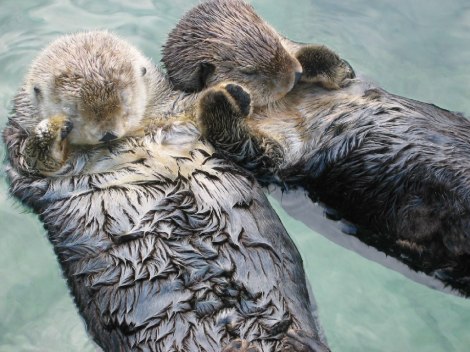
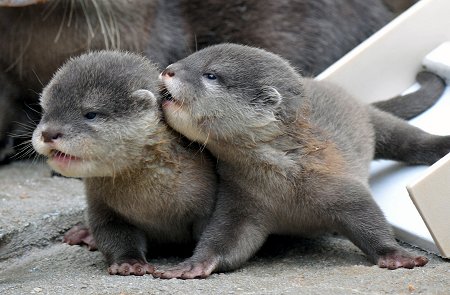
“Honestly, honey, it’s the motion of the ocean.”
This would maybe not be a big deal — I’m imagining a lot of lady otters saying “honey, I don’t care about the size of your baculum, I care about how you hold my hand while we float around.” But the otters are experiencing other reproductive health side effects — undescended testicles and cysts on the tubes that carry their sperm. And I hardly have to tell you that the eventual result of problematic otter reproduction is NO MORE OTTERS. Is that the world we want our children to live in? No. No it is not.
A message from
Your support keeps our climate news free.
Grist is the only award-winning newsroom focused on exploring equitable solutions to climate change. It’s vital reporting made entirely possible by loyal readers like you.
At Grist, we don’t believe in paywalls. Instead, we rely on our readers to pitch in what they can so that we can continue bringing you our solution-based climate news. Donate today to keep our site free.