👋 Hi, everybody. In today’s newsletter, we’ve got a gift for you all: an array of artwork capturing one of the most beautiful ecosystems on Earth. It reflects the work of a new collaboration of artists and scientists aimed at protecting coral reefs by sharing their stories in a variety of mediums.
Keeping with a water theme, we’ve also got a couple of stories about wetland restoration from the East Coast to the West, and a type of heat wave dubbed “snow eaters.”
This post originally appeared in Grist’s weekly solutions newsletter, Looking Forward. Not on our list yet? Subscribe here to get it in your inbox every Friday.
Telling the story of coral reefs, through art and science
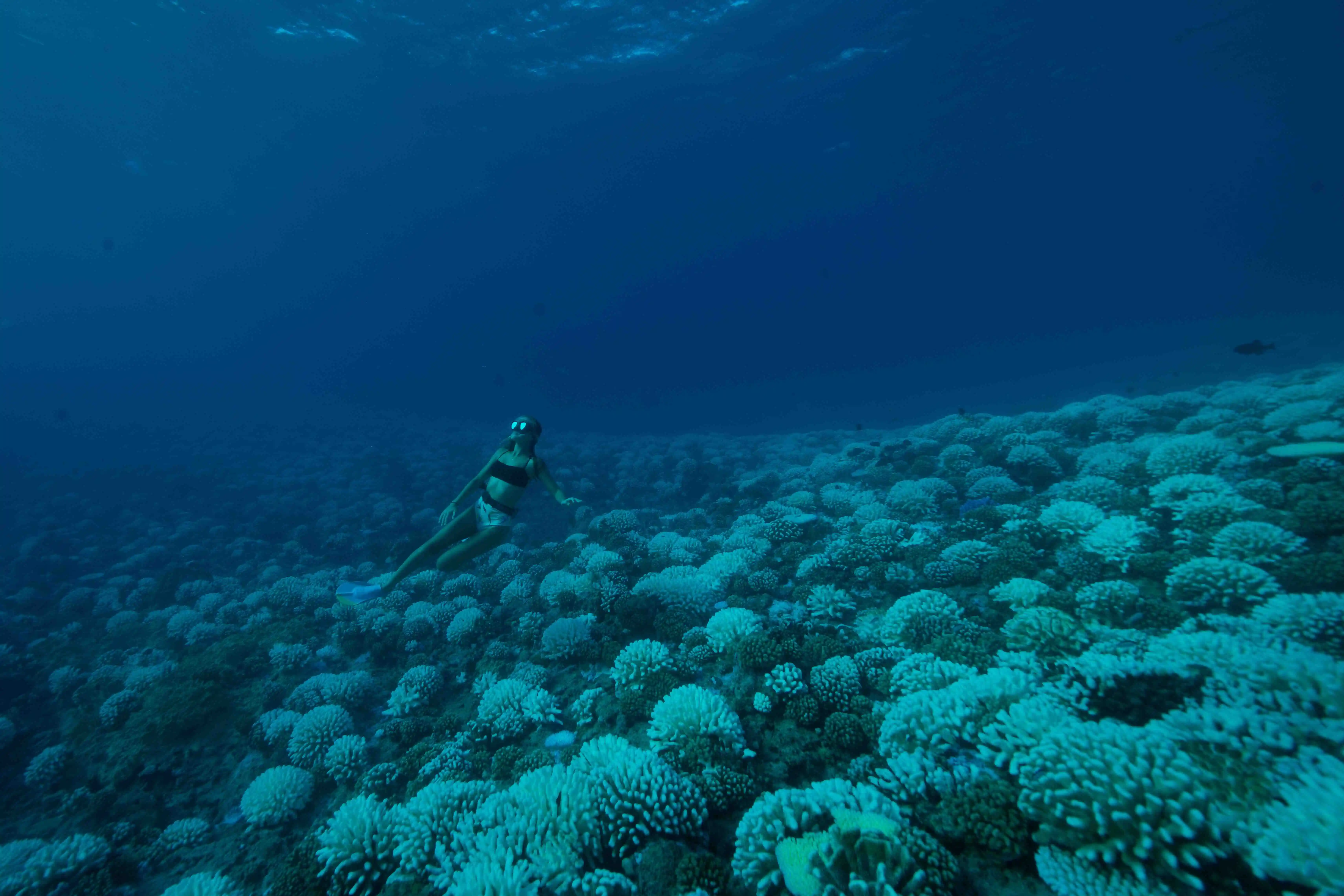
Cristina Mittermeier
Even if you’ve never seen a coral reef in person, you can probably picture one in your mind’s eye. The otherworldly-looking ecosystems are beloved for their intricate beauty, their vibrant colors, and the abundance of life they support.
You may also know that the world’s reefs are endangered. Climate change is heating our oceans and acidifying them as they absorb excess CO2, making it harder for corals to form. Last year, a group of scientists announced that we had reached our first major planetary “tipping point” with the widespread loss of warm-water corals.
But efforts to protect remaining reefs, and restore damaged ones, are ramping up — and their iconic, evocative beauty may be part of the story of saving them. At least, that’s the hope of a new initiative called the Coral Art-Science Consortium. Composed of leading scientists and artists from a variety of backgrounds and disciplines, the group is dedicated to telling the story of coral reefs through art and, they hope, inspiring action that could help protect them.
Mónica Medina, a biology professor at UCLA, has long been using art in the classroom — including the work of Cristina Mittermeier, the pioneering conservation photographer and marine biologist. Showing visual art or playing music offers a different window for her students into the worlds they study, Medina said.
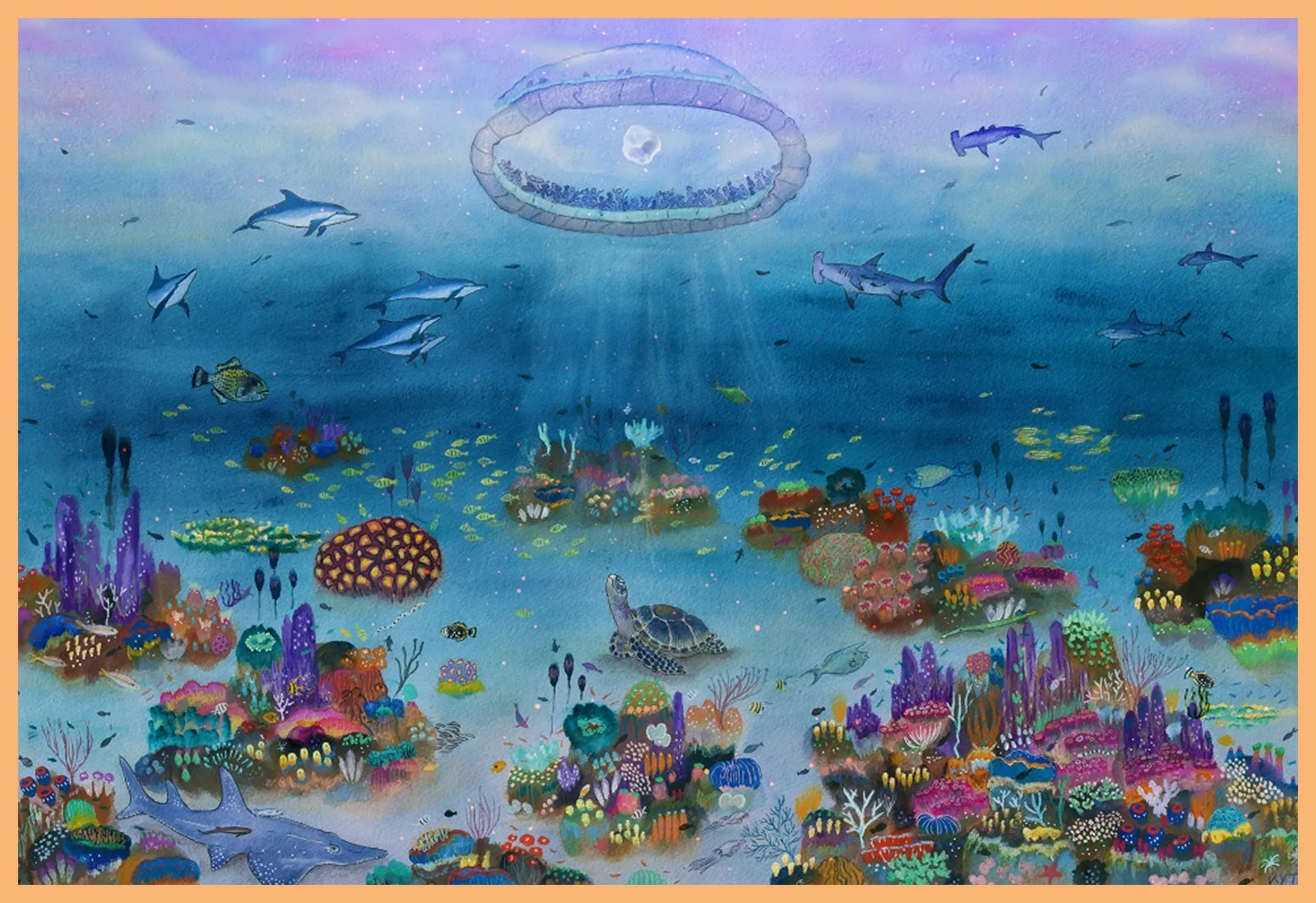
This piece is part of a project called Coral Reef Futures — a collaboration between an international team of scientists, futurists, science-fiction storytellers, and the multidisciplinary artist Kim Yip Tong — which translates reef science into narrative storylines and visual worlds. Kim Yip Tong
“It just generates this different energy,” she said, especially in contrast with a hard science like marine biology, which can feel like “the world is ending, all the ecosystems are dying.” Art, with its ability to imagine different futures, leaves more room for hope.
Medina got together with two other coral scientists, Oren Levy and Or Ben-Zvi, who were working on a paper about the interplay between art and science and how the two fields can work hand-in-hand to inspire meaningful action for the world’s reefs. She began coordinating with artists to contribute their insights to the paper — and then more scientists, and then more artists — including some big names, like Cristina Mittermeier herself.
“They all said yes,” Medina told me. “Every single one of them that we approached.”
The original plan was to publish a call-to-action paper with some 50 co-authors, including scientists and artists from all over the world and all manner of disciplines — sculpture, photography, dance, ecology, conservation, deep-sea research. But when the journal limited the number of authors to three, the group instead spun itself into a consortium (which became the fourth author on the paper, published last month in Science Advances).
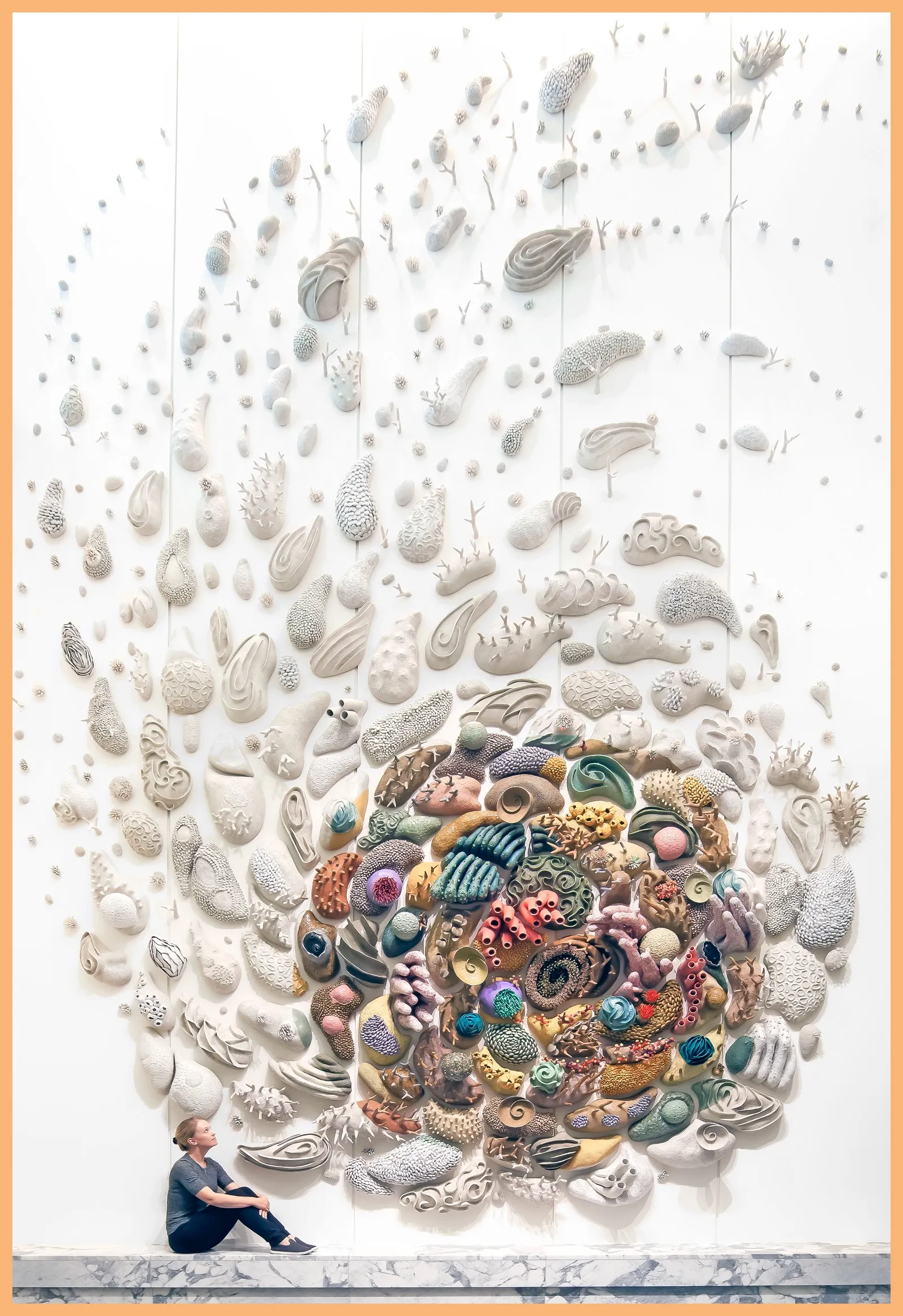
Courtney Mattison (above) works with large-scale ceramic sculpture, the intricate pieces highlighting both the beauty and fragility of coral reefs. This piece using glazed stoneware and porcelain is titled “Confluence (Our Changing Seas V).” Another work from the Changing Seas series was used as the cover of Science Advances’ July 10 issue. Courtney Mattison
“I have never experienced a peer-review process that was more collegiate and amicable and collaborative,” said Mittermeier.
Medina hopes the consortium can continue to collaborate and grow, though next steps are “up in the air,” she said. For now, the works and profiles of the contributing artists and scientists are on display on a website that Medina put together. But if the consortium can secure additional funding, the future could include things like art-focused events, installations, and digital campaigns to reach more people. She also noted that several people have reached out about donating art pieces, which could potentially be sold to generate funds that would directly support the Indigenous or local communities who steward reefs.
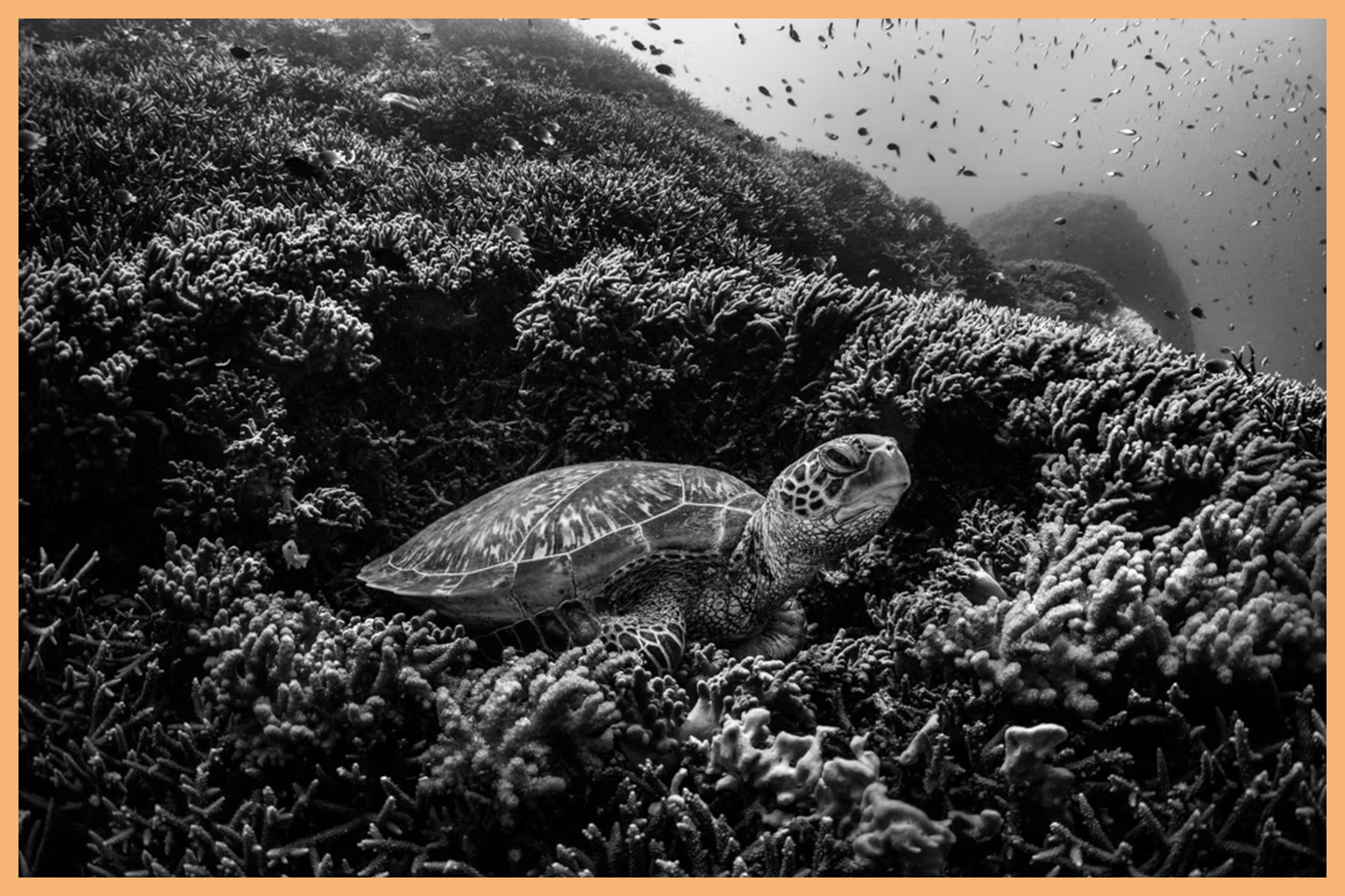
This photo, “Home on the Reef,” shows a green sea turtle resting among the coral on Australia’s Great Barrier Reef. Cristina Mittermeier
Both Medina and Mittermeier told me about their own emotional responses to seeing the death of reefs — and the fish, drifting around like zombies, not understanding what is happening to their homes. For both of them, art has offered an outlet for processing their own grief and a way to invite others in without overwhelming them.
“Scientists, by virtue of the rigors of academia, oftentimes are not allowed to say the things that somebody like me can say,” Mittermeier said of her role as a storyteller. “I can tell people that I’m truly scared. And I’m grieving for the things I see happening.” As an advocate, she also can connect the dots from something tangible and emotional like coral bleaching back to the underlying causes of the climate crisis.
“The part where I feel like we are empowered to do something is to keep talking about emissions and the imperative of transitioning to different types of energy,” Mittermeier said.
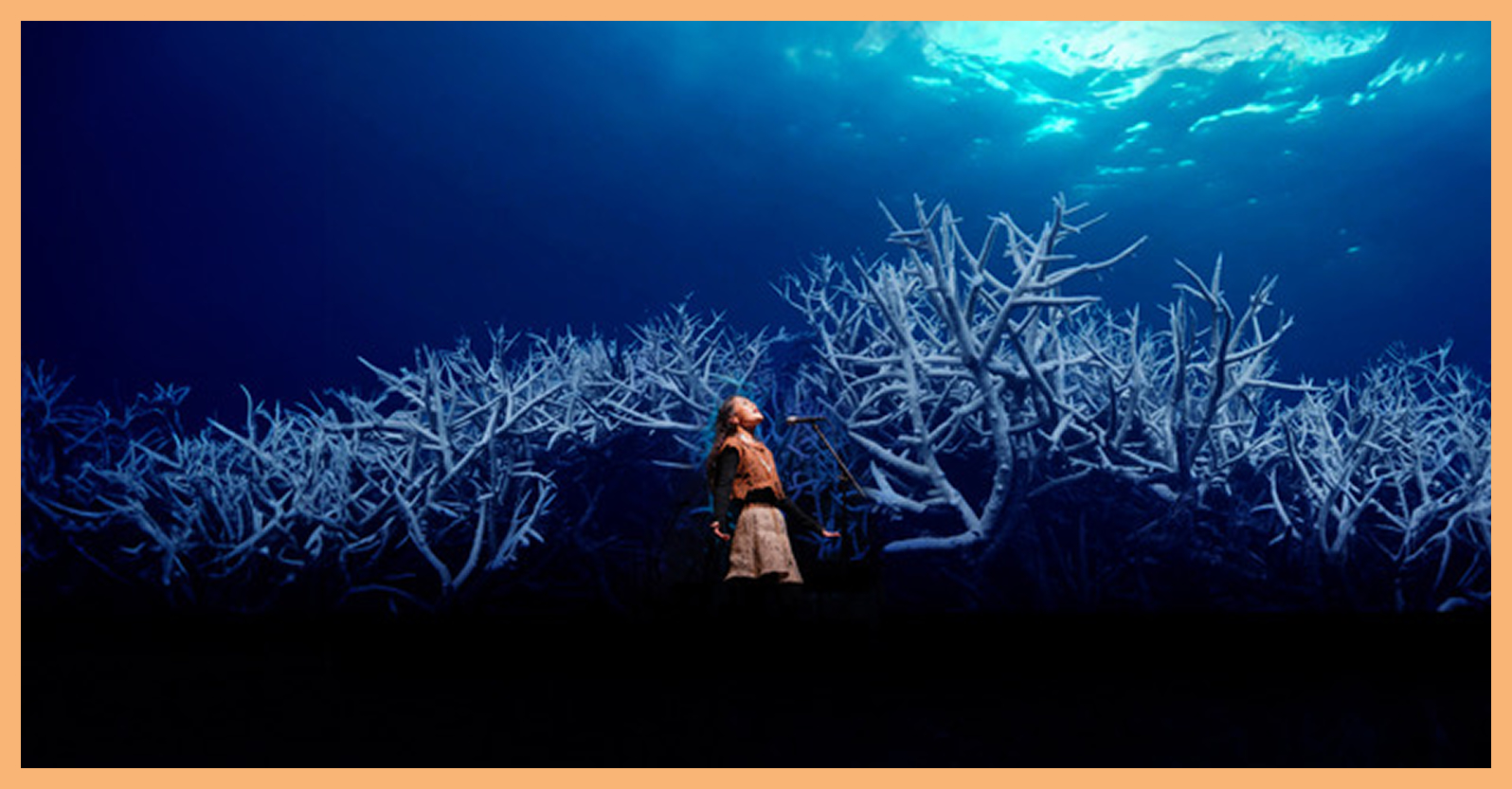
This image shows a scene from Small Island Big Song, a collaborative music, film, and performing arts project exploring the cultural connection to reefs for Indo-Pacific island nations. The live concert has toured all over the world. Small Island Big Song
The momentum certainly seems to be there. Last month, Medina and Levy facilitated a session on art as a catalyst for conservation at the International Coral Reef Symposium in New Zealand. It was packed, Medina said, and participants told her it was a relief for their mental health at an otherwise difficult conference. Many people also signed up to be part of whatever next steps the consortium may take.
“I feel that people are ready to keep fighting,” Medina said. “Because if we give up, then all is lost. And to me, the art [gives] me that energy and drive that we need right now to face what’s coming.”
More from Grist
🌿 Living levees
Around the San Francisco Bay, engineers are experimenting with a solution called “horizontal levees” to address both rising seas and the loss of wetland habitat. Unlike traditional levees, these projects act more like a natural estuary, breaking waves along a gentle slope that’s seeded with native plants. Read more
🌊 The marsh of time
Local leaders in Georgia are addressing coastal erosion by restoring native marsh grasses. But in order to protect the marshes, which naturally migrate and will do so more rapidly as sea levels rise, conservationists are also proposing protections not just for the marshes themselves, but the land around them. Read more
❄️ She’s a snow eater
Scientists are studying “snow eaters,” a type of early-season heat wave that cuts through snowpack and makes meltwater management difficult. They hope the catchy name might help bring attention and more research to this unique threat. Read more
In other news
- Offshore wind infrastructure may provide a surprising haven for sea life, from hunting seals to oyster larvae (Atmos)
- As gas prices remain high, electric motorcycles are seeing a boom in developing countries (The New York Times)
- Illinois is ramping up community solar, and siting it in some interesting places — like the unused rooftops of storage facilities (Canary Media)
- Responding in part to Gen Z preferences, clothing retailers are leaning into mending services and classes (Los Angeles Times)
- It’s probably OK to eat lettuce again — but opt for whole heads over salad mixes (Wired)
And finally, looking forward to …
… a healthy future for coral reefs, and the many species that depend on them (including us).
🪸🪸🪸
The storm was pretty bad. One of the strongest your little beach town has seen in a long time. You know your house and your neighbors’ houses almost certainly would have flooded, if it hadn’t been for the restored reef.
Now that most of the debris has been cleared, you head down to the beach and out for a paddle to pay your respects. You see some others doing the same. Everybody knows how important the reef is for breaking storm surge, let alone everything else. You gaze down at the beauty and strength of the coral, filled with gratitude.
— a drabble by Claire Elise Thompson
🪸🪸🪸
A drabble is a 100-word piece of fiction — in this case, offering a tiny glimpse of what a clean, green, just future might look like. Want to try writing your own (and see it featured in a future newsletter)? We would love to hear from you! Please send us your visions for our climate future, in drabble form, at [email protected]
👋 See you next week!