👋 Hi, everybody. Today, we’re doing something a little bit different in Looking Forward. As you may already know, Appalachia (and the world at large) has lost a couple of legends recently. When a public figure passes, it presents a moment for the rest of us to reflect on their life’s work and the lessons they left us with — so that’s what we’re doing today. Whether you were a superfan yourself or barely knew of them, I think you’ll find a nugget of gold in the immortal wisdom of Wendell Berry and Dolly Parton.
Also today, we’ve got news about EVs, the growth of solar, and beavers.
This post originally appeared in Grist’s weekly solutions newsletter, Looking Forward. Not on our list yet? Subscribe here to get it in your inbox every Friday.
“Be joyful, though you have considered all the facts”
Grist / Amelia K. Bates
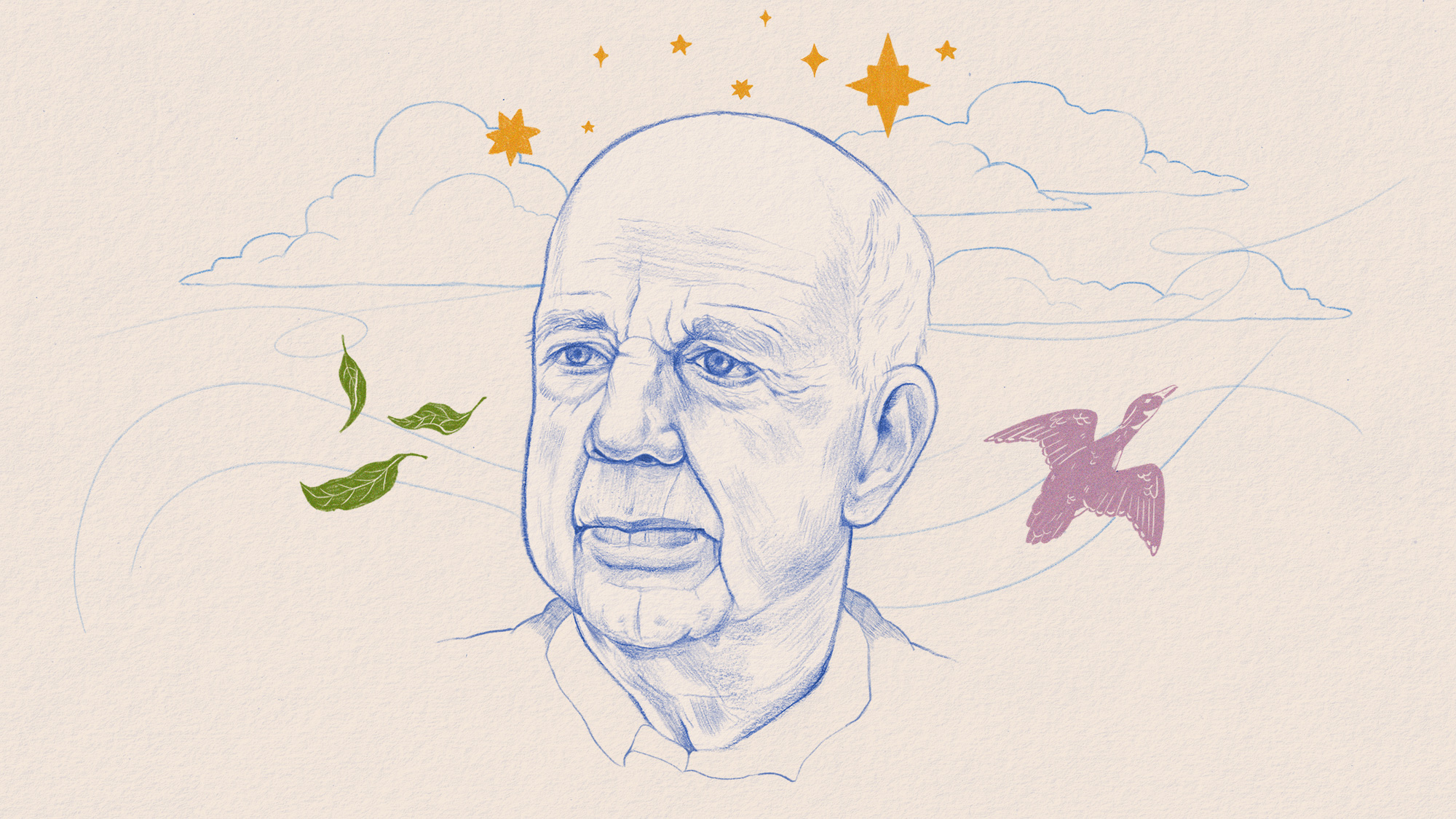
If you’ve taken an environmental anything class, you’ve probably at least heard of Wendell Berry. One of the South’s great environmental writers, Berry was also an activist and a sixth-generation farmer in Kentucky. He was a champion for Appalachia, and rural communities in general — critical of industrial agriculture and bullish about small farms, local food systems, and the approach of tending land with care for future generations. Berry died last week at the age of 92.
“He was such a massive figure, not only as a Southern environmental writer, but also a voice on environmental issues in the region,” said my colleague Katie Myers, who’s based in the region and wrote a reflection on Berry’s life this week (with input and edits from Kentucky-based Grister Lyndsey Gilpin). Although she herself had never encountered him in person, she knew activists who had marched with him and others who had corresponded with him by letter.
Berry’s activism was often high-profile — he was arrested multiple times for civil disobedience protests against environmental harms like mountaintop removal. But, as Katie described, he was also a voice for a much more subtle, almost mundane relationship with the world around us that reflected his own deep love for Appalachia.
“This is a region that bears environmental scars, but it’s also full of farmers and gardeners and people who engage with the wilderness in their every day,” Katie said. “Maybe if they don’t consider themselves environmentalists, they still have their creek that they go to to fish, that they’re familiar with and notice the changes in it. I think his approach to that very, very small-scale level of environmental noticing was meaningful to a lot of folks.”
Berry extended that call for noticing beyond his home region as well. One of his most salient quotes was “Eating is an agricultural act” — in relatively few words, he challenged modern consumers to remember that our food comes from somewhere, and we participate in (and depend upon) systems that it behooves us to get better acquainted with.
Katie pointed to the opening lines of his popular poem, “Manifesto: The Mad Farmer Liberation Front,” which speaks to a person living in detachment from the natural and human systems that support their life:
Love the quick profit, the annual raise,
vacation with pay. Want more
of everything ready-made. Be afraid
to know your neighbors and to die.
“So much of his work was in urging people to look beyond that, look deeper than that, understand that you’re a part of a world that existed before you and will exist after you,” Katie said. “When you plant a seed, you’re not doing it for instant gratification. You’re making a promise to the future.”
Although I’d called Katie to talk about Berry’s legacy, we couldn’t rightly discuss the sorrow felt by Appalachia right now without recognizing the loss of another icon — the late, great Dolly Parton. Katie, who lives in Tennessee, happened to be in Parton’s birthplace of Sevier County on the day the world learned of her death.

Flowers begin to accumulate at the base of Dolly Parton’s statue in Sevierville, Tennessee. Katie Myers
“I went to her statue to just pay my respects,” she told me. Others had the same idea. “I saw people starting to come out, doors opening, people starting to lay flowers down. Grown men were weeping.”
The mourning in her hometown is a reflection of the deep, ongoing connection that Dolly Parton had to the place where she came from — the pride the region felt for her, and vice versa.
“Not only did her origin in a very, very poor community in the rural South inform her songwriting and her artistry, but also, I think, her whole outlook,” Katie said, noting how much Parton was invested in giving back to the region through philanthropy, speaking visits, and more. Much like Wendell Berry’s poetry, Parton’s music shows her appreciation of the natural beauty that she grew up with. In songs like “My Tennessee Mountain Home,” she tells a different story about rural Appalachia than the image that many others have of a polluted and impoverished wasteland.
“It’s a place that’s been described in different news articles as like a smudge, or a waste. And she was always speaking of the landscape and the biodiversity as something really beautiful and special,” Katie said.
As we discussed Berry’s poetry and Parton’s music, Katie also shared a favorite Wendell Berry quote that Lyndsey had highlighted, from the same poem above: “Be joyful, though you have considered all the facts.” It’s a particularly resonant message for a journalist — but also for anyone living with an awareness of the many crises we face today, looking out at a world that’s both blighted and still worth fighting for, and trying to make meaning out of it all.
“Revisiting Wendell Berry and Dolly Parton,” Katie said, “and the way that they imparted complex and difficult realities through art, has made me think a lot about, like, what does it mean to know — you know, capital-K know — but also continue to find joy in the world around you?”
Dive deeper:
- Wendell Berry’s life on Earth
- After Dolly Parton’s death, her hometown mourns (Blue Ridge Public Radio)
- “Manifesto: The Mad Farmer Liberation Front” (by Wendell Berry)
- “My Tennessee Mountain Home” (by Dolly Parton)
Share your thoughts
It seems it’s been a particularly bad few weeks for beloved public figures — Tim Curry also left us, and Gloria Steinem. Have any of these passings left a particular mark on you? What quotes, songs, or other offerings have you been sitting with? What lessons are you holding onto from what they shared with the world? Reply to this email to tell me about it.
More from Grist
🚗 If you build it
Before the second Trump administration, Georgia had been laying groundwork for years to become a leader in EV manufacturing. New federal policies delivered some shocks to the industry — but there are signs it’s beginning to stabilize, even if the transition will take longer. Read more
☀️ Red sun
Even as Republicans at the federal level have been slashing clean energy incentives, red states lead the nation in solar development, according to a new report. The trend may not be driven by climate goals so much as laxer permitting and the energy demands of big business. Read more
📈 On thin ice
After the tragedy in Nepal last month, it’s reasonable to wonder how we might be able to predict where and when the next such disaster will hit. As the planet warms and glaciers retreat, we will almost certainly see more floods and landslides — while scientists are improving their monitoring through a variety of tactics, there’s no silver bullet for early-warning systems. Read more
In other news
- China now has more solar capacity than coal — but its actual energy usage is a more complicated picture (Canary Media)
- 20 states and DC are suing the Trump administration over cuts to endangered species protections (The New York Times)
- This company ranked 72 of the world’s major cities in terms of climate resilience — go off, Chicago (Gizmodo)
- How one man is fighting back against an onslaught of oil and gas lease sales in Colorado (The Colorado Sun)
- We just may be ‘in the middle of a beaver conservation movement’ — a winning strategy for wetlands and biodiversity (Reasons to be Cheerful)
And finally, looking forward to …
… words that will inspire generations of readers and listeners to come. Ever since Katie and I spoke, I’ve been listening to this song on repeat — so I’m going to let Dolly have the last word.
Honeysuckle vine clings to the fence along the lane
Their fragrance makes the summer wind so sweet
And on a distant hilltop, an eagle spreads its wings
And a songbird on a fence post sings a melody
In my Tennessee mountain home
Life is as peaceful as a baby’s sigh
In my Tennessee mountain home
Crickets sing in the fields nearby.
🦗🦗🦗
👋 See you next week!