👋 Hi, everybody. In this week’s newsletter, we’re sharing some thoughts on what the climate movement can learn from touring musicians and the uniquely powerful atmospheres they create at their live shows. I had the opportunity to chat about this with AJR’s bassist, Adam Met (who is also a climate advocate and nonprofit leader).
We’ve also got some news for you about biodiversity, the benefits of parks, and what the World Cup has done for public transportation.
This post originally appeared in Grist’s weekly solutions newsletter, Looking Forward. Not on our list yet? Subscribe here to get it in your inbox every Friday.
What the climate movement can learn from live concerts

Matt Winkelmeyer / Getty Images for iHeartRadio
If you’ve ever been to any kind of live show, you know what a potent space it can be. Strangers become dance partners — or sharers of tissues, belly laughs, or steadying hands — and artists have a special opportunity to connect and share a piece of themselves with fans.
I’ve been lucky enough to experience this energy multiple times. So, I was intrigued when I got a PR email asking if I wanted to talk with Adam Met — the “A” in the indie alt-pop band AJR — about what the energy of live concerts can do for climate action. A few weeks later, I found myself on the phone with Met himself.
“My music background has taken me all over the world,” Met told me in an interview the day after Earth Day. Everywhere he’s gone, he said, he sees the localized impacts of climate change — but also the incredible energy of a crowd, and the desire those people have to be part of something bigger than themselves.
As a bassist, he sells out stadiums with the band he and his two brothers started as teenagers. But, in the first chapter of his book, Amplify: How to Use the Power of Connection to Engage, Take Action, and Build a Better World, Met asserts that he wasn’t meant to be a musician. He shared with me that he doesn’t even read music. Instead, Met seems to view his accidental stardom as a kind of key to open doors for the work he finds more urgent.
Met has been interested in climate issues since a high school field trip to see Mary Robinson, the former president of Ireland and U.N. high commissioner for human rights. “She was just amazing,” Met said. “And for the first time, when I was a kid, I understood the relationship between human rights and climate change. And it inspired me to keep studying it in my undergrad, my master’s, my Ph.D.”
He not only has a doctorate in human rights law and sustainable development, but Met is also the founder of a nonprofit, Planet Reimagined, which brings together research and advocacy to drive policy change for clean energy expansion and other solutions.
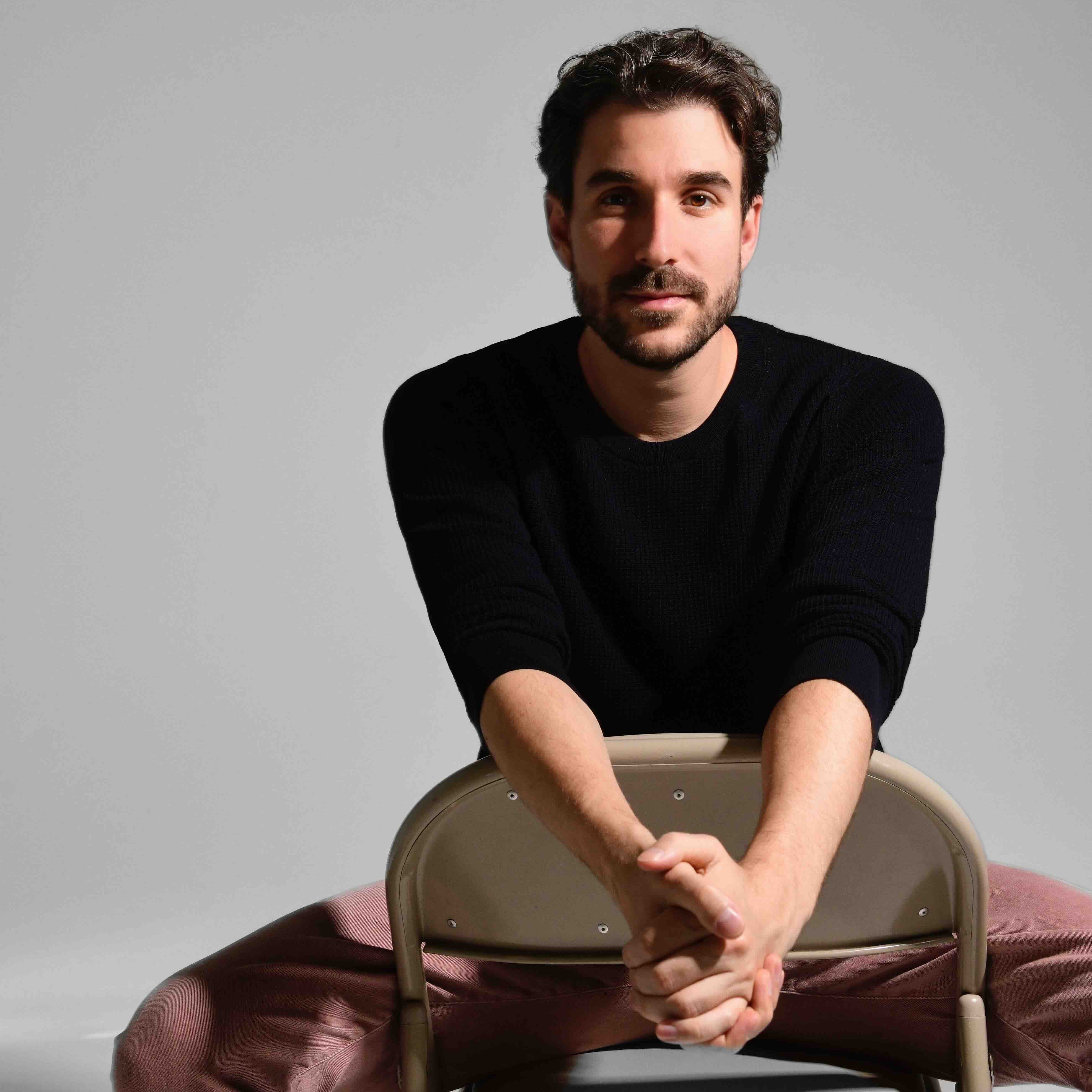
Bassist, author, and climate advocate Adam Met. Shervin Lainez
“I’m aware that even with my academic credentials and sleeves-rolled-up policy work, plenty of people see me as just another musician with another hollow agenda,” Met writes in the book. But, he adds, while he’s been trying to break out of the musician-with-a-cause pigeonhole, his experiences with climate policy and advocacy have also shown him why his music career really matters.
As an artist and performer, Met knows how to move people.
AJR’s concerts are famously high-energy, immersive experiences. Met saw an opportunity to harness this energy, and to give these massive crowds an on-ramp to climate action — not just with vague encouragement to “do something about climate change,” but with specific, concrete actions for climate progress where they live.
As an example: “We pulled into Phoenix on our last arena tour, and it was 109 degrees out,” Met told me. “And while that was horrendous, that was something that the fans experience all the time in Phoenix.” At that concert the band encouraged attendees to petition their city council to recognize extreme heat as a climate emergency and release funds to combat it. “It was something hyperlocal, something that they could have an impact on. We got over a thousand signatures on that petition,” Met said.
An action in Salt Lake City, meanwhile, had concertgoers sending handwritten postcards to Utah legislators urging them to protect the Great Salt Lake.
“That kind of thing we do in every single city,” Met said. It’s effective not just because of the specificity of the actions, or the connection the concertgoers feel to the band (although both matter), but because of the energy and sense of possibility that live events can create — what’s known as “collective effervescence.” As Met describes in his book, the term (originally coined by the French sociologist Émile Durkheim) refers to that special feeling of being bound together by an emotional high. Its cousin, “collective efficacy,” is the sense that we can accomplish more when we’re part of a group.
It’s something Met says the climate movement writ large could learn from. Planet Reimagined is now working with other artists — including the likes of Billie Eilish, Reneé Rapp, Tyler Childers, and Tame Impala — to create the same kinds of opportunities on their tours. The organization is also launching a tool called Grapevine (currently in beta) to further tap into local momentum; the AI-boosted platform takes a policy that worked well in one city and creates a bespoke roadmap for another place to apply the same model in its own local environment.
The success Met and his brothers built with AJR has also had another benefit for his climate work: It’s enabled him to rub elbows with other climate leaders and bring them in on the fun — including his original inspiration, Mary Robinson. “We’ve done a bunch of climate events together,” Met said. “We danced onstage together at London Climate Week last year. We’re probably gonna do something else together this year. It’s a great friendship.”
Dive deeper:
- How musicians and concert venues are upping the tempo on climate action
- Meet the DJs spinning Earth Day into nightlife
More from Grist
🌳 Bringing in the green
Parks and green spaces bring tons of benefits to their surrounding communities, including economic ones. A new report from the Trust for Public Land found that for every $1 invested in parks, local communities reap $3 — for instance, by boosting tourism, commerce, and public health. Read more
⚽ A score for transit
Cities like Atlanta and Seattle (my home!) have made big investments in public transit over the past several years, partially in preparation to host World Cup matches this summer. But they designed these improvements to serve residents first — not just the influx of soccer fans who will travel to stadiums. Read more
⛰️ To know a trail
Community scientists in a group affectionately known as GRISLD — Gang of Retirees in Search of Life’s Diversity — are documenting biodiversity in the ecological hotspot of the Great Smoky Mountains. Their efforts are uncovering new species of things like lichen and insects, and tracking how climate change is reshaping the park’s ecosystems. Read more
📚 And one more thing
Remember to RSVP for our next Looking Forward book club! We’re reading Climate Wayfinding by Katharine K. Wilkinson. (And we’ve concluded our giveaway — so if you haven’t already heard from me, look for a copy of the book at your favorite local shop or library!) We’ll gather on July 29 to discuss. RSVP here.
In other news
- A federal court blocked the Trump administration’s push to dismantle the National Center for Atmospheric Research (Colorado Public Radio)
- The House just passed a permitting reform package aimed at accelerating and scaling up geothermal energy (Canary Media)
- The European Union plans to ramp up its ocean-monitoring efforts, as the US pulls back (The New York Times)
- A California law to cut plastic waste is kicking in this month — but advocates have qualms with the plan (Bloomberg)
- The Okefenokee Swamp in Georgia, a biodiversity and carbon-storing hotspot, is under consideration to become a UNESCO World Heritage Site (Inside Climate News)
And finally, looking forward to …
… a future where care for the planet (and each other) is embedded into our cities, our culture, and what we do for fun.
🎵🐝🎵
“Once we get into the ecodome it’ll be a lot cooler,” Mina says again. You’ve been in line almost two hours — even under the shade of the tree-lined street, you’re sweating. But the atmosphere is buzzing with excitement. You can’t wait to get up to the front of the stage to see The Pollinators.
A venue staffer cycles by with a water cooler, and you hop up to refill your bottles.
“Wanna check out our action items while you wait?” they ask. You’ve already done them — so instead, they offer you downloads of the band’s new mobile game, Noticing Nature.
— a drabble by Claire Elise Thompson
🎵🐝🎵
A drabble is a 100-word piece of fiction — in this case, offering a tiny glimpse of what a clean, green, just future might look like. Want to try writing your own (and see it featured in a future newsletter)? We would love to hear from you! Please send us your visions for our climate future, in drabble form, at [email protected]
👋 See you next week!