👋 Hi, everybody! It’s home improvement week here in Looking Forward. We’re talking about electrification — how we wean our houses and cars off of fossil fuels and instead supply them with electricity. Specifically, we’re going to home in on electrical panels, and a discovery my colleague made during a recent renovation that could make a difference for others weighing the costs and benefits of electrifying.
We’ve also got news for you about COP31, a new wave of climate politics, and how to prepare for El Niño.
This post originally appeared in Grist’s weekly solutions newsletter, Looking Forward. Not on our list yet? Subscribe here to get it in your inbox every Friday.
Let’s chat about your electrical panel
Grist / Amelia K. Bates
How often do you think about the electricity demands of your home — the electrons that your lights, outlets, and appliances use at any given time to bring you the services and comforts you rely on?
Maybe you consider it in passing when looking at your monthly utility bill, or when you choose to turn the lights out as you leave a room. But if you’ve embarked on an effort to electrify your home — switching from gas heaters and stoves to heat pumps and induction ranges — you have probably pondered this question very closely.
My colleague Tik Root went on such a journey a few years ago, and chronicled the effort for Grist. He and his wife spent more than a year planning, calculating, and educating themselves about tax incentives, energy audits, and the ins and outs of their home systems. In the end, their house was nearly an embodiment of the climate mantra “electrify everything.”
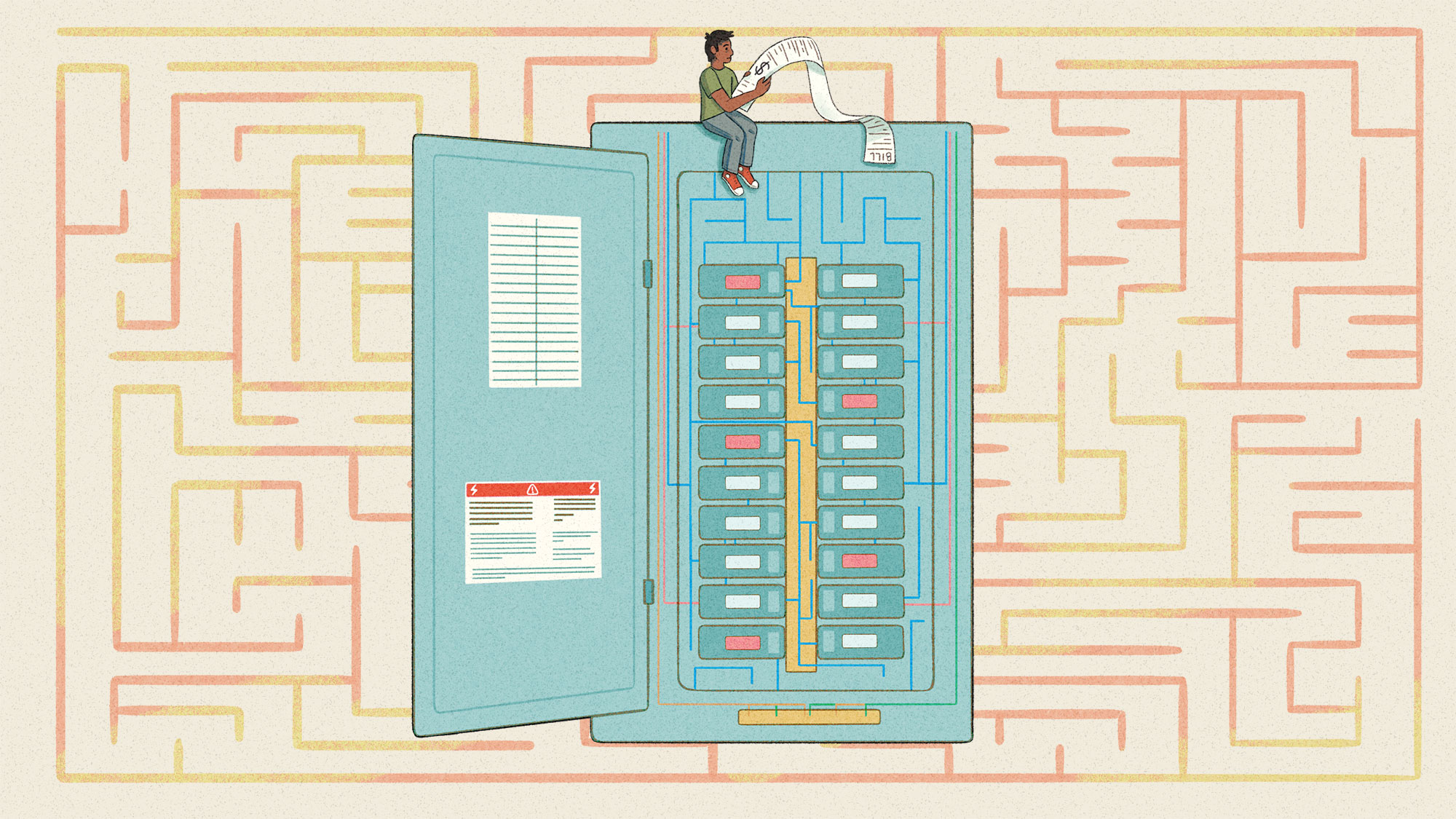
Just recently, Tik decided to pursue another home improvement project (and another story): an 800-square-foot addition. But he ran into a hitch. The outlets and lighting in the new room, along with a switch to an electric dryer, would push their home past the limit that their 200-amp electrical panel could support. They would have to think about updating the panel to make their renovation possible, which would require a new underground power line and could add upward of $10,000 to their renovation cost.
Or so they were told.
The electrician Tik and his wife were working with used a method called “load summing” to determine the power demand of their house, based on guidance in the National Electrical Code (a set of federal safety standards that all states follow).
“The basic idea is that you add up the maximum amount that everything could use and you assume it’s all running at the same time. Then use that amount as your peak,” Tik told me.
It seems a safe bet, to be certain your home electricity supply can sustain everything you might theoretically want to do with it. But when Tik called his utility provider to ask for advice about how to approach the upgrade, he was met with a question that surprised him: Are you certain you need it?
Here’s the thing: Load summing — the method electricians are taught to use — calculates your absolute maximum electricity use. But the reality is you would almost never hit that. Imagine it: You would have to be charging your EV at the same time you were running your washer, dryer, heater, and oven, with every light on and every outlet in use.
The National Electrical Code actually spells out other options for determining peak demand — one section of the code allows for a calculation that discounts some of a home’s electrical loads, recognizing that they won’t all be running at the same time. Another uses a year’s worth of utility data to determine a home’s actual peak demand, adding a 25 percent buffer. That’s the method Tik decided to try.
“I just didn’t know about that part of the code — neither did the electrician I was talking to,” Tik said.
When he got the data from his utility, he discovered that his house experienced its peak electricity demand on January 20, drawing a whopping total of 62 amps — well below what his 200-amp panel could handle.
“I was kind of blown away,” Tik said. Not only did the discovery make a difference for his own family’s plans, it busted a myth about home electrification that he and others had long taken for granted.
While thousands of homeowners may think they need to update their electrical panels to support the transition to more electrified systems, research from the Lawrence Berkeley National Laboratory has found that very few homes actually require an upgrade. Using this lesser-known method for determining peak use, most will find that they have headroom to spare.
“It’s pretty weedy, but the overall message I think is that there’s a very good chance you can electrify and stay on your old panel,” Tik said. Essentially, for some who think they are priced out of electrifying their homes, that may not actually be true.
Part of the battle now is educating more practitioners about these options. One electrician Tik spoke to for his latest story said he attended an industry conference this year that included a training on this alternative method, but he felt some colleagues were skeptical.
“It’s worth asking your electrician about, if you’re ever in this situation,” Tik said, adding that his own electrician was excited to find out about the option. (It’s Section 120.87, if you need to tell your own electrician where to look.) Tik, I think it’s safe to say, was excited too — to save thousands on a panel upgrade it turned out he didn’t need.
Dive deeper:
- This surprise cost could derail your heat pump or EV charger installation. Here’s how to avoid it.
- They thought getting their home off fossil fuels would be straightforward. Chaos ensued.
More from Grist
🏛️ Good COP, bad COP
Delegates from around the world are gathering in Antalya, Turkey, this week and next for COP31. While many doubt the effectiveness of the annual U.N. climate conference generally, this year’s COP in particular isn’t likely to make much of a splash — delegates will be focused on “housekeeping” and implementing workflows toward previous goals and commitments. Read more
✅ Green New What?
In the wake of Trump’s efforts to rebrand climate policies as a “Green New Scam,” Democrats have strayed away from strong climate messaging. But climate action, and advocates, still won in the midterms — candidates like Abdul El-Sayed in Michigan represent a new wave of “green economic populism,” connecting climate to affordability and equality. Read more
🌧️ Storm coming in
El Niño — the weather system you’ve been hearing so much about — has arrived. Heavy rains, snow, and flooding are likely to impact many parts of the U.S. this fall and winter. Here are five things you can do today to make sure you’re prepared for extreme weather to come. Read more
In other news
- Global CO2 emissions for 2026 are on track to fall slightly from last year — but experts warn it’s a ‘short-term blip’ (Gizmodo)
- Al Gore, meanwhile, believes 2026 may be ‘a real turning point’ for climate, due to the proliferation of clean tech (Bloomberg)
- A 20th century ocean liner, the S.S. United States, is finding a new life as an artificial reef and diving destination (The New York Times)
- A program in Chicago helps formerly incarcerated people train for jobs in the clean energy transition (Canary Media)
- The rare Devil’s Hole pupfish, whose population once numbered only 20, is rebounding (The Washington Post)
And finally, looking forward to …
… a future of clean, abundant, and affordable energy.
⚡⚡⚡
“Bear!” you yell up the stairs at your teenage daughter. “Stop setting the heat to 75 degrees, I’m boiling!”
It’s an argument as old as time. You remember having it with your mother — back then, it was about you running up the electricity bill. Funny to think about that now.
As you are thinking about it, your mind wanders back to the first bill you got after the community solar array went up. You showed it to your mom in this very kitchen, and she nearly spit out her tea.
You turn the heat back down — but only to 70.
— a drabble by Claire Elise Thompson
⚡⚡⚡
A drabble is a 100-word piece of fiction — in this case, offering a tiny glimpse of what a clean, green, just future might look like. Want to try writing your own (and see it featured in a future newsletter)? We would love to hear from you! Please send us your visions for our climate future, in drabble form, at [email protected]
👋 See you next week!