👋 Hi, everybody! In today’s newsletter, we’re talking about “prepper” culture. That term may conjure up images of conspiracy theorists building bunkers and hoarding canned beans (not to malign canned beans, which of course I love) — but the nature of “prepping” is starting to change in a world where more people are thinking about how to be ready for the very real likelihood of climate disasters. Some self-identified preppers are thinking about the practice differently, and even making room for joy in it.
We’ve also got some good news about transportation, including electric trains, the life of EV batteries, and the fate of congestion pricing.
This post originally appeared in Grist’s weekly solutions newsletter, Looking Forward. Not on our list yet? Subscribe here to get it in your inbox every Friday.
Prepping for the future
Grist / Getty Images / FEMA
Often, in this newsletter, we talk about envisioning the future in a positive way. We look at the long-term potential of the solutions we cover, and use climate-fiction drabbles to peek into a world where those solutions have taken root. Having dreamy visions of a future we want to work toward can be sustaining and inspiring.
But in some cases, envisioning a less-optimistic future may be an act of resilience — and even hope — as well.
That’s what my colleague Frida Garza found when she started looking into the world of prepping, something more and more people are thinking about as they face the realities of worsening climate impacts.
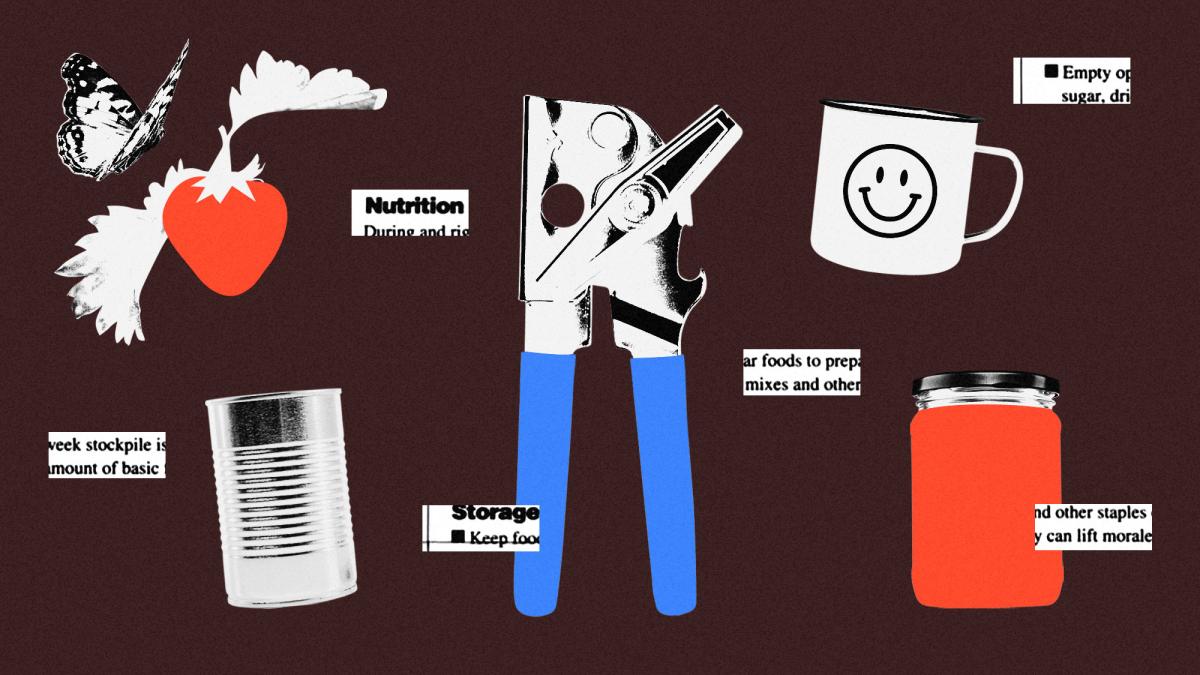
Frida covers food and agriculture, and initially, she was interested in what she described as “meal prepping for disaster.” In forums like the prepper community on Reddit, people aren’t just discussing austere preparations for a total apocalypse, but also how they’re preparing for the realities of whatever disruptions might happen. And that can include more than just basic survival — some are thinking about what they’d need to make a disaster bearable.
As Frida described: “What are the comfort foods or treats or indulgences that people can prep, even within a sort of doomsday scenario?”
One of the people Frida talked to, Al Nordz, got into prepping during the pandemic. (That major global disruption was also my first experience with anything resembling prepping. I remember dutifully following the advice, in the tense weeks before lockdown, of picking up a few extra cans every time I went to the grocery store. Frida also recalls doing some panic buying, including a bag of frozen meatballs — something she doesn’t usually eat and did not in fact eat for about another year.)
Since then, Nordz told Frida, they’ve taken to stockpiling a daily luxury that they cannot do without: coffee. Although it’s certainly not life or death, coffee is something they and their partner enjoy, and it’s a comfort knowing they have bags of beans in the freezer if another disruption were to arrive — something that’s not unlikely in wildfire-prone California, where they live.
In doing so, they’re following two core pieces of prepper advice: prep what you eat — as in, stock the kinds of foods you actually like and would want to have on hand in an emergency. And then, eat what you prep. Rather than letting their coffee languish in the freezer awaiting a potential apocalypse, Nordz and their partner cycle through their reserves and then stock more. “No problem, no waste,” as Frida put it.
“Prepping gets written about as this novel thing a lot — when I think in reality, it’s becoming more and more common, and more common sense, all the time,” Frida said.
One of the other people she talked to, Scout Cardinal, said they got into prepping somewhat reluctantly, “convinced that my desire to be prepping was a little bit of an irrational anxiety response.” But they’ve since conceded that “that’s just not true.” Based in Appalachia, on the other side of the country from Nordz, they are vulnerable to flooding and hurricanes. Their approach to prepping has included community preparedness, like joining a mutual aid group focused on disaster resources and knowledge.
They’ve also cultivated their own vegetable garden for a bit of food security, including Aleppo peppers and Korean red chili peppers — non-essentials, but spices they didn’t want to live without (and can now make self-sufficiently).
Stories like these show a fun side of prepping. But, Frida added, her intent was not to romanticize it. “There are moments of anxiety,” she said. But the lesson for all of us, however we may be thinking about disaster preparedness, is that “prepping sort of makes that anxiety workable. And it allows you to think about other things, like joy.”
Dive deeper:
- Prepping for a disaster? You’ll probably want to pack a little treat.
- Disaster 101: Your guide to extreme weather preparation, relief, and recovery
More from Grist
🚆 The electric ride
Caltrain, the commuter rail line that connects San Francisco with Silicon Valley, recently electrified 51 miles of its tracks. The faster electric trains have increased ridership to the tune of 60 percent — while protecting riders from harmful diesel fumes. Read more
🌱 The need for seed
As climate change increasingly threatens crucial ecosystems, conservationists need a supply of native plants for habitat restoration efforts. A coalition called the Midwest Native Seed Network, the first of its kind in the region, is bringing together hundreds of scientists to address challenges like shortages of native seeds to make that conservation possible. Read more
🪨 A critical supply
The Trump administration has been no friend to renewable energy thus far. But it has put effort into building and securing the country’s supply of critical minerals, likely for defense purposes. Although it’s not a perfect overlap, those mineral supply chains could theoretically help a future administration restore the country’s focus on a clean energy buildout. Read more
In other news
- EV batteries are aging better than expected, new data shows (NPR)
- A federal judge struck down Trump’s efforts to kill New York’s successful congestion pricing program (Heatmap News)
- States are trying new policy approaches to ensure residents won’t bear the energy costs of data centers (Canary Media)
- Trump’s first sale of oil and gas leases in Alaska drew zero bids from drillers (Bloomberg)
- In a decades-long effort, conservationists are restoring Galapagos giant tortoises to Floreana Island (Atmos)
And finally, looking forward to …
… a future where we’re prepared for the worst — and the worst never comes.
🍪🍪🍪
It’s the third time this season you’ve gotten a storm warning. The first two blew over without much damage — nothing like the catastrophic storms you lived through in the 20s and 30s. Your community’s microgrid never lost power.
Nevertheless, of course, your husband is battening down the hatches — activating the neighborhood check-in system, charging the backup batteries, and stocking your reserve pantry.
You tried to protest when he tucked the last of your peanut butter cookies in there. “But I want one now,” you whined.
“Trust me, babe,” he said. “If a bad storm hits, you’ll want one even more.”
— a drabble by Claire Elise Thompson
🍪🍪🍪
A drabble is a 100-word piece of fiction — in this case, offering a tiny glimpse of what a clean, green, just future might look like. Want to try writing your own (and see it featured in a future newsletter)? We would love to hear from you! Please send us your visions for our climate future, in drabble form, at lookingforward@grist.org
👋 See you next week!