👋 Hi there! Happy Friday, readers. I’m so excited to show you the new layout of your weekly solutions newsletter from Grist. If you haven’t heard from me much before, I’m Claire Elise Thompson. I’ve been writing and editing stories about climate progress and the people leading it for about six years at Grist.
Being a journalist on the climate beat can sometimes take an emotional toll (as can, you know, just existing in the world we live in). I have always felt immensely lucky to get to focus my work on solutions — exploring the creative, compassionate, and sometimes surprising ways that people are working to address the climate crisis and the injustices that underpin it. Doing this work gives me a lot of hope, and a constant stream of inspiration for ways that I can live my life differently, or otherwise be a part of bringing about the better future that I dream about. I’m excited to share those stories and insights with y’all here in this newsletter.
But I also like to think of Looking Forward as a community — it’s not just about me sharing with you, but us all sharing with each other. I love to hear what’s inspiring you, what’s happening in your local area, and the questions you’re navigating about how to be a climate steward in this moment. If we’ve never exchanged words before, please tell me a little bit about yourself! Who am I writing to? Where in the world are you reading this? What are you most excited or curious or concerned about when it comes to climate change and how we go about mitigating and adapting to it?
Please reply to this email to introduce yourself, and I’ll think of you every week when I sit down to write this newsletter.
So, as we dive into this new era of Looking Forward, I wanted to start by exploring why community matters for navigating the climate crisis. I once wrote, “Meeting your neighbors is a climate solution,” and that has never been more true. Our main story this week is about the power of community, and how neighbors (in a broad sense of the term) come together to help one another in times of crisis. Also in this issue, a sweet story about sea turtles and some surprising developments for electric vehicles.
When disasters strike, community is the first line of defense
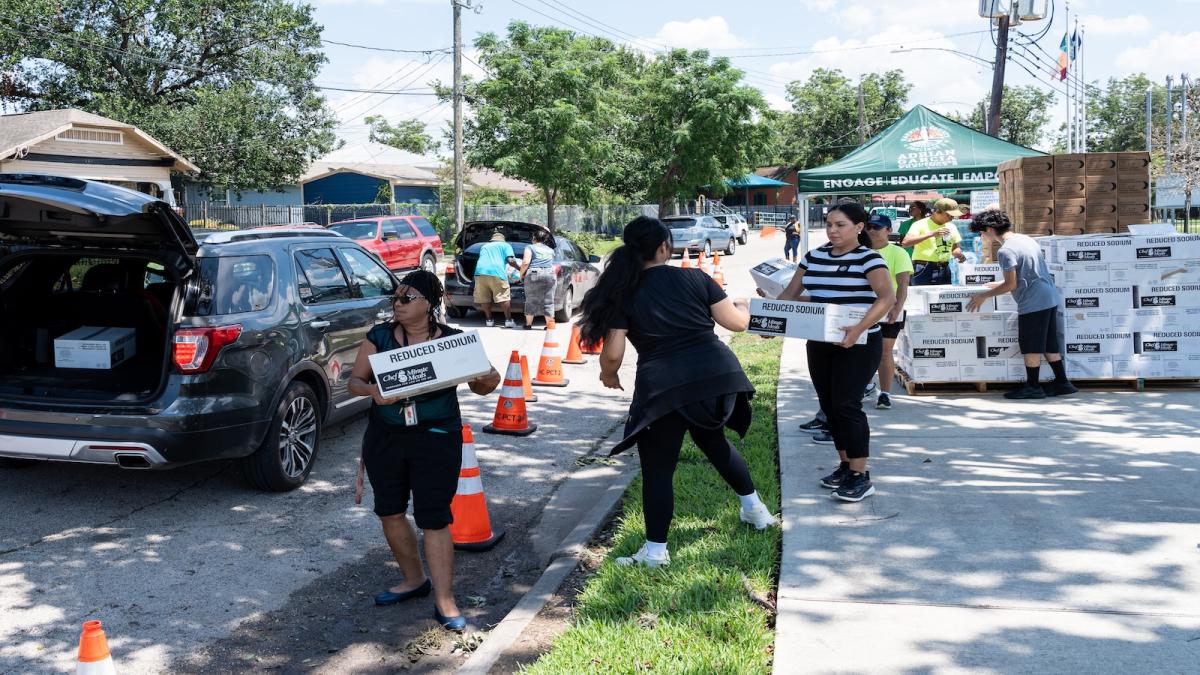
People at a food-distribution site in Houston following Hurricane Beryl. Xinhua News Agency / Getty Images
“The people who are closest to you physically will become the most important people of your life when everything collapses.” Christine Nieves Rodriguez, a Puerto Rican climate activist, told us this when we interviewed her for the very first issue of Looking Forward back in 2021. Nieves lived through the devastation of Hurricane Maria in 2017 — and just days after the storm, she and her neighbors organized Proyecto de Apoyo Mutuo Mariana (Mutual Aid Project of Mariana), a community kitchen and food distribution operation that quickly grew to feed more than 300 people every day.
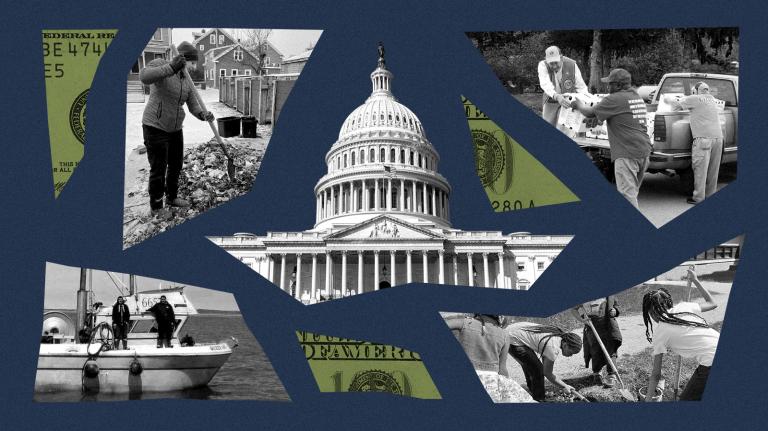
Every time a disaster hits — which, unfortunately, is increasingly often — stories like this one emerge. Neighbors who find each other a place to stay when homes are destroyed. Communities that band together to pick up debris and share food. Local businesses or organizations that offer up their physical spaces and other resources for aid.
My colleague Naveena Sadasivam was recently in Texas Hill Country covering the aftermath of the catastrophic flash flooding that happened on July 4. While she was there, she spoke with a man named Brian Keeper who weathered the flood in the upstairs loft of a river home his family had built in 1975. After calling 911 when he awoke to the flood in the wee hours of the morning, Keeper began calling his neighbors to make sure they were awake and warned — and ultimately saved the lives of two families. In turn, Keeper himself benefited from the generosity of strangers and friends, including one of the families he called that night, as he and his dog searched for a place to stay after the floodwaters receded.
Making a phone call, offering up a spare room, or setting up a GoFundMe page are examples of the kind of essential, immediate aid that anyone can offer when their community is impacted by a disaster. There are also countless examples of community members harnessing their specialized skills to help — like Operation BBQ Relief, a group started by barbecue pitmasters who wanted to use their cooking skills to feed residents and first responders in times of need, including last month in Texas. When catastrophic fires engulfed Los Angeles at the start of this year, artists gave over their studios and galleries to provide space for donation hubs — and jumped in to coordinate, even with no prior organizing experience.
As storms, floods, fires, and heat become more intense and more frequent, there’s a lot that any of us can do to be better prepared to weather the next disaster. That includes things like packing an emergency kit, knowing where to get reliable information, or even making some small upgrades to your home (Grist has a comprehensive guide to disaster preparedness to help you get started). But equally important may be the simple act of getting to know your neighbors.
“The most reliable way of ensuring that you’re going to be safe, and that the people around you are going to be OK, is knowing each other’s strengths,” Nieves said. “It’s about relationships and getting to know each other.”
Read more:
- After Texas’ catastrophic floods, families face a daunting question: Rebuild or let go?
- Disaster 101: Your guide to extreme weather preparation, relief, and recovery
Share your thoughts
If you’re replying to introduce yourself (please do!!) I’d also love to hear about how well you know your neighbors. In this digital age, what are some strategies you’ve used for getting to know the people and places around you? (I’ll start: My familiarity with my immediate neighborhood and neighbors went up exponentially when I got a dog. Taking a daily walk, with or without dog, is a great way to start to see some familiar faces and get a feel for what’s going on in your area.) Reply to this email to tell me a bit about your neighborhood, and how you’ve formed ties there.
More from Grist
🐢 Turtle power
Researchers are invested in a long game to understand how rising seas and temperatures will affect nesting sea turtles in the Southeastern U.S. The hatchlings they track this summer will be back to nest 30 years from now. Read more
🎨 Still life in plastic
As nations have worked over the past three years to negotiate a global plastics treaty (including at a session this week in Geneva), artists have played a role in the talks with installations, poems, demonstrations, and other works calling attention to the human health impacts of plastics and the role of fossil fuel companies. Read more
🔋 Natty hydrogen
Hydrogen fuel could be crucial for decarbonizing energy-intensive industries like trucking, shipping, and aviation — and stores of pure hydrogen (sometimes called “natural” or “white” hydrogen) might be sitting under the Midwest. While it’s too early to bank on it, around 40 companies are beginning to explore this resource. Read more
In other news
- Ford announced a major investment in developing affordable electric pickup trucks (NPR)
- Pressed by legal challenges, the Trump administration reopened funding set aside for EV charging infrastructure (Canary Media)
- A company in California ran the biggest test yet of a “distributed power plant,” where people’s home batteries supply power to the grid (Inside Climate News)
- Balcony solar, already popular in Germany and other European countries, is starting to overcome hurdles in the U.S. (The New York Times)
- A group of Indigenous youth kayaked the length of the Klamath River for the first time since its four dams were removed. Follow their journey. (The Washington Post)
And finally, looking forward to …
… a more compassionate society. While there are many heartwarming stories to cling to of neighbors helping neighbors after crises, plenty of other stories show the darker side of disaster response and recovery. Grist launched a new series this week exploring how post-disaster chaos can be seen — by some — as a money-making opportunity. After the L.A. fires, for instance, displaced residents faced an untenable housing market as landlords jacked up rents, knowing there would be a surge in demand and people would be desperate.
Keep up with that series here. And in the meantime, join me in envisioning a future free of scammers, price-gougers, and greedy corporations …
🫂🫂🫂
“Are you sure?” you ask Bee again.
He nods, pushing your bags of groceries toward you. “Essentials are still free. We’ve got enough runway for at least another week of that.”
You accept. The storm only did minimal damage to your home, so you’ve been cooking for about a dozen neighbors who are still without power. Bee knows this — hence why this volume of groceries is “essential” for you.
“See you at the town hall later? That rep is coming to talk about repairs the city will sponsor.”
He gives you the thumbs up, turning to help the next customer.
— a drabble by Claire Elise Thompson
🫂🫂🫂
A drabble is a 100-word piece of fiction — in this case, offering a tiny glimpse of what a clean, green, just future might look like. Want to try writing your own (and see it featured in a future newsletter)? We would love to hear from you! Please send us your visions for our climate future, in drabble form, at lookingforward@grist.org
👋 See you next week!