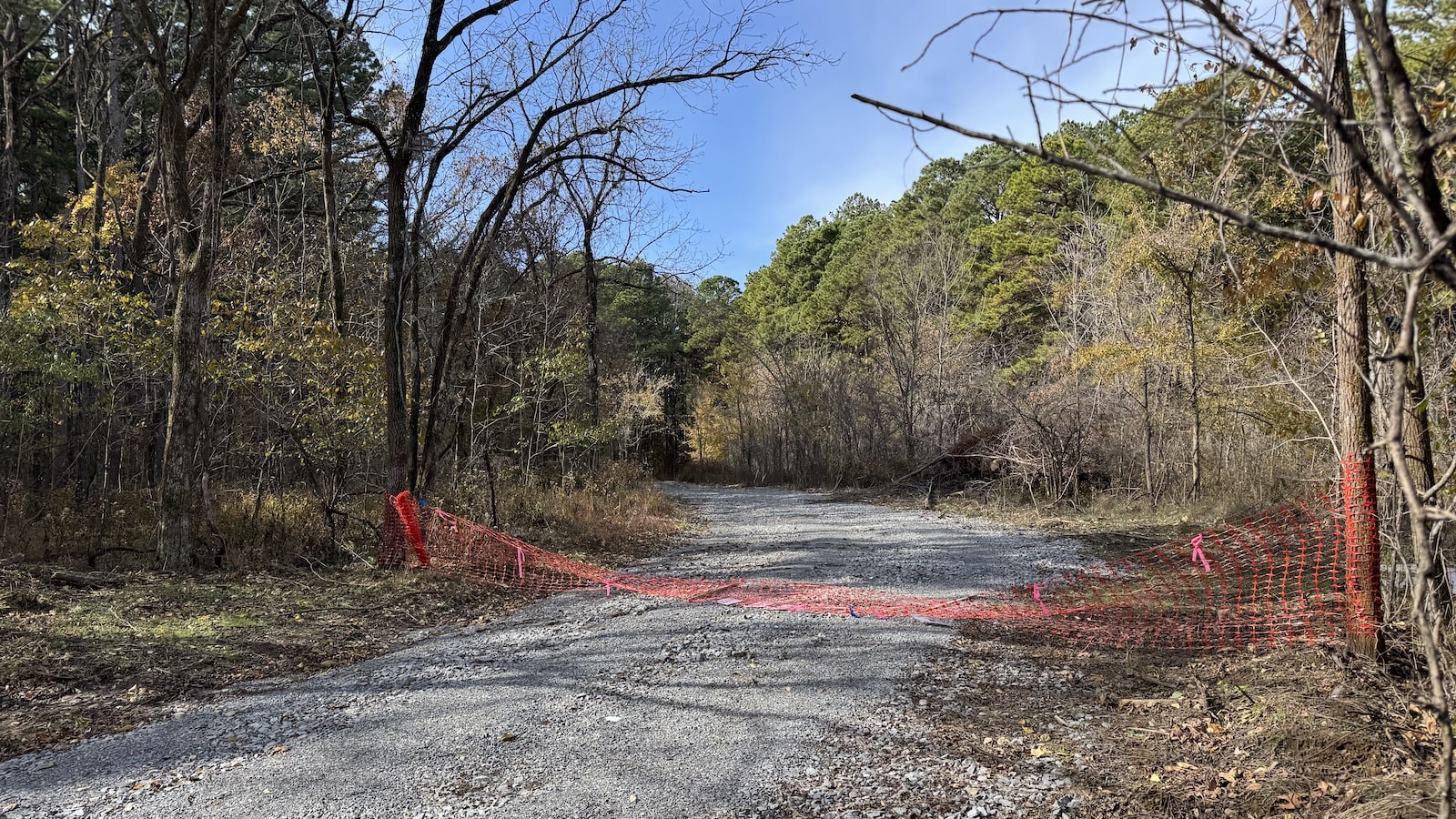
When the Forest Service approved the sale of nearly 70 acres for commercial logging in southern Illinois’ Shawnee National Forest in late 2024, Sam Stearns was furious. The Shawnee is the only national forest in the state, and one of the smallest in the nation. The agency initially billed the so-called McCormick Oak-Hickory Restoration Project timber sale as a “thinning” operation to remove older trees and make room for younger saplings. Logging operations contribute to habitat loss, and Stearns found the Forest Service’s justification lacking.
“Never in the history of this planet has a forest been logged back to health,” said the 71-year-old Stearns.
Stearns, who is the founder of the preservation group Friends of Bell Smith Spring, planned to oppose the sale. He began keeping an eye out for the agency’s public comment period, which provided residents like him an opportunity to voice their concerns. For months, he and other local environmentalists scoured the web and local newspapers for mentions of the sale to prepare for the comment period, but the McCormick Project never turned up.
It would turn out that the Forest Service advertised the project under a completely different name. The sale was titled “V-Plow,” and by the time advocates realized it, they were already a week into the project’s three-week comment period. In the past, advocates said comment periods for logging operations lasted as long as 45 days. Court documents would later reveal that the agency initially didn’t receive any bids. It eventually awarded the contract to an interested buyer in Kentucky in June 2025.
The following month, Stearns and other environmentalists sued the agency to block the plan. They cited the presence of endangered bats and potential impacts to a nearby national natural landmark and alleged that the Forest Service had violated the National Environmental Policy Act, or NEPA. Earlier this fall, a federal judge temporarily blocked the project before allowing the logging to proceed. The case is still pending, and a spokesperson for the Forest Service declined to comment due to the ongoing litigation.
The legal battle is part of a broader clash between fast-tracking projects and ensuring environmental reviews as required by federal law. NEPA mandates that federal agencies consider the environmental impacts of projects, but it includes a provision for “categorical exclusions” that let agencies bypass full reviews and limit public participation for minor proposals.
“This can be a legitimate process, for instance, when used for routine things where the impacts are minimal and well established, like campsite or trail maintenance,” said Garrett Rose, a senior attorney with the Natural Resources Defense Council. “Unfortunately, this administration has been working to aggressively expand the exemptions available to [the Forest Service], and minimize disclosure of projects impacted by categorical exclusions.”
In 2023, the Biden administration attempted to use these shortcuts to speed up permitting for projects like renewable energy and broadband internet. Earlier this year, President Donald Trump began pressing the Forest Service to fast-track timber harvests on public lands. In one executive order, he directed the Forest Service to adopt categorical exclusions developed by other agencies to “reduce unnecessarily lengthy processes.” That means, for example, the Forest Service could use categorical exclusions developed by the Department of Agriculture’s rural development agency for wastewater treatment plants or transmission lines, according to Rose. The order also instructed the Forest Service to develop new exclusions for “thinning” projects related to wildfire mitigation.
Advocates fear the agency is applying categorical exclusions more widely than before for logging projects to comply with Trump’s directive. Local watchdog groups across the country are scrambling to make sure the public has a chance to provide input when logging and oil and gas extraction are approved on public lands.
Ryan Talbott, a conservation advocate with Wildearth Guardians in the Pacific Northwest, said the Forest Service recently cited categorical exclusions developed by the Tennessee Valley Authority to approve a logging project in Mount Hood National Forest, which excused it from the standard robust public comment process. The agency also utilized the same categorical exclusion to move a project forward in Alaska’s Tongass National Forest.
“This all comes back to Trump’s timber executive order,” Talbott said. “They’re looking for every possible avenue to expedite timber production.”
In Indiana, environmentalists recently scored a rare victory against the Forest Service. In September, a federal judge stopped a logging project in the Hoosier National Forest, siding with local advocates who argued the agency’s plan violated NEPA. The ruling found that the Forest Service did not properly weigh the environmental impacts of a proposal to log 4,000 acres and clearcut 4,000 more, among other actions, within Indiana’s only national forest.
In Illinois, however, Stearns’ lawsuit is still ongoing. A Kentucky logging crew harvested about half of the nearly 70-acre timber sale in late August before temporarily halting in early September due to Stearns’ lawsuit. The loggers have yet to finish the job.
Standing at a distance from the cut hillsides in late November, Stearns said the Forest Service is bad at a lot of things, but they’re good at one thing: cutting down trees.
“Even if they were getting a premium price for this wood, which I know they’re not, those trees would be much more valuable standing, contributing to the health of an ecosystem, than they’ll ever be cut like that,” he said.
Editor’s note: The Natural Resources Defense Council is an advertiser with Grist. Advertisers have no role in Grist’s editorial decisions.
A message from
Your support keeps our climate news free.
Grist is the only award-winning newsroom focused on exploring equitable solutions to climate change. It’s vital reporting made entirely possible by loyal readers like you.
At Grist, we don’t believe in paywalls. Instead, we rely on our readers to pitch in what they can so that we can continue bringing you our solution-based climate news. Donate today to keep our site free.