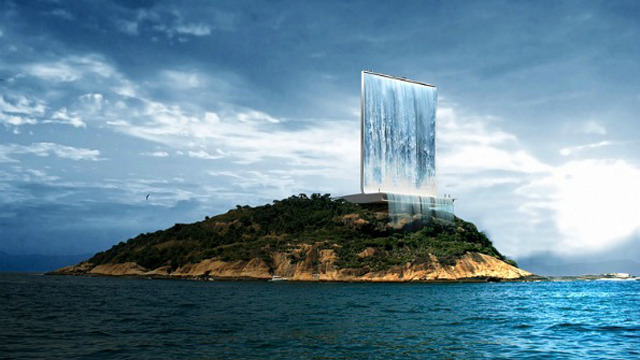
This is Rio de Janeiro right now: “Hey, London, nice job with the terrifying brain slug mascots and logo that evokes cartoon incest. We’ve also been doing some design innovation for our Olympics! Yeah, we just made this giant beautiful waterfall that will generate renewable energy for the Olympic Village. But yours is good too!”
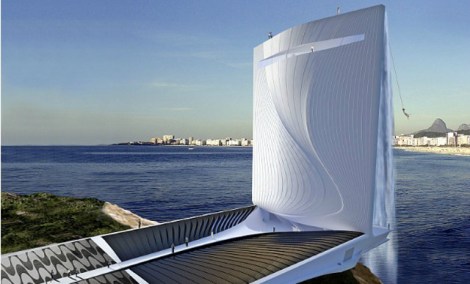
The 345-foot tower, designed by Swiss firm RAFAA, is ringed by solar panels at its base, which provide power to the city and the games. The structure stores extra energy from those panels by pumping up seawater, which can then be released to run a turbine — and, on special occasions, to create an impressive waterfall effect. It also houses an amphitheater, cafeteria, and observation deck to keep Olympic tourists busy, and a bungee-jumping station to thin the herd.
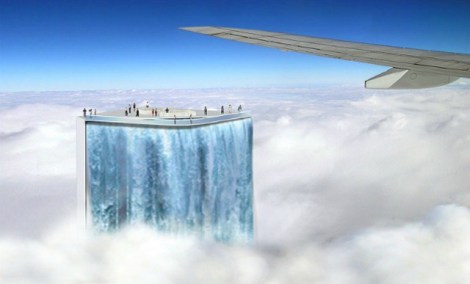
Will this make 2016 the first zero-emissions games? Yeah, not likely. The Olympics are a gigantic energy-suck, even before you factor in the carbon-spew side effects of getting the athletes there in the first place. But this will be one Olympic spectacle that can, at very least, power itself. That’s more than London’s army of flying Marys Poppins can say.
A message from
Your support keeps our climate news free.
Grist is the only award-winning newsroom focused on exploring equitable solutions to climate change. It’s vital reporting made entirely possible by loyal readers like you.
At Grist, we don’t believe in paywalls. Instead, we rely on our readers to pitch in what they can so that we can continue bringing you our solution-based climate news. Donate today to keep our site free.