What makes a job sustainable — both eco-friendly and liable to stick around? That question is at the center of new research from the Dukakis Center at Northeastern University’s Policy School, commissioned by the City of Boston to help meet its ambitious Climate Action Plan goals.
The plan lays out a road map for transitioning the city off fossil fuels, achieving citywide carbon neutrality by 2050, and making the city resilient to a future changing climate. It aims to decarbonize buildings, electrify the transportation system, upgrade the city’s grid, and build coastal resiliency. But getting there depends on people — who’s going to do the work, and how will they get trained?
“Climate plans are like a jigsaw puzzle,” said Joan Fitzgerald, a professor of public policy at Northeastern who led the research. “And the last piece to be put in place often is workforce development.” For Boston, that last puzzle piece comes with the release of the City’s Climate Ready Workforce Action Plan, which marks the culmination of a year-long research project conducted in partnership with the Dukakis Center along with the Burning Glass Institute, TSK Energy Solutions, and Community Labor United. Additionally, the plan incorporates feedback from 51 advisors, including city and state officials, training and education partners, labor partners, employer partners, and community leaders.
One of the biggest challenges researchers encountered was how to define a “green job.” Take car mechanics, for instance. Fixing a gas-guzzling car might not seem like a climate-friendly role. But as electric vehicles become more common, mechanics are more likely to be servicing them. (Still, that doesn’t necessarily mean there will be more mechanic jobs overall, according to Fitzgerald; electric cars have fewer parts and don’t need as much maintenance.) The same is true for an HVAC technician—one day they could be installing a gas furnace, and the next, an energy-efficient electric heat pump. “These examples show some of the murkiness of figuring out what a green job is,” Fitzgerald said.

To tackle this challenge, Northeastern made use of a novel dataset collected by the Burning Glass Institute, a data-driven think tank, to do an inventory of what jobs are needed in the green economy and what skills those occupations need. “Imagine a data set that’s hundreds of millions of individual job ads,” Stuart Andreason, the institute’s executive director, said. “We look at job postings from across the globe, identify the skills in them, and track how those skills are changing.”
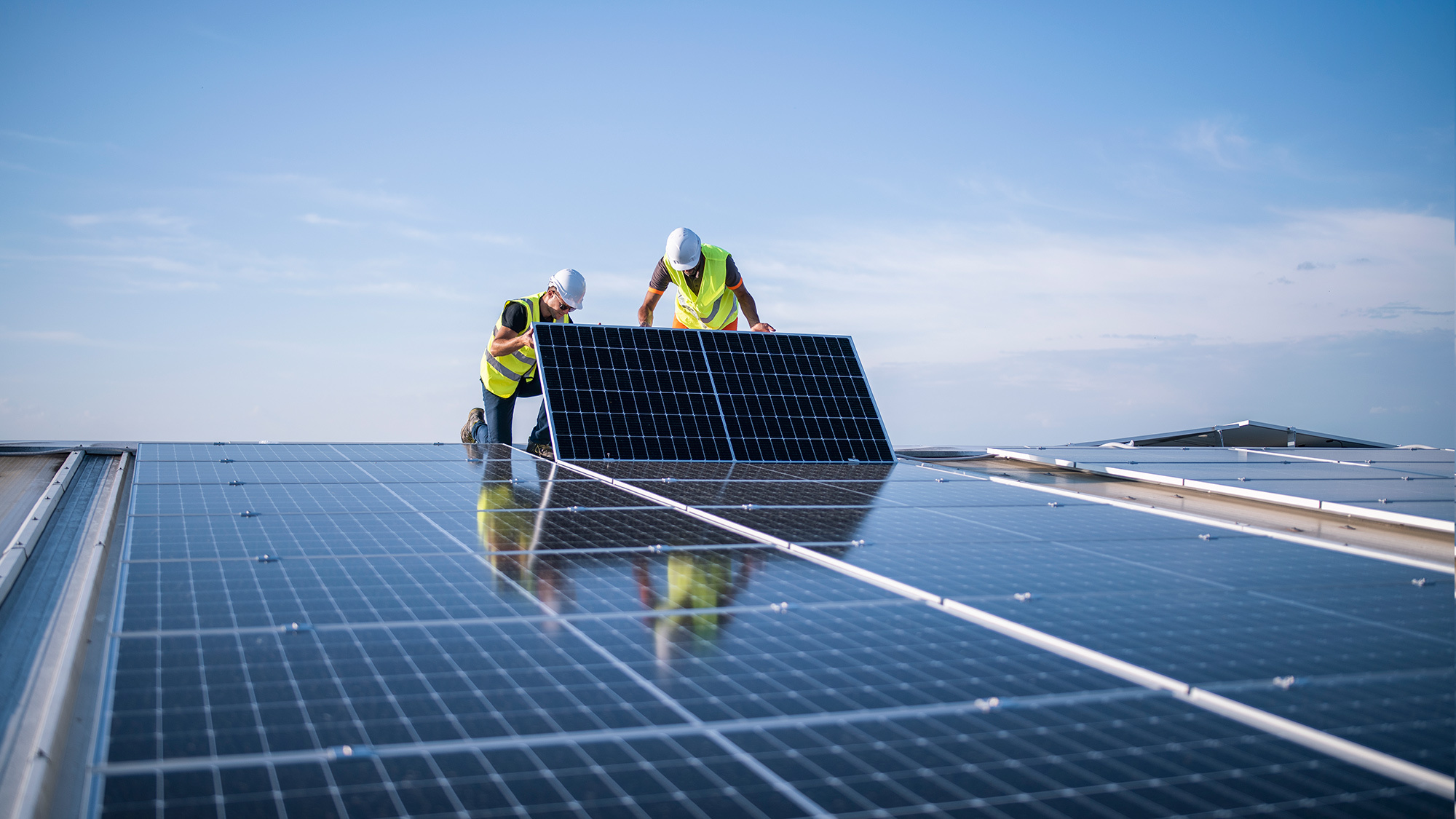
The researchers found that, while jobs like solar developer are undoubtedly part of the green workforce, many existing jobs could become green jobs with new or evolving skills. Construction workers might need training in energy-efficient building codes; electricians may need to understand how to install EV chargers. As the nation pivots from fossil fuels toward clean energy, green skills are becoming essential for workers across sectors.
Drawing on both the Burning Glass data and other publicly available data from the Bureau of Labor Statistics, Dukakis Center Director Alicia Modestino then analyzed two key questions: How many workers are going to be needed for the projects and initiatives laid out in Boston’s Climate Action Plan? And how many of these jobs will be held by new workers entering the labor force or workers who need to be replaced due to projected retirements?
Despite some of these uncertainties, it’s clear that cities such as Boston can’t be climate-ready without a climate ready workforce. “And there is a limited number of programs and slots to equip workers with the green skills that are needed,” Modestino said. “The transition from entirely carbon-based jobs to those that require green skills or become entirely ‘greened’ will be rapid … possibly creating a shortage of workers if cities do not get ahead of the curve.”
That kind of analysis helps cities like Boston understand what jobs are growing, what skills those jobs require, and how to shape workforce training accordingly. “The problem is predicting need. Is it both training new people to enter the green workforce and on-the-job training for people who are already in the labor force? That makes it hard to predict,” Fitzgerald said.
In line with the environmental justice goals of Boston’s Green New Deal, researchers looked into what career opportunities exist for the city’s disadvantaged communities. These jobs run the gamut from designing and building climate-friendly infrastructure to community engagement.
Beyond identifying what green jobs were out there, Fitzgerald’s team also explored how workers can climb the career ladder and identified where training programs are falling short.
One concern: Many existing green workforce programs do not have enough funding to provide wages and support services to trainees. Once the funding ends, so does the career pipeline. “One of our recommendations is that’s where cities can help,” Fitzgerald said. “If you have an effective training program but it’s relying on funding that doesn’t allow it to pay trainees, then the city can support the wages for participants.”
Despite the challenges, Boston’s Climate Ready Workforce Action Plan lays the groundwork for other cities to turn their far-reaching climate goals into real, lasting job opportunities. This report is the first of its kind, connecting Boston’s climate agenda to economic opportunity, said Oliver Sellers-Garcia, Environment Commissioner and Green New Deal Director. “Our work to fight climate change will create good-paying jobs and a more inclusive workforce in Boston,” he said.
Northeastern University’s School of Public Policy and Urban Affairs (Policy School) offers master’s degrees that feature innovative, real-world explorations of our world’s most challenging climate, environmental, and sustainability issues. Through a combination of experiential learning, interdisciplinary research, and cutting-edge coursework, these programs prepare you for the next step in your career, using policy to address environmental and social justice in communities around the globe. Learn with us at our campuses in Boston, Arlington (Metro D.C.), and Oakland.
A message from
Your support keeps our climate news free.
Grist is the only award-winning newsroom focused on exploring equitable solutions to climate change. It’s vital reporting made entirely possible by loyal readers like you.
At Grist, we don’t believe in paywalls. Instead, we rely on our readers to pitch in what they can so that we can continue bringing you our solution-based climate news. Donate today to keep our site free.