agriculture
-
![]()
![]()
EPA hands the ethanol lobby a hollow victory
The corn lobby got what it's been clamoring for: the EPA lifted its "blend wall" on ethanol mixes to 15 percent. There's a catch, though, that will make King Corn's victory downright Pyrrhic.
-
![]()
![]()
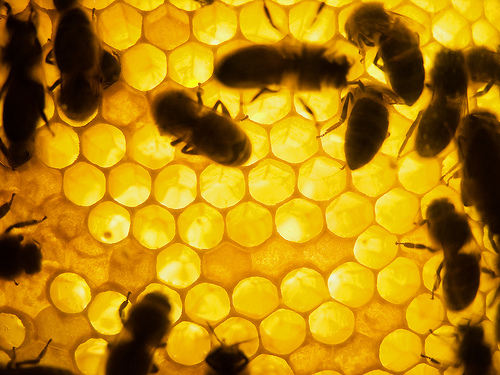
Sorry, New York Times: The bee die-off case is not closed
The New York Times recently declared the case of Colony Collapse Disorder, the great bee die-off, "solved." But the reporting hyped the science and left out important conflicts involving the lead scientist.
-
![]()
![]()
Purdue’s Gebisa Ejeta on the vexing task of feeding a growing population
Over the next several weeks, I'll be attending the University of Washington's food and environment lecture series and harvesting knowledge from a diverse array of food-system luminaries. Plant breeding expert Gebisa Ejeta of Purdue University opened the series -- and a pot of worms -- by talking up a new petrochemical-dependent "Green Revolution" in Africa and talking down the potential of organic farming in feeding the masses.
-
![]()
![]()
Conserving and rebuilding soils in the U.S. and around the world
Shelterbelts, strip cropping, and no-till practices are helping to keep American soil from blowing away, and African countries and China are planting "green walls" to keep the desert at bay. But overgrazing is going to be a problem.
-
![]()
![]()
Court rules rBGH-free milk *is* better than the kind produced with artificial hormones. Now what?
News that an appeals court is overturning Ohio's ban on "rBGH-free" milk labeling has caused quite a splash. The court disagrees with the FDA that there is no "compositional difference" between milk produced with and without the artificial growth hormones. What happens now?
-
![]()
![]()
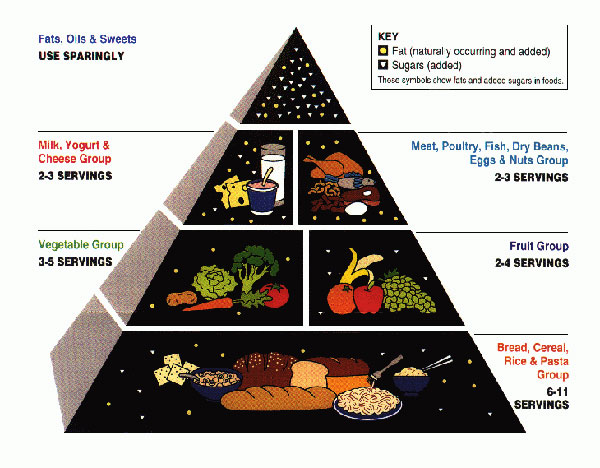
Fixing USDA dietary guidelines won't fix our diets
The USDA is revising its guidelines on what Americans should be eating. But even if the feds get it right, which they probably won't, a new pyramid won't be enough to change the way we eat.
-
![]()
![]()
Transgenic crops' built-in pesticide found to be contaminating waterways
Researchers at the University of Notre Dame have shown that the Bt toxin in genetically engineered crops is polluting waterways in Indiana.
-
![]()
![]()
Signs of a reverse brain drain, from finance to farms
Holton Farms' Community Supported Agriculture program is unusual for several reasons, not least because it's being run by a former Credit Suisse banker.
-
![]()
![]()
War-era food posters: Wacky, well-meaning, and still relevant [SLIDESHOW]
Skinless frankfurters, laying-hen lessons, fat recycling -- the Obama administration could take a few tips from propagandizing presidencies past.