aquaculture
-
![]()
![]()
Taras Grescoe on factory salmon farming
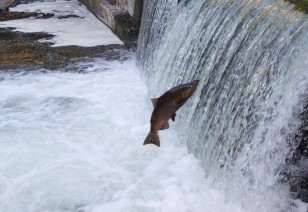
An endangered chum salmon attempts to jump a small dam on the Deschutes River in Washington. While researching my post on Cheesecake Factory, I came upon contradictory information on how many pounds of wild fish it takes to create a pound of farmed salmon. Industry sources like this one paint a (relatively) rosy picture: […]
-
![]()
![]()
Why the Cheesecake Factory really is gross
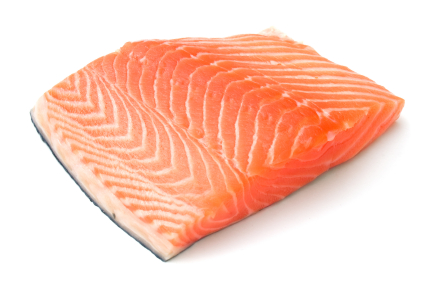
Down on the farm: most salmon consumed in the U.S. comes from aquacultureIn a post on his group blog, the Internet Food Association, Washington Post blogger and food-politics columnist Ezra Klein poses the philosophical question, “Is the Cheesecake Factory Gross?” The context is a bet involving the highly regarded cookbook writer Michael Ruhlman, who recently […]
-
![]()
![]()
The case for — and against — eating those suddenly pervasive, stinging sea creatures
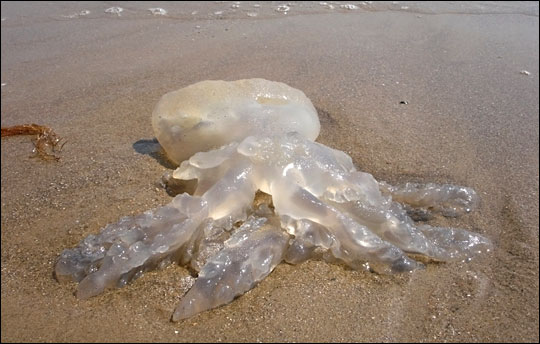
In Checkout Line, Lou Bendrick cooks up answers to reader questions about how to green their food choices and other diet-related quandaries. Lettuce know what food worries keep you up at night. Beach menace — or dinner? Dear Checkout Line, I’ve heard that jellyfish are plentiful and that we should eat them. I want […]
-
An ode to the sea kitten
Today we give a tip o' the carp
To the bitterlings at PETA
Who've thought of yet another way
To make us better eatas.Agog at all our fishy friends
That on sharp hooks have bitten,
They've launched a cutesy-boots campaign
Called, yes, "Save the Sea Kitten!"If fish were "kittens," so they say,
You'd view them differently --
Your tuna would change if today's lunch
Were Kitten of the Sea. -
Fishermen who play by the rules deserve some help
Taking up Tom Philpott's food stimulus challenge, I suggest bailing out the fisherman. Of course, fish stocks internationally are still in serious decline -- you need look no father than the Atlantic bluefin tuna to see that. But according to a report on NPR, we're having some serious fisheries-management success stories on the West Coast. Now it's the local fishing fleets rather than the fisheries that threaten to collapse. At first, the government thought they had engineered a "soft landing" for fishermen when:
... five years ago many fishermen who trolled for groundfish agreed to give up their boats for a lump sum of cash. That dramatically reduced the size of the fleet. There are only about 160 bottom trawlers left in California, Oregon and Washington.
As a result, nets are full and quotas are easily met. But now regulators are converting fishing quotas into a cap-and-trade system. There's no question that this is an important development. Since fishermen will be able to buy and sell portions of their quotas, they'll throw less of their catch overboard (dumping fish being the only legal way to dispose of excess catch). Under the new system, they'll just hop on the radio and buy some of the fishing rights from a fellow fisherman who has room to spare in his hold.
Everything looks peachy so far, but all industries need a certain scale. As the fleets continue to shrink and more fishermen sell their quotas and their boats, fishing ports, which include processing plants and other supporting services, will shut down entirely. These are businesses that, unlike the meat industry's now defunct network of local abattoirs and butchers, have so far resisted centralization.
So how about some incentives to keep these folks afloat? Fishermen should be encouraged to stay on the water, not to become fish stock brokers. If a little of the stimulus money can help us manage the fishermen along with the fisheries, it would be a boon to struggling coastal communities and would preserve fishing as an environmentally and economically sustainable tradition. Aside from the fact that any job lost is a crisis in this economy, it would be a shame that our success with the fish should lead to disaster for the people.
-
NYT: Maryland poultry CAFOs snuff out Chesapeake oyster industry
In Meat Wagon, we round up the latest outrages from the meat and livestock industries. —– I write this on the second day of December — one among a string of months that end in “r.” That means, for those of us who live near the sea, it’s time to consider the oyster, that glorious […]
-
Farming bluefins not an answer to overfishing
News of the latest negotiations on how many bluefin tuna the world can afford to kill without extinctionating the species (yes, it’s a word … to me) is yet to be inked, and that’s fine, because it’s always such a depressing story. Who us, kill too many of a disappearing fish? But it reminded me […]
-
We should be wary of jumping on the ‘individual fishing quota’ bandwagon
I’m not sure what the marine equivalent of a bandwagon is (a love boat?), but there’s one headed our way. I’m talking about the movement called “individual fishing quotas,” as described in a recent Los Angeles Times article. The original theory is straight out of the free market school of economics: Give people the ownership […]
-
One more environmental Cabinet position that counts particularly for oceans
In its feature “Stocking the Cabinet,” Grist speculated on Barack Obama’s potential nominees for the “top environmental jobs” in his administration. For the oceans, however, the most pertinent post isn’t the head of the EPA, or the secretary of agriculture, energy, or interior, all of which were included in Grist’s guessing game. Guess what is? […]