Grist List
-
![]()
![]()
Why this drought will be way, way worse than the last one
A New York Times article about the current drought in the South compares it to a record-setting dry spell 60 years ago:
Climatologists say the great drought of 2011 is starting to look a lot like the one that hit the nation in the early to mid-1950s. That, too, dried a broad part of the southern tier of states into leather and remains a record breaker.
But this time, things are different in the drought belt. With states and towns short on cash and unemployment still high, the stress on the land and the people who rely on it for a living is being amplified by political and economic forces, state and local officials say. As a result, this drought is likely to have the cultural impact of the great 1930s drought, which hammered an already weakened nation.
But it's not just the economy that's worse now than it was in the 1950s. Water usage is also way, way up. This drought rivals the record-setting 1950s drought -- it's already breaking records in some states -- but it comes at a time when the population is double what it was in 1950, and total water use is more than twice as high.
-
Tepco bulldozed hill that could have prevented Fukushima disaster
When engineers first assessed the future home of the Fukushima nuclear power plant that would eventually melt down in response to a tsunami, the site featured a striking, 82-feet-high bluff that overlooked the ocean below.
It was more than high enough to have withstood the tsunami that struck the site in March.
-
![]()
![]()
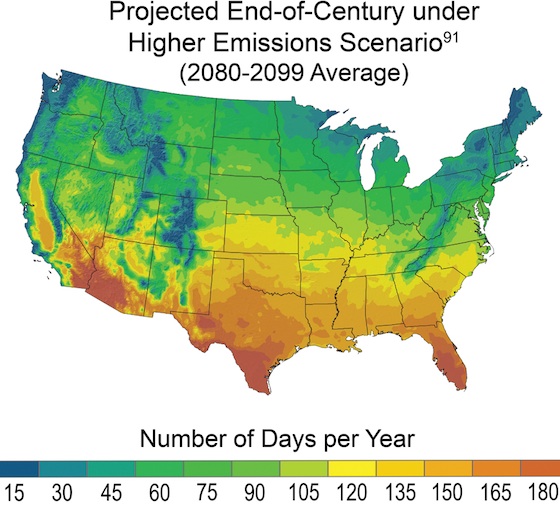
'It is hotter than balls,' says U.S. government
.bbpBox90778323399090177 {background:url(http://a0.twimg.com/images/themes/theme1/bg.png) #C0DEED;padding:20px;} p.bbpTweet{background:#fff;padding:10px 12px 10px 12px;margin:0;min-height:48px;color:#000;font-size:18px !important;line-height:22px;-moz-border-radius:5px;-webkit-border-radius:5px} p.bbpTweet span.metadata{display:block;width:100%;clear:both;margin-top:8px;padding-top:12px;height:40px;border-top:1px solid #fff;border-top:1px solid #e6e6e6} p.bbpTweet span.metadata span.author{line-height:19px} p.bbpTweet span.metadata span.author img{float:left;margin:0 7px 0 0px;width:38px;height:38px} p.bbpTweet a:hover{text-decoration:underline}p.bbpTweet span.timestamp{font-size:12px;display:block} 640 max heat records broken or tied this month http://t.co/6v837IF Even more for highest minimum http://t.co/kIaL5OBless than a minute ago via Tweet Button Favorite Retweet ReplyJustin Kenney JustinNOAA […]
-
Critical List: Keystone XL could spill millions of gallons of oil; snails that like being eaten
The current Yellowstone spill involved 42,000 gallons of oil. That’s bad enough. But the Keystone XL pipeline could dump 6.9 million gallons of oil into the river.
Republicans want to repeal the incandescent light bulb "ban," but since it's NOT SUCH A BRIGHT IDEA (har har), their bill probably won't pass.
Trees can suck up carbon from the atmosphere, delaying disaster for a little while. But so can cities, it turns out. Parks, gardens, abandoned lots, golf courses, sports fields, and river banks suck up more carbon than anyone imagined -
![]()
![]()
Do you live near America's Fukushima?
This infographic from 1BOG.org — click for the much bigger original, which has details about all the plants — shows at-risk nuclear facilities in the United States. Most of the ones situated in high-population areas (the larger gray circles) don't coincide with the high seismic risk areas (yellow and red), so that's comforting … but […]
-
![]()
![]()
Think you're so smart, humans? Even fish can use tools
Tool use: It's not just for humans anymore. Actually, it hasn't been just for humans for a long while -- yet another form of homo sapiens exceptionalism we're having to learn to do without. But now it's not just for humans, apes, monkeys, certain birds, and possibly octopuses: There's documented evidence that fish can use tools too. Take that, practically everything except fish! You're not so smart after all.
-
![]()
![]()
Strip-mining the Moon: Bad idea, or the worst idea?
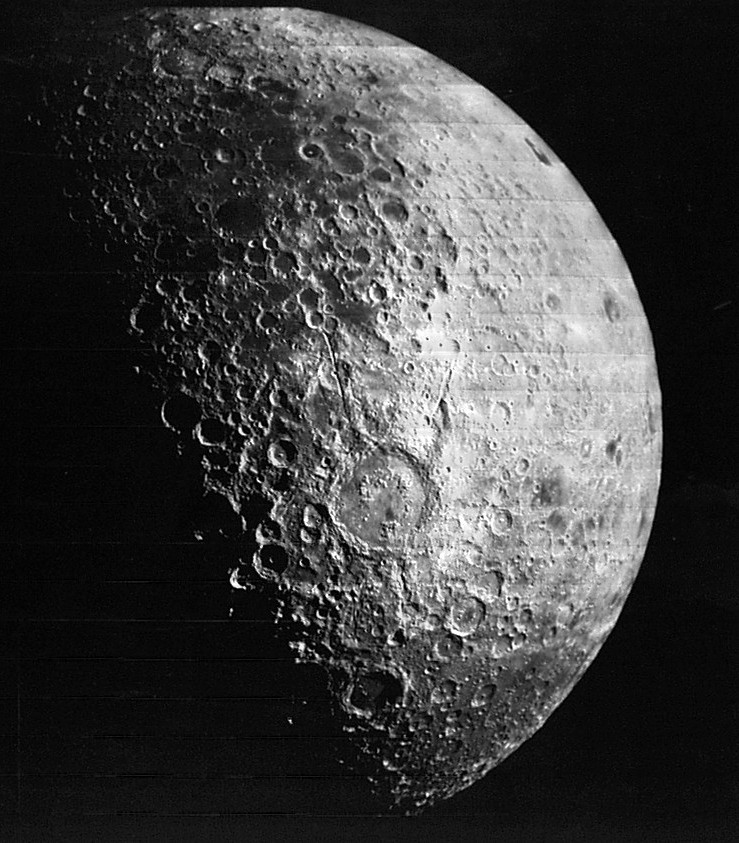
As a millennial, I don't share boomers' enthusiasm for the power of science to solve all problems. So when someone says that strip-mining the Moon for rocks rich in helium-3, heating the rocks to harvest the helium, and using that helium for nuclear fusion will solve the world's energy problems, I am inclined to say, “Ha! You power-mad old person, you are living in a science fiction story.” But that, in fact, may be the direction humanity is heading in, moon-wise.
-
![]()
![]()
DuPont herbicide may have caused mysterious tree plague
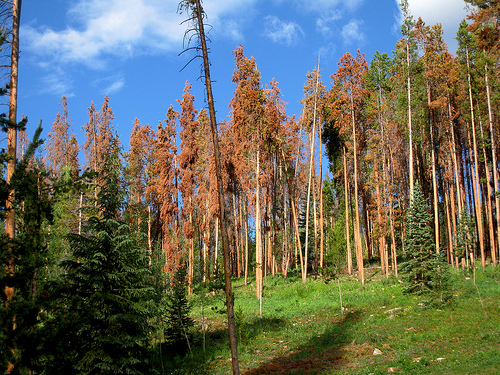
Millions of dollars worth of spruce and pine trees across the country have mysteriously withered and died in the past few months. The likely culprit is an herbicide marketed as a way to control lawn pests like dandelions.
The herbicide is Imprelis, a new product from DuPont. It was supposed to be better for the environment than its predecessors and has been sold at a premium to professional landscapers. DuPont claims it "may not have been mixed properly or was applied with other herbicides." Landscapers just want to know if they're going to have to pay to replace the trees that died on their watch. -
![]()
![]()
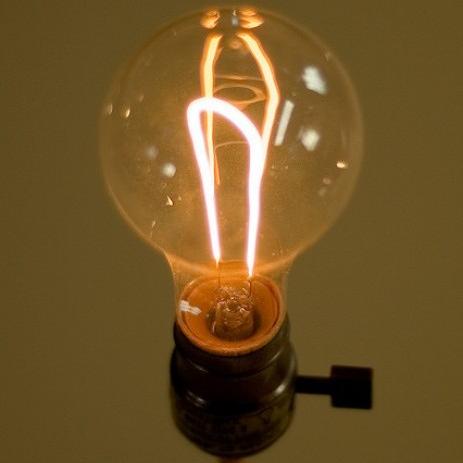
Thomas Edison would have loved energy-efficient bulbs
Thomas Edison's great-grandson, David Edison Sloane, is not mincing words when it comes to the GOP wanting to repeal energy-efficiency standards for light bulbs:
As an inventor, Edison would have no interest in turning back the legislative clock. The wizard of Menlo Park dedicated himself to advancing human comfort, not freeze life as we knew it in 1879.
Oh snap! Edison's great-grandson just called you retrogressive.