Grist List
-
![]()
![]()
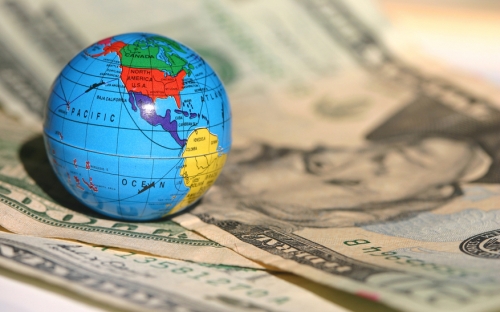
Severe weather costs us $485 billion per year
According to estimates from the National Center for Atmospheric Research, the baseline cost of extreme weather (which has always been with us, but which is steadily getting worse due to climate change) in the United States is $485 billion a year -- 3.4 percent of the country's GDP.
-
![]()
![]()
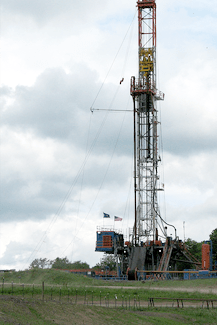
World's first fracking bans come through in France and New Jersey
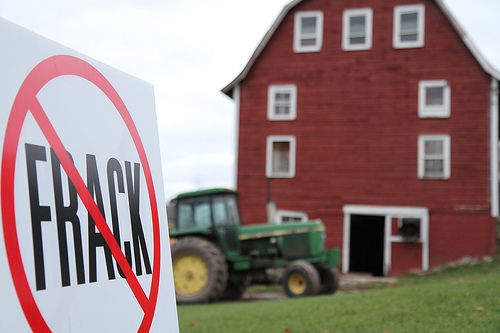
While we were all distracted by the possibility that New York State will allow fracking for natural gas, two big milestones in the battle to restrict the notoriously environmentally destructive process arrived on successive days:
New Jersey bans fracking
On June 29, New Jersey became the first state in the Union whose legislature passed a ban on fracking.
-
![]()
![]()
Too little, too late? Some Democrats seek investigations of gas industry claims
A group of energy companies -- like, say, the natural gas industry -- would never, ever mislead the public and politicians about how profitable it could be over the long-term. Obviously, we should just believe the natural gas industry's financial projections, which promise that any negative environmental impacts will be worth the jobs, the profits, and the energy security that come with the promised national gas boom.
That's basically been the stance of most legislators in Washington when it comes to natural gas. The picture the industry painted of huge supplies of low-carbon fuel proved really compelling. But now a few lawmakers are starting to worry that the government hasn't really looked into the reality of the situation. And they're asking agencies like the Security and Exchange Commission, the Energy Information Administration, and the Government Accountability Office to check up on the industry's claims about profitability and supply. -
![]()
![]()
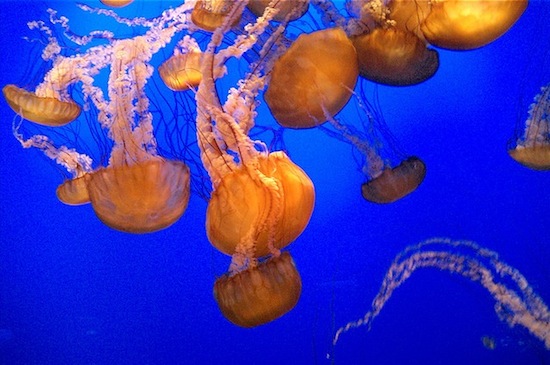
Horde of jellyfish shuts down nuclear plant
In keeping with the recent trend of wildlife disrupting human activity through sheer numbers, a bunch of jellyfish just shut down a nuclear power station in Scotland. The plant manually shut down operations yesterday because of a "high volume" of jellyfish on its seawater filter screens. (As far as we know, the jellyfish were not […]
-
Critical List: New York could approve fracking; animals get stoned
New York Governor Andrew Cuomo wants to open up private land in the state to hydrofracking.
Children living near Fukushima tested positively for radiation exposure.
Want to get all riled up before the weekend? Get your fix of climate skepticism here. -
![]()
![]()
How wallaby farts could save the atmosphere
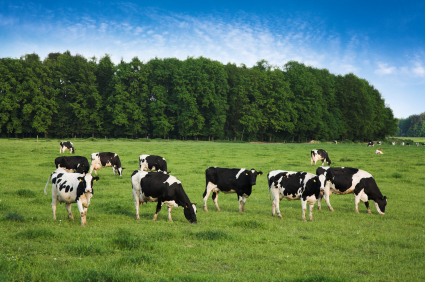
Scientists have long known that cows are big contributors to global warming. Livestock produce more than a quarter of the world's global methane emissions every year, and 20 percent of methane emissions in the U.S. It's a side effect of ruminant digestion, and aside from strapping your entire herd into carbon-filter diapers, there's no quick fix -- to cut emissions, you have to carefully manage cattle nutrition so they don't offgas as much. Or so we thought. That was before we discovered wallaby farts.
-
![]()
![]()
In the worst drought in Texas history, 13.5 billion gallons of water used for fracking
Texas is experiencing the driest eight-month period in its recorded history. But in 2010, natural gas companies used 13.5 billion gallons of fresh water for hydraulic fracturing, and that could more than double by 2020. Where's all this water coming from? Oh, it was just lying around, in these aquifers! You guys weren't using it to drink or irrigate or anything, right? Guys?
-
![]()
![]()
We might have to geoengineer the planet to save ourselves from renewable energy
Mark Lynas, an author whose pop-sci books about climate change are scrupulous enough to get favorable reviews from the likes of climate scientist Eric Steig, proposed a funny little thought experiment on his blog: Could switching to renewables strip the planet of its sun-protective smog? And if so, will we need to replace it with artificial smog instead?
-
![]()
![]()
What we could have bought with the $4 trillion we spent on Iraq and Afghanistan
Americans like us some war, but to the tune of $4 trillion? In adjusted dollars, that's just short of what it cost us to whup the Nazis.
Here's a look at what we could have done with that money, had we spent it on something besides stoking Americans' confusion over whether or not the world's 1.5 billion 'Muslims' are in fact a monolithic group whose every member is a terrorist.